
作品のオリジナル比率に合わせた、当店の規定サイズからお選びください。

特定のフレームやスペースに合わせて、ご希望のサイズをご入力いただけます。選択されたサイズが元の画像の比率と異なる場合、アートワークをトリミングするか、手描きで要素を追加して絵画を拡張いたします。デジタルモックアップ を制作し、制作開始前にご確認(承認)をいただきます。
画面上のプレビューは、実際のトリミングや拡張を正確に反映しているものではありません。最終的な構図は、モックアップによってのみ正確にご確認いただけます。
カスタムサイズもご利用いただけますが、元の比率を維持するためには、あらかじめ用意されたリストからサイズを選択することをお勧めいたします。

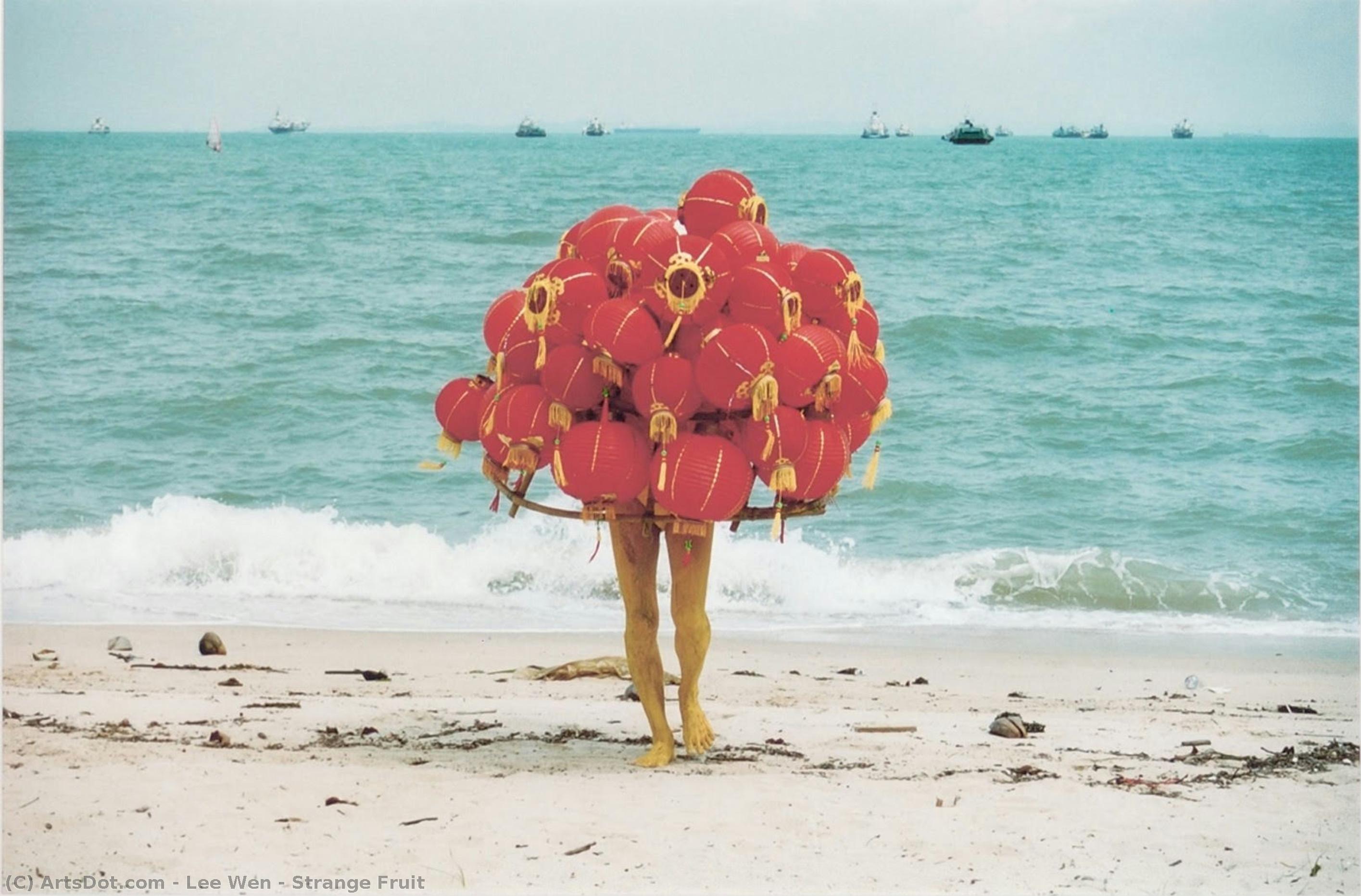
Strange Fruit
複製画のサイズ
Lee Wen, born in Singapore in 1957, was far more than a mere practitioner of the arts; he was a transformative force who reshaped the landscape of Asian contemporary performance. His life was a profound journey of self-discovery, moving from the structured world of finance to the raw, visceral realm of experimental expression. Before finding his true calling, Wen navigated the pragmatic corridors of banking and logistics, yet the creative spirit within him remained restless. This restlessness eventually led him to the Lasalle-SIA College of the Arts and later to the City of London Polytechnic, where he refined a voice that would eventually resonate far beyond the borders of his home nation. His early years were marked by a deep connection to the textures of Singaporean life, a childhood spent amidst the lush, swampy landscapes of his neighborhood, which provided a fertile ground for the imaginative seeds he would later sow in his performance pieces.
The evolution of Wen’s artistry was deeply intertwined with the emergence of The Artists Village, a seminal collective in Singapore that served as a crucible for experimentalism. Influenced by the legendary Tang Da Wu and fellow visionaries like Amanda Heng, Wen embraced the idea that art could be an ephemeral, living experience rather than just a static object on a wall. He was a man who found poetry in the rain and strength in vulnerability, often using his own body as the primary canvas for his explorations of identity and existence. This period of his life was characterized by a fearless pursuit of the "new," pushing against the boundaries of what was socially acceptable or artistically recognized in a rapidly modernizing Singapore.
Perhaps no creation is more synonymous with Lee Wen’s legacy than his iconic "The Journey of a Yellow Man" series. Initiated in 1992, this ambitious undertaking began as a sharp, provocative critique of racial and ethnic stereotypes. By painting his skin with bright, unmistakable yellow poster paint, Wen transformed himself into an exaggerated symbol of ethnic identity, forcing viewers to confront their own preconceived notions of race and belonging. What started as a confrontation with the external gaze—a response to critics who dismissed his work as mere mimicry of Western trends—gradually deepened into something much more spiritual and introspective.
As the years progressed, the Yellow Man persona underwent a metamorphosis. The performance moved away from purely political commentary toward a meditative exploration of freedom, humility, and the human condition. The bright yellow pigment became a vessel for exploring the individual's relationship to community, environment, and even religious practice. Through this series, Wen achieved a rare feat in contemporary art: he utilized a highly visible, almost cartoonish visual trope to discuss the most delicate and nuanced aspects of human vulnerability. His work was not merely seen; it was felt, as he navigated the complexities of being a citizen of a multicultural society through the lens of a painted, yet deeply human, protagonist.
The impact of Lee Wen’s career is measured not just in the applause of international festivals, but in the enduring shifts he caused within the global art dialogue. His work has graced prestigious stages at the Fukuoka Asian Art Museum in Japan and the National Gallery Singapore, proving that performance art, often dismissed as fleeting, can leave an indelible mark on the historical record. For his monumental contributions to the local and international arts scene, he was rightfully honored with the Cultural Medallion for Visual Arts in 2005, a testament to his status as a pillar of Singaporean culture.
Even as his performances concluded, the echoes of his creativity remained through his paintings and mixed-media installations. He leaves behind a legacy defined by:
Though he passed away in 2019, the vibrant, yellow spirit of Lee Wen continues to inspire new generations of artists to look inward, to challenge the status quo, and to find the extraordinary within the ordinary rhythms of life.

1957 - 2019 , Singapore

Explore the profound intersection of photography and fine art. Discover how the lens captures the soul of history, from documentary masterpieces to its enduring influence on the Impressionist spirit. A curated guide for the discerning art collector.


最新の美術ニュース、限定オファー、そしてインテリアのアイデアをいち早くお届けします。
お客様のプロジェクトについてお聞かせください。当社の美術専門家が、お客様に合わせた3つのパーソナライズされた芸術提案をご提供いたします。
あなたにぴったりの3作品を無料で厳選いたします

 プレビュー
プレビュー
 プリントを購入
 シェアする
シェアする シェアする
シェアする
 詳細を見る
詳細を見る

 ダウンロード
 似ている作品
 X線調査
X線調査 スライドショー
 詳細を見る
詳細を見る






































 ガラスオプションは、110cm未満のサイズでのみご利用いただけます。


