
作品のオリジナル比率に合わせた、当店の規定サイズからお選びください。

特定のフレームやスペースに合わせて、ご希望のサイズをご入力いただけます。選択されたサイズが元の画像の比率と異なる場合、アートワークをトリミングするか、手描きで要素を追加して絵画を拡張いたします。デジタルモックアップ を制作し、制作開始前にご確認(承認)をいただきます。
画面上のプレビューは、実際のトリミングや拡張を正確に反映しているものではありません。最終的な構図は、モックアップによってのみ正確にご確認いただけます。
カスタムサイズもご利用いただけますが、元の比率を維持するためには、あらかじめ用意されたリストからサイズを選択することをお勧めいたします。

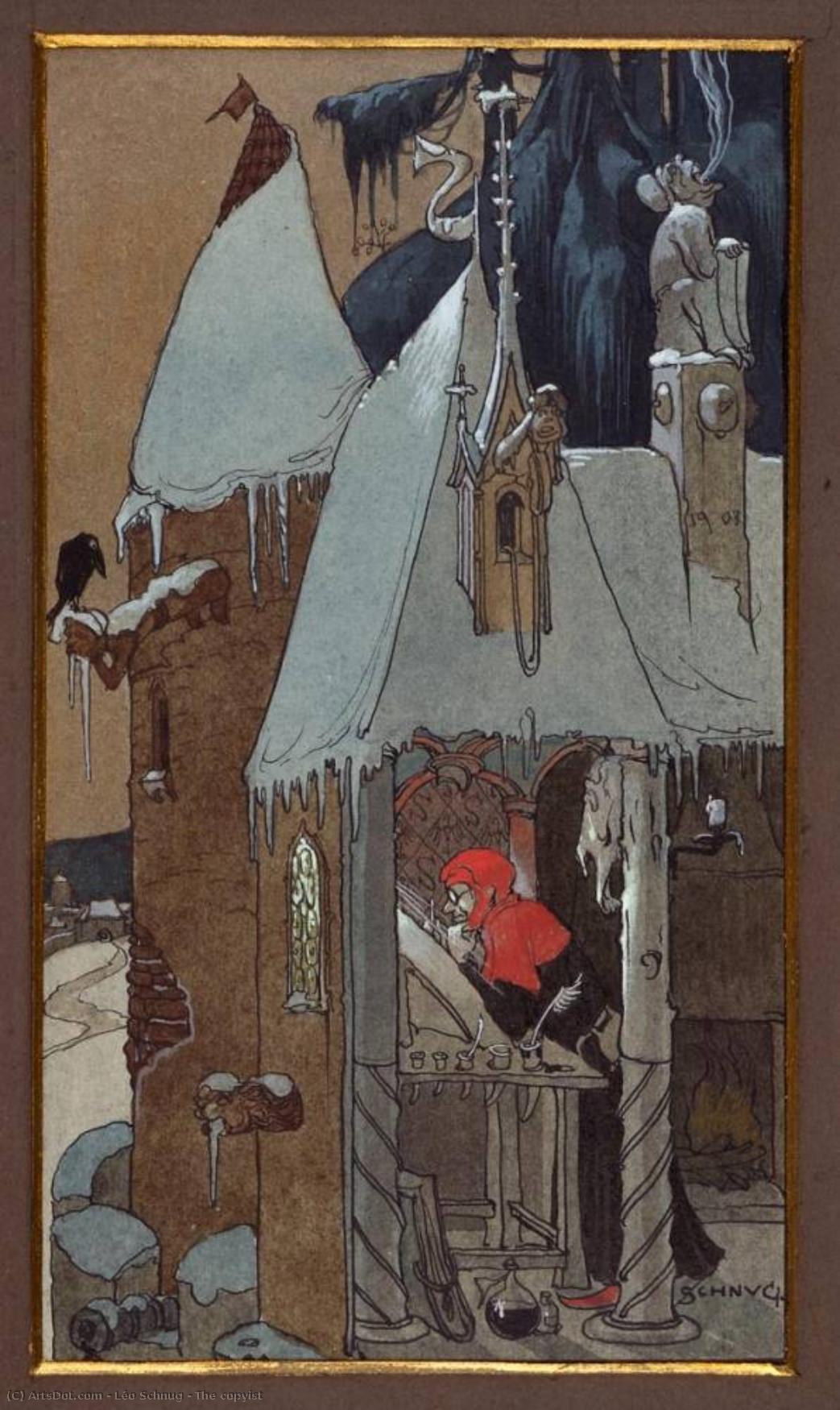
The copyist
複製画のサイズ
The life of Léo Schnug was a profound dialogue between the tangible struggles of history and the ethereal realms of imagination. Born in 1878 in Strasbourg, during a period when Alsace was transitioning under the shadow of the German Empire, Schnug’s very identity was forged in a landscape of shifting borders and cultural duality. His early years were marked by a poignant domestic reality; with his father hospitalized for mental illness, Schnug’s childhood home became a revolving door for performers from the local municipal theater. The vibrant, theatrical costumes that drifted through his halls provided an early, intoxicating glimpse into a world of drama and artifice, planting the seeds for a lifelong fascination with costume, character, and the storytelling power of visual art.
As he matured, Schnug’s artistic journey took him from the School of Decorative Arts in Strasbourg to the prestigious Academy of Fine Arts in Munich. Under the tutelage of masters like Nikolaos Gyzis, his technical prowess began to coalesce with a unique stylistic vision. He possessed a rare ability to marry the opulent, flowing ornamentation of the Art Nouveau movement—reminated by the works of Klimt and Mucha—with a deep, reverent obsession for the medieval and the Gothic. This synthesis allowed him to create works that felt simultaneously modern in their decorative elegance and ancient in their symbolic weight, often evoking the atmosphere of illuminated manuscripts or the intricate beauty of stained glass.
Schnug’s oeuvre is inseparable from the soil of Alsace. He was not merely a painter of scenes, but a chronicler of a regional soul. His involvement with the Cercle de Saint-Léonard and his studies in marquetry under Charles Spindler allowed him to explore texture and medium with a craftsman's precision. This dedication to detail is most evident in his depictions of Alsatian heritage, where he breathed life into local legends and historical motifs. His art often functioned as a bridge between the past and the present, utilizing Gothic aesthetics to celebrate a sense of continuity amidst the political upheavals of his era.
Beyond the regional, Schnug’s work reached toward the fantastical. He had an uncanny ability to conjure atmospheres that felt both haunting and heroic. His illustrations often featured:
The later years of Schnug’s life were shadowed by personal tragedy and the tumultuous tides of the early 20th century. The outbreak of World War I saw him serve as a sergeant in the German army, a period that brought both recognition through the Order of Merit and the deepening of personal struggles with mental health and substance use. This internal turbulence, much like the external conflicts of his homeland, infused his later works with a more somber, reflective quality. The brilliance of his decorative style was often tempered by a poignant sense of loss and an awareness of the fragility of existence.
Despite the hardships that eventually led to his death in 1933 near Brumath, Schnug’s historical significance remains undiminished. He stands as a pivotal figure in Alsatian art, a master who could navigate the delicate boundary between the decorative and the profound. His influence can be felt in the way he transformed historical motifs into living, breathing narratives, leaving behind a legacy that continues to captivate those drawn to the intersection of myth, history, and the human spirit.

1878 - 1933 , France


最新の美術ニュース、限定オファー、そしてインテリアのアイデアをいち早くお届けします。
お客様のプロジェクトについてお聞かせください。当社の美術専門家が、お客様に合わせた3つのパーソナライズされた芸術提案をご提供いたします。
あなたにぴったりの3作品を無料で厳選いたします

 プレビュー
プレビュー
 プリントを購入
 シェアする
シェアする シェアする
シェアする
 詳細を見る
詳細を見る

 ダウンロード
 似ている作品
 X線調査
X線調査 スライドショー
 詳細を見る
詳細を見る






































 ガラスオプションは、110cm未満のサイズでのみご利用いただけます。


