


 設置イメージを確認
 送る
送る シェア
シェア
 詳細情報
詳細情報 ガイドを表示

 画像をダウンロード
 似ている作品
 X線調査
X線調査 スライドショー
 統計情報
統計情報Sun


A vibrant yellow sun with a whimsical face shines against a purple floral pattern in this captivating 1987 painting by Haitian master Levoy Exil, inviting you to bring the spirit of Saint Soleil into your collection.
 続きを読む
続きを読む
Discover Levoy Exil, a renowned Haitian artist & Saint Soleil movement contributor! Explore his mystical, pointillist paintings depicting Vodou, vibrant colors & abstract forms. Learn more!
このページに掲載されている作品は著作権法によって保護されており、当社の許可なく同一の複製物を制作または販売することは法律で禁じられています。この保護は、以下のような国際条約に基づき執行されます。 ベルヌ条約 および、以下の条項に定められたものを含む各国の法律により、 米国著作権法 第17編。
敬意を払った法的な代替手段として、私たちはオリジナルにインスピレーションを与えられた、カスタムの手描きアートワークを提供しています。私たちの熟練したプロのアーティストは、元の作品が持つスタイル、情緒、そして芸術的なエッセンスを注意深く研究し、独自の創作物でありながら、同じ感性を呼び起こすような、新しくユニークな作品を作り上げます。
この手法は、著作権で保護された作品の複製や複写を伴わないため、著作権法に完全に準拠しています。これは単なる模倣ではなく、創造的な再解釈です。元の作品からインスピレーションを受けつつも、それとは異なる、全く新しい絵画を生み出すものです。
手描き油彩複製画
当社のアーティストが、お客様のご希望のサイズと額縁に合わせて、キャンバスに手描きで制作する油彩画です。 ( プリント版に切り替え デジタル画像販売へ切り替え)




P118B ¥10

P118H ¥10

P118W ¥10

P438Z ¥10

P508JH ¥12

P508YH ¥12

P805H ¥10

P805Z ¥10

P919BZ ¥10

P919G ¥10

P919XJ ¥10

P959ZH ¥10

P968JZ ¥12

W106C ¥8

W218G ¥10

W218JH ¥8

W218Y ¥10

W307PJ ¥10

W316G ¥10

W316PJ ¥8

W316Y ¥10

W398PJ ¥8

W4111J ¥10

W500HY ¥15

W500JH ¥15

W692G ¥12

W849H ¥8

W940BG ¥15

W953PJ ¥8




標準サイズ
カスタムサイズ
CM
INCH
作品のオリジナル比率に合わせた、当店の規定サイズからお選びください。
Loading sizes...

横幅
高さ
フレームや壁のスペースに合わせて、ご希望の幅と高さを入力してください。本作品は手描きのため、異なる比率のサイズをご希望の場合、絵画の周囲を少し広げて描くか、あるいは端を少しカットして調整することが可能です。お客様のご要望に合わせます。制作を開始する前に、仕上がりを確認するためのデジタルモックアップをお送りいたします。このページに表示されている画像は完成品の実物ではなく、あくまでモックアップによるイメージです。
カスタマイズの例:顔をお客様の写真に置き換える、ペットを追加する(例:猫を犬に変更)、背景に隠れたメッセージを入れる、背景の風景や要素を変更するなど。
ご注文後、TopImpressionists.com チームより詳細な指示をお送りするとともに、仕上がりイメージ(モックアップ)をご提供いたします。
ご注文後、TopImpressionists.com チームより詳細な指示をお送りするとともに、仕上がりイメージ(モックアップ)をご提供いたします。


 ガラスオプションは、110cm未満のサイズでのみご利用いただけます。

Sun
再現技法
複製画サイズ一覧
-


合計金額
¥ 42321
A Radiant Vision of Haitian Spirit
In the vibrant tapestry of Haitian contemporary art, few works capture the whimsical yet profound essence of the Saint Soleil movement quite like Levoy Exil’s Sun. Created in 1987, this masterpiece serves as a luminous window into a world where the celestial and the terrestrial dance in perfect harmony. The painting centers on a magnificent, golden sun, personified with a gentle, expressive face. With eyes of deep blue and a mouth that suggests a quiet, knowing smile, the sun becomes more than a mere astronomical body; it is a sentient deity, a guardian of light watching over the cosmos. This personification invites the viewer into an intimate dialogue with nature, transforming a cosmic phenomenon into a relatable, soulful companion.
The composition is a masterclass in color theory and rhythmic pattern. Surrounding the central solar figure is a mesmerizing backdrop of purple floral motifs, which provides a striking chromatic contrast to the brilliant yellows and golds of the sun. This interplay between warm and cool tones creates a visual vibration that feels alive with energy. Scattered throughout the canvas, smaller figures emerge like whispers from a dream, adding layers of mystery and narrative depth. These secondary characters, nestled within the intricate patterns, suggest a larger, populated universe where every element—from the smallest petal to the largest star—possesses its own spirit and story.
The Legacy of Saint Soleil and Vodou Symbolism
To truly appreciate Sun, one must understand the profound cultural currents that flowed through Levoy Exil’s brush. As a pivotal figure in the Saint Soleil movement, Exil utilized his canvas to translate the complex spiritualities of Haitian Vodou into a visual language accessible to the world. His work is deeply rooted in the concept of the Loas—the spirits that inhabit the natural world. In this painting, the sun acts as a symbol of vitality, clarity, and divine presence. The use of bright, saturated colors and flattened perspectives is not merely an aesthetic choice but a way to represent a spiritual reality where boundaries between the physical and the metaphysical are beautifully blurred.
Exil’s technique, characterized by a rhythmic application of color and a focus on symbolic forms, evokes a sense of primordial joy. The painting does not demand attention through aggression, but rather through its infectious warmth and the meticulous detail of its patterns. For collectors and interior designers, this piece offers a unique opportunity to introduce a sense of "luminous storytelling" into a space. Whether placed in a sun-drenched gallery or a sophisticated modern living room, a high-quality reproduction of this work brings with it an aura of peace, cultural richness, and an eternal summer that transcends time.
よくあるご質問
「Sun」はどの様式に属していますか?
「Sun」は、Saint Soleilの作品です。この様式は、その作品が属する芸術的伝統を示しています。
Levoy Exilは何歳の時に「Sun」を制作しましたか?
1987年に「Sun」が制作された際、1944年生まれのLevoy Exilは43歳でした。
Levoy Exil作「Sun」の原画はどこで見ることができますか?
Levoy Exil作「Sun」はHaitian Art Society, Washington, D.C., United States of Americaに展示されています。なお、美術館の掲載情報は複製画ではなく、原画に関するものです。
アーティストについて
A Visionary of Haitian Vodou Art
Levoy Exil stands as one of Haiti’s most distinctive artistic voices, a pivotal figure within the Saint Soleil movement and celebrated for his mesmerizing depictions of Vodou spirituality. Born in 1944 in Soisson-la-Montagne, Haiti, he embodies the spirit of Haitian folk art—a raw, emotive expression rooted in ancestral traditions and imbued with profound symbolism. His journey into painting began in 1972, coinciding with his immersion in the Saint Soleil workshops cofounded by Tiga and Maude Robart, a collaborative endeavor that profoundly shaped his artistic vision. Before finding his calling on the canvas, Exil worked as a mason, a background that perhaps informs the structural precision found within his vibrant, layered compositions.
Exil’s formative years were marked by exposure to Haitian culture and Vodou beliefs—a religion characterized by elaborate rituals, ancestor veneration, and communion with spirits known as Loas. These influences permeate his oeuvre, informing his stylistic choices and thematic preoccupations. Notably, he cites Prosper Pierre Louis, another Saint Soleil artist, as a significant inspiration, recognizing Pierre Louis’s masterful portrayals of Vodou Loas and their evocative use of color and form. The influence of African art traditions is palpable in Exil's approach—a deliberate harkening back to primal visual languages that prioritize intuition over rational representation. Interestingly, Exil has also expressed being haunted more by the memory of the Arawak Indians, the first inhabitants of Hispaniola, than by his African ancestry, often manifesting in figures with elongated limbs and almond-shaped eyes.
The Spirit of Saint Soleil
The Saint Soleil movement, established in the mountains above LaBoule, served as a crucible for artistic experimentation and spiritual exploration. Participants were provided with art materials without prior experience, fostering spontaneity and unlocking latent creative potential. This environment nurtured Exil’s distinctive style—characterized by Pointillism, where minuscule dots meticulously layered onto canvas reveal an image through chromatic diffusion. His canvases rarely exhibit unused portions of the surface, demonstrating a commitment to maximal visual impact. The movement gained international prestige following the visit of French novelist and art historian André Malraux in 1975. Malraux was so profoundly moved by the works emerging from this community that he dedicated a chapter of his final book, L'Intemporel, to Saint Soleil, famously describing it as the most striking experience of magic painting in the twentieth century.
As Exil’s technique matured, his work became a rhythmic dance of color and form. His paintings often feature:
- Symbolic Nature: Elements such as the sun, doves, and floral patterns that evoke both tranquility and cosmic energy.
- Spiritual Geometry: A complex network of grid-like lines and intense motifs that trap solar forms within a structured, mystical space.
- Chromatic Diffusion: The use of vibrant, saturated hues applied through delicate dots to create a sense of shimmering light.
Legacy and Artistic Significance
Beyond his early contributions to the original Saint Soleil group, Exil remained a vital force in Haitian art, later becoming one of the five members of Cinq Soleil, a group of artists that reformed in the late 1980s. His work continues to serve as a bridge between the earthly and the divine, translating the complex, often unseen world of Vodou into a visual language accessible to the global stage. Through his mastery of pointillist textures and his ability to weave together the histories of the Arawak and African peoples, Levoy Exil has secured his place as a master of Caribbean expressionism. His paintings are not merely images but are windows into a spiritual landscape where every dot of color serves as an invocation of the sacred.

Levoy Exil
1944 - , Haiti
アーティスト情報
- Artistic Movement Or Style: Saint Soleil
- Artists Or Movements Influenced By This Artist: ['Pointillism']
- Artists Who Influenced This Artist: ['Prosper Pierre Louis']
- Date Of Birth: 1944
- Full Name: Levoy Exil
- Nationality: Haitian
- Notable Artworks:
- Dove with Squabs
- Country Wedding
- Place Of Birth: Soisson-la-Montagne, Haiti
関連記事

グスタフ・クリムト傑作25選:華麗なる装飾性と象徴が織りなす世界 | TopImpressionists
グスタフ・クリムトの傑作25選。華麗なる装飾性と象徴が織りなす世界を紐解きます。キス、ポートレートなど、美術史に残る名画の物語と技法をTopImpressionistsで。高品質複製画やインテリアアートも豊富に。今すぐコレクションをご覧ください。
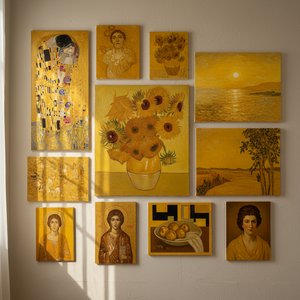
Golden Hues: Top 10 Paintings Dominated by Yellow Ochre |
Explore 10 iconic paintings bathed in golden yellow ochre! From Van Gogh's sunflowers to Monet’s haystacks, discover the stories behind these masterpieces. Find museum-quality art reproductions & elevate your home decor on .

Blossoms of Time: A Historical & Aesthetic Exploration of Floral Painting Across Cultures
Explore the rich history of floral painting! Discover symbolism, techniques & masterpieces from Van Huysum to O'Keeffe. Expert insights for art lovers & collectors at TopImpressionists.

The Golden Hue: Exploring Symbolism & Emotion in Yellow Art
Explore the rich symbolism & emotional power of yellow in art history! From Van Gogh to Kandinsky, discover how artists used this vibrant hue. Expert analysis & high-quality reproductions at TopImpressionists.
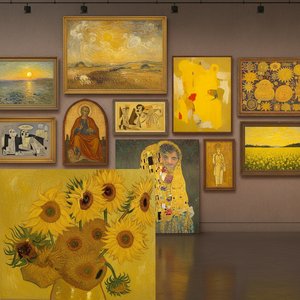
Golden Hues: 10 Masterpieces Dominated by Chrome Yellow | TopImpressionists
Immerse yourself in golden light! Explore 10 famous paintings dominated by 'Chrome Yellow', from Van Gogh’s Sunflowers to Monet's Haystacks. Discover the stories behind these iconic Impressionist & Post-Impressionist masterpieces and find museum-quality art reproductions at TopImpressionists.com.