

 設置イメージを表示
 シェアする
シェアする シェアする
シェアする
 詳細を見る
詳細を見る ガイドを表示

 ダウンロード
 似ている作品
 X線調査
X線調査 スライドショーを表示
 Q&A
Q&A 統計情報
統計情報A la gloire de Rubens


Explore 'A la gloire de Rubens' by Louis Beroud – a vibrant Baroque masterpiece inspired by Rubens! Capturing opulent revelry & sensual energy, this oil painting offers a glimpse into 19th-century Parisian art.
 詳細を表示
詳細を表示
ルイ・ベルード(1852-1930)をご紹介。ルーヴル美術館やオペラ・ガルニエなど、パリのインテリアや名所を細部まで緻密に描いたことで知られるフランスの画家です。
ジークレー/アートプリント
スピーディーな制作と多彩な仕上げオプションが魅力の、ミュージアムクオリティなジークレー・キャンバスプリント。 ( 手描き複製画を注文する デジタル画像販売へ切り替え)




P118B ¥10

P118H ¥10

P118W ¥10

P438Z ¥10

P508JH ¥12

P508YH ¥12

P805H ¥10

P805Z ¥10

P919BZ ¥10

P919G ¥10

P919XJ ¥10

P959ZH ¥10

P968JZ ¥12

W106C ¥8

W218G ¥10

W218JH ¥8

W218Y ¥10

W307PJ ¥10

W316G ¥10

W316PJ ¥8

W316Y ¥10

W398PJ ¥8

W4111J ¥10

W500HY ¥15

W500JH ¥15

W692G ¥12

W849H ¥8

W940BG ¥15

W953PJ ¥8




標準サイズ
オーダーメイド
CM
INCH
作品のオリジナル比率に合わせた、当店の規定サイズからお選びください。
Loading sizes...

横幅
高さ
額縁や壁のスペースに合わせて、ご希望の幅と高さを入力してください。プリントはカットすることは可能ですが、元の画像より大きくすることはできないため、異なる比率のサイズを選択された場合は、画像の一部が欠けることになります。印刷を開始する前に、内容を確認していただくためのデジタルモックアップをお送りいたします。このページに表示されている画像は、実際のカット後の状態を示すものではありません。実際の仕上がりはモックアップにてご確認ください。


 ガラスオプションは、110cm未満のサイズでのみご利用いただけます。

A la gloire de Rubens
ジークレー/アートプリント
複製画サイズ一覧
-


合計金額
¥ 11062
À la gloire de Rubens – A Celebration of Baroque Grandeur
Louis Béroud’s “À la gloire de Rubens” is more than just a depiction of a painting; it's an embodiment of the artistic spirit of its time—the fervent embrace of academic tradition alongside a keen observation of modern life that characterized Parisian art in the early 20th century. Painted in 1905, this monumental canvas captures the atmosphere of the Louvre Museum during a period marked by significant cultural renewal and intellectual curiosity. The artwork’s subject matter is deceptively simple: a young woman diligently sketching “The Coronation” by Peter Paul Rubens from his celebrated Marie de Medici cycle—a masterpiece that embodies the Baroque ideal of dramatic grandeur and emotional intensity.- Composition & Style: Béroud adheres to the stylistic conventions of the École de Beaux-Arts, prioritizing clarity of form and meticulous detail. The scene unfolds within a richly ornamented interior space reminiscent of Rubens’s own studio, emphasizing architectural perspective and creating a sense of spatial depth. However, unlike Rubens's canvases which aim for idealized beauty, Béroud presents a realistic portrayal of artistic practice—a testament to the artist’s commitment to capturing the essence of his subject matter.
- Technique: Employing oil paint on canvas with visible brushstrokes, Béroud utilizes impasto – thick application of pigment – particularly noticeable in areas depicting drapery and skin tones. This technique lends texture and luminosity to the painting, mirroring the dramatic chiaroscuro employed by Rubens himself. The artist’s careful attention to light and shadow contributes significantly to the overall theatrical quality of the composition.
- Historical Context: Béroud's work emerged during a period of artistic debate following Impressionism’s dominance. Artists like Béroud sought to reaffirm classical principles while acknowledging the influence of contemporary life—a dynamic tension that reflects broader cultural shifts occurring in France at the time. The painting’s inclusion within the Louvre’s collection underscores its significance as an exemplar of academic art and a celebration of Rubens's legacy.
- Symbolism: The central figure, sketching “The Coronation,” symbolizes the dedication to artistic craft and the pursuit of excellence—values deeply ingrained in the Beaux-Arts tradition. The inclusion of Rubens’s monumental painting serves as a visual reminder of the Baroque aesthetic’s ambition to inspire awe and convey profound emotion.
- Emotional Impact: “À la gloire de Rubens” evokes a feeling of reverence for artistic heritage combined with an appreciation for meticulous observation. It invites viewers to contemplate the role of art in capturing beauty, conveying emotion, and preserving cultural memory—themes that resonate powerfully across generations.
Detailed Description & Artistic Considerations
The painting’s palette is dominated by muted earth tones – ochre, umber, Sienna – reflecting the subdued lighting of the Louvre’s galleries. Béroud skillfully renders textures with remarkable precision, capturing the folds of fabric and the subtle nuances of skin tone. The artist's meticulous brushwork contributes to a palpable sense of movement—suggesting the dynamism inherent in artistic creation itself. Careful attention is paid to architectural elements – moldings, arches – reinforcing the spatial illusion and enhancing the grandeur of the setting. Béroud’s masterful technique elevates the depiction beyond mere representation, transforming it into an evocative meditation on art history and artistic practice.Provenance & Acquisition
“À la gloire de Rubens” entered the Louvre's collection in 1993 as a bequest from Micheline Héblot (1930-1990), honoring her parents’ memory. The painting was originally exhibited at the Salon of Société des Artistes français in 1905 and subsequently reproduced as prints during that era. Its inclusion in Musée Carnavalet's permanent collection provides invaluable insight into Parisian artistic culture at the turn of the century.Further Research & Artistic Influences
Louis Béroud’s artistic trajectory was profoundly shaped by his training at the École Supérieure des Beaux-Arts, where he absorbed the precepts of classical art and technique. His unwavering devotion to realism combined with an artist's sensitivity distinguishes him as a pivotal figure in late 19th-century French painting—a legacy that continues to inspire artists today. References: Musée Carnavalet; Louvre éditions / Somogy, 2008, p. 149, coul. n°178; Bresc-Bautier, Geneviève ; Foucart, Jacques, « Le tableau du mois n° 9 : trois nouveaux tableaux pour l’histoire du Louvre : Louis Béroud, Henri Coroënne », Tableau du mois, 9, du 7 septembre au 3 octobre 1994, 1994, 1-4, p. 1-4, n&b, p. 1, B; Musée du Louvre, Département des Peintures; Bresc-Bautier, Geneviève ; Foucart, Jacques, « Le tableau du mois n° 9 : trois nouveaux tableaux pour l’histoire du Louvre : Louis Béroud, Henri Coroënne », Tableau du mois, 9, du 7 septembre au 3 octobre 1994, 1994, 1-4, p. 1-4, n&b, p. 1, B; Musée Carnavalet; Louvre éditions / Somogy, 2008, p. 149, coul. n°178; Musée du Louvre, Département des Peintures; Bresc-Bautier, Geneviève ; Foucart, Jacques, « Le tableau du mois n° 9 : trois nouveaux tableaux pour l’histoire du Louvre : Louis Béroud, Henri Coroënne », Tableau du mois, 9, du 7 septembre au 3 octobre 1994, 1994, 1-4, p. 1-4, n&b, p. 1, B; Musée Carnavalet; Louvre éditions / Somogy, 2008, p. 149, coul. n°178Q&A
ルイ・ベルード作「A la gloire de Rubens」 に近い雰囲気の作品を探すには?
「A la gloire de Rubens」に似た作品は、こちらの関連作品ページでご覧いただけます。
「A la gloire de Rubens」の色味は、どの程度鮮やかですか?
ルイ・ベルード作「A la gloire de Rubens」の色調は、Balanced Softの彩度とBalancedの強さを備えています。
ルイ・ベルード作「A la gloire de Rubens」には何が描かれていますか?
ルイ・ベルード作「A la gloire de Rubens」の描画内容:mythological feast, nude figures, baroque revelry, sensual celebration, opulent interior, venus mythology, dynamic composition
作家プロフィール
ルイ・ベルー:時代精神を捉えたパリの先見者
ルイ・ベルー(1852-1930)は、19世紀後半から20世紀初頭にかけてのフランス美術界において、極めて重要な地位を占める画家です。彼はパリの室内空間や、ルーヴル美術館、オペラ・ガルニエといった象徴的な建造物を、驚くほど緻密に描き出したことで知られています。フランスのリヨンに生まれたベルーの芸術的歩みは、印象派の影響が徐々に衰えゆく時代のうねりの中で展開されました。彼はアカデミズムの伝統を確固たるものとしつつも、同時に近代生活の機微を繊석に捉える視点を併せ持っていました。彼のキャンバスには、壮麗な美、細部へのこだわり、そして心理的な観察眼に満ちた世界が広がっています。それは、リアリズムへの揺るぎない献身と、芸術家としての繊細な感性が融合した、まさに至高の証といえるでしょう。- 初期の生涯と芸術的修練: ベルーはパリのエコール・デ・ボザール(国立高等美術学校)で最初の芸術教育を受けました。そこでは、構図や技法の古典的な原則を重んじる影響力のある師たちの指導のもと、その腕を磨きました。この形成期において、彼は伝統に対する深い敬意を学ぶと同時に、多様な主題や様式を探求しようとする旺盛な探究心を養うこととなったのです。
- 代表作と芸術様式: ベルーの作品群は、ルーヴルやオペラ・ガルニエを描いた記念碑的な建築画から、パリの生活の本質を捉えた親密な肖像画に至るまで、驚くほど幅広い主題を網羅しています。彼の絵画の特徴は、細部への執拗なまでのこだわり、光と影の見事な操り、そして比類なき正確さで空気感を伝える能力にあります。アカデミックなリアリズムに表現力豊かな筆致を巧みに融合させることで、知的な厳格さと感情的な深みの両方を湛えたイメージを生み出しました。
ルーヴルの事件:シュールレアリスム的なユーモアの瞬間
ベルーの名が最も永く記憶に刻まれている理由の一つは、1911年8月のルーヴル美術館訪問中に起きた、忘れがたいエピソードにあるかもしれません。美術館の創立100周年を記念する作品のインスピレーションを求めて訪れたベルーは、スケッチのために「モナ・リザ」に向き合おうとした際、レオナルド・ダ・ヴァンチのあの象徴的な肖像画が姿を消していることに気づきました。そこには、かつて絵画が掛けられていた壁に、残された4つの鉄の釘があるばかりでした。この奇妙な状況は、名画盗難事件の捜査を引き起こし、パリの世論を熱狂させました。この事件は、芸術的真正性をめぐる不安や、由緒ある機関へと侵入する近代性の象徴となったのです。- 美術館からの依頼と芸術的評価: ベルーの画家としての名声は、ルーヴル美術館をはじめとする著名な文化機関からの数多くの依頼によって、大きなものとなりました。これらのプロジェクトを通じて、彼はその才能を壮大なスケールで披露する機会を得て、当時のフランスを代表する芸術家の一人としての地位を確固たるものにしました。
- 影響と遺産: 緻密なリアリズムと心理的洞察を特徴とするベルーの芸術様式は、その後の世代の画家たち、特に都市生活の複雑さを捉えようとした画家たちに影響を与えました。彼の作品は、その技術的な輝きと、ベル・エポック期のパリ社会を想起させる情緒豊かな描写によって、今なお称賛され続けており、フランス美術史における極めて重要な人物としての遺産を刻んでいます。
パリの空間を探求する:壮大なホールから静かな片隅まで
ベルーの芸術的焦点は、記念碑的な建造物から日常的な住空間に至るまで、パリの環境を緻密に記録することにありました。彼はオペラ・ガルニエやルーヴルのような建築空間の壮大さを、息を呑むような精度で捉えました。そこには、当時のアカデミックな画家たちが好んだ技法が反映されています。それと同時に、親密な肖像画や、日常の営みにふけるパリ市民を描いた情景を通じて、日常生活の機微をも探求しました。これらのキャンバスは、急速な工業化、芸術的革新、そして近代性への高まる憧憬によって特徴づけられる「ベル・エポック」という時代の、社会的・文化的風景を知るための貴重な窓となっているのです。主要な絵画と美術館での展示
ベルーの最も名高い作品の中には、「ニースのガレ駅通り」や「1889年万国博覧会機械館中央ドーム」などがあり、これらは彼がいかに時代の精神を捉えようとしたかを象徴しています。彼の作品は、ルーヴル美術館やセントルイス美術館をはじめ、フランス各地の権威ある美術館に収蔵されており、その芸術的価値と歴史的重要性を携えて、今もなお観る者の心を揺さぶり続けています。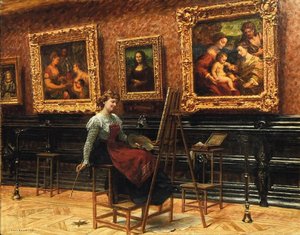
ルイ・ベルード
1852 - 1930 , フランス
プロフィール概要
- Artistic Movement Or Style: アカデミック・リアリズム
- Artists Or Movements Influenced By This Artist: ['アール・デコ']
- Artists Who Influenced This Artist: ['ギュスターヴ・モロー']
- Date Of Birth: 1852年 フランス、リヨン
- Date Of Death: 1930年
- Full Name: ルイ・ベルード
- Nationality: フランス
- Notable Artworks:
- ニースのガレ駅通り
- 1889年万国博覧会機械館中央ドーム
- シュリヒティング男爵の書斎
- Place Of Birth: フランス、リヨン
関連記事

Drama and Light: Discover the Captivating Grandeur of Baroque Art
Immerse yourself in the dramatic splendor of Baroque art. Explore the profound impact of light, shadow, and the Counter-Reformation through an expert historical lens, celebrating the masters who defined an era of unparalleled grandeur and emotional intensity.

The Drama of Light: Capturing the Grandeur and Emotional Intensity of Baroque Art
Explore the breathtaking drama of Baroque art. Discover how masters like Rubens and Caravaggio used chiaroscuro to evoke profound emotion, faith, and grandeur through the masterful interplay of light and shadow in this expert art history guide.

Drama in Nature: The Captivating Grandeur of Baroque Landscapes and the Art of Emotional Spectacle
Explore the breathtaking drama of Baroque landscapes. From Rubens's grand vistas to the mastery of chiaroscuro, discover how 17th-century artists transformed nature into a theatrical stage of emotion and light. A deep dive for true art enthusiasts.