
 Graphite PencilContemporary Realism
 1940Modern
 18.0 x 29.0 cm
 Leo Baeck Institute
迅速な制作と多彩な仕上げオプションを備えた、ミュージアムクオリティのジークレーまたはキャンバスプリント。 ( 手描きの絵画を購入 画像を購入)





























作品のオリジナル比率に合わせた、当店の規定サイズからお選びください。

特定のフレームやスペースに合わせて、ご自身でサイズを指定することも可能です。選択されたサイズが元の画像の比率と一致しない場合、作品をトリミングするか、鏡面反射または単色での塗りつぶしによって画像を拡張いたします。制作を開始する前に、ご確認用のデジタルモックアップをお送りいたします。
画面上のプレビューには、実際のトリミングや拡張は反映されませんのでご注意ください。最終的な構図を正確に確認できるのは、モックアップのみとなります。
カスタムサイズも承っておりますが、元の比率を維持するためには、あらかじめ用意されたリストからサイズを選択することをお勧めいたします。

Nude
複製画のサイズ
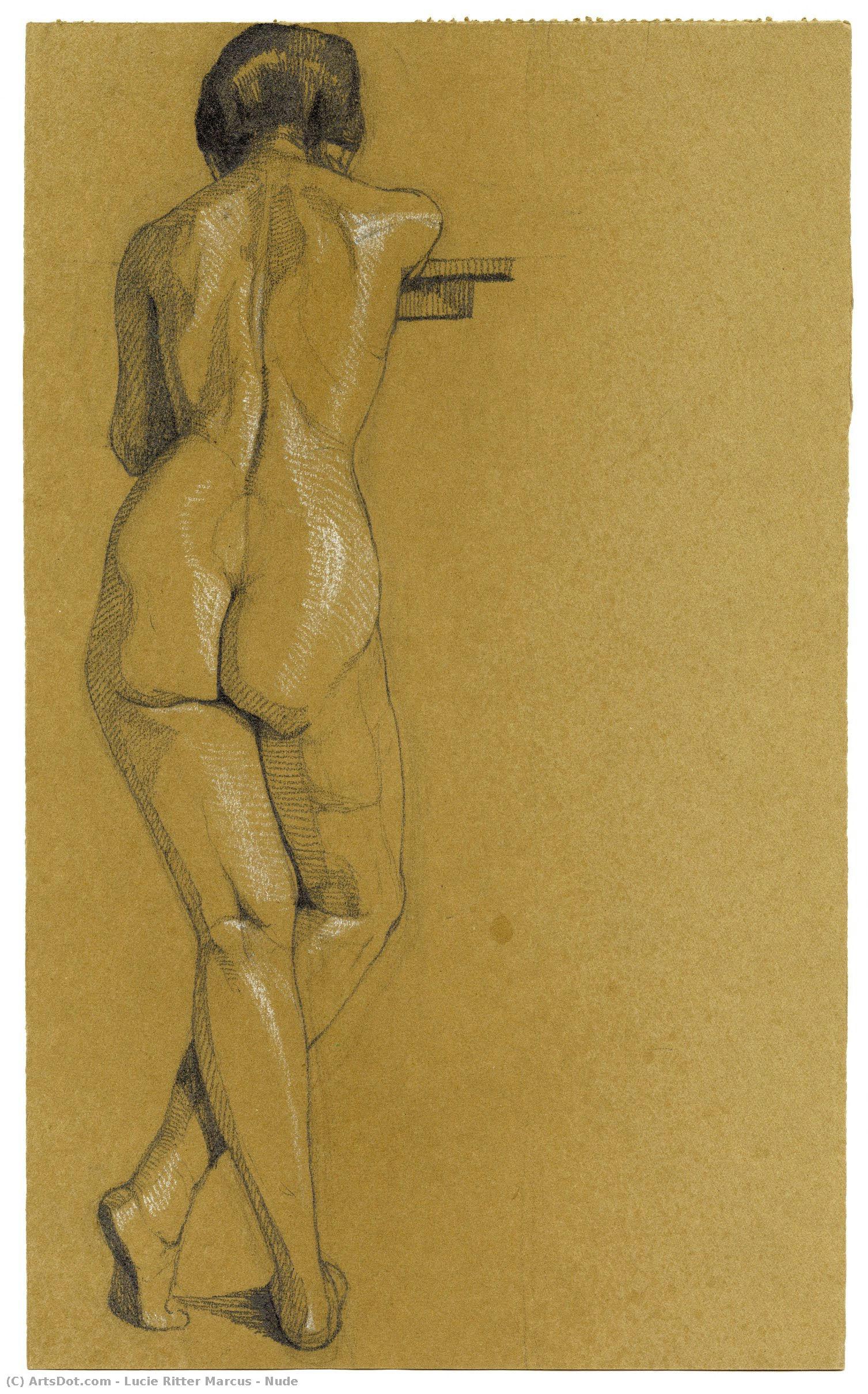
In the quiet intimacy of her 1940 graphite study, Lucie Ritter Marcus captures more than just the physical contours of the human body; she captures a moment of profound stillness. This exquisite nude, rendered with the precision of an academic master, presents a female figure in profile, her form emerging from the textured, aged surface of the paper like a memory surfacing from the past. The composition is a masterful exercise in balance, centering on the graceful arc of the back and torso, while the extended limbs guide the viewer's eye through a rhythmic dance of light and shadow. There is an inherent vulnerability in the subject's pose, yet it is anchored by a sense of monumental strength, achieved through the artist's expert command over anatomical accuracy.
The technique employed here is a testament to the enduring power of traditional drawing. Using primarily dark grey-black graphite, Marcus utilizes meticulous layering and delicate cross-hatching to build volume and depth. Each stroke serves a purpose, defining the subtle musculature and the soft undulations of the skin. The lighting, appearing to descend from above and slightly to the left, creates a chiaroscuro effect that breathes life into the two-dimensional plane. This interplay of light and shadow does not merely describe shape; it imbues the figure with a tactile quality, making the viewer almost sense the warmth of the skin and the coolness of the shadows. The rough, uneven texture of the paper itself acts as a collaborator in the piece, adding an organic, weathered character that suggests a timelessness transcending its mid-century origins.
To understand this work, one must look toward the historical context of the artist herself. Born in Breslau in 1897, Lucie Ritter Marcus lived through an era of immense transformation and upheaval. Her marriage to Ernst Marcus, a German-Jewish lawyer, deeply influenced her artistic trajectory, weaving threads of personal intimacy into her professional output. This particular drawing, dated 1940, carries the weight of that era—a period where the pursuit of beauty and the study of the human form served as a sanctuary of classical truth amidst a changing world. Her ability to pivot between commercial illustrations and deeply personal, evocative nudes demonstrates a versatile spirit that sought to find the extraordinary within the ordinary.
For the discerning collector or interior designer, this reproduction offers much more than a mere decorative element; it provides a focal point of intellectual and emotional depth. The monochromatic palette and the understated elegance of the subject make it an incredibly versatile piece for sophisticated environments. Whether placed in a minimalist modern gallery setting or nestled within a classic study adorned with leather and wood, the artwork commands attention through its quietude. It invites contemplation, encouraging anyone who gazes upon it to pause and appreciate the delicate harmony between the fragility of the human condition and the enduring strength of artistic mastery.

1897 - 1967 , Germany

Explore the profound beauty of graphite art. From the alchemy of carbon to the emotional depth of monochrome landscapes, discover how master artists use the eloquent line to capture light and soul in timeless pencil drawings.

Explore the profound artistry of graphite drawing. Discover how masters use chiaroscuro, texture, and light to evoke deep emotion, bridging classical precision with Impressionist soul. A guide for true art lovers seeking technical mastery and historical depth.


最新の美術ニュース、限定オファー、そしてインテリアのアイデアをいち早くお届けします。
お客様のプロジェクトについてお聞かせください。当社の美術専門家が、お客様に合わせた3つのパーソナライズされた芸術提案をご提供いたします。
あなたにぴったりの3作品を無料で厳選いたします

 プレビュー
プレビュー
 シェアする
シェアする シェアする
シェアする
 詳細を見る
詳細を見る

 ダウンロード
 似ている作品
 X線調査
X線調査 スライドショー
 詳細を見る
詳細を見る









 ガラスオプションは、110cm未満のサイズでのみご利用いただけます。


