

 設置イメージを表示
 シェアする
シェアする シェアする
シェアする
 詳細を見る
詳細を見る ガイドを表示

 ダウンロード
 似ている作品
 X線調査
X線調査 スライドショーを表示
 Q&A
Q&A 統計情報
統計情報Solitude

- 102.0 x 169.0 cm


Marc Chagall's 'Solitude' (1933) captures Jewish resilience amidst rising anti-Semitism. This poignant painting, rich with symbolism and featuring a contemplative figure, embodies cultural identity and enduring spirit.
 詳細を表示
詳細を表示
シャガールは、夢幻的な色彩とユダヤの民話が織りなす独特の世界観で知られる20世紀を代表する芸術家。絵画、ステンドグラスなど多彩な作品が生み出し、モダニズム美術に大きな影響を与えました。
このページに掲載されている作品は著作権法によって保護されており、当社の許可なく同一の複製物を制作または販売することは法律で禁じられています。この保護は、以下のような国際条約に基づき執行されます。 ベルヌ条約 および、以下の条項に定められたものを含む各国の法律により、 米国著作権法 第17編。
この手法は、著作権で保護された作品の複製や複写を伴わないため、著作権法に完全に準拠しています。これは単なる模倣ではなく、創造的な再解釈です。元の作品からインスピレーションを受けつつも、それとは異なる、全く新しい絵画を生み出すものです。
ジークレー/アートプリント
スピーディーな制作と多彩な仕上げオプションが魅力の、ミュージアムクオリティなジークレー・キャンバスプリント。 ( 手描き複製画を注文する デジタル画像販売へ切り替え)




P118B ¥10

P118H ¥10

P118W ¥10

P438Z ¥10

P508JH ¥12

P508YH ¥12

P805H ¥10

P805Z ¥10

P919BZ ¥10

P919G ¥10

P919XJ ¥10

P959ZH ¥10

P968JZ ¥12

W106C ¥8

W218G ¥10

W218JH ¥8

W218Y ¥10

W307PJ ¥10

W316G ¥10

W316PJ ¥8

W316Y ¥10

W398PJ ¥8

W4111J ¥10

W500HY ¥15

W500JH ¥15

W692G ¥12

W849H ¥8

W940BG ¥15

W953PJ ¥8




標準サイズ
オーダーメイド
CM
INCH
作品のオリジナル比率に合わせた、当店の規定サイズからお選びください。
Loading sizes...

横幅
高さ
額縁や壁のスペースに合わせて、ご希望の幅と高さを入力してください。プリントはカットすることは可能ですが、元の画像より大きくすることはできないため、異なる比率のサイズを選択された場合は、画像の一部が欠けることになります。印刷を開始する前に、内容を確認していただくためのデジタルモックアップをお送りいたします。このページに表示されている画像は、実際のカット後の状態を示すものではありません。実際の仕上がりはモックアップにてご確認ください。


 ガラスオプションは、110cm未満のサイズでのみご利用いただけます。

Solitude
ジークレー/アートプリント
複製画サイズ一覧
-


合計金額
¥ 11080
The Poignant Echo of Isolation
Marc Chagall’s “Solitude,” painted in 1933, isn't merely a depiction of a man seated on the ground; it’s a profound meditation on Jewish identity, cultural displacement, and the weight of history. Housed within the Tel-Aviv Museum of Art, this work transcends its physical dimensions to become a powerful symbol of resilience in the face of rising anti-Semitism across Europe. The painting immediately draws the eye with its muted palette – a deliberate departure from Chagall’s often vibrant Fauvist style – creating an atmosphere of contemplative stillness that mirrors the man's internal state. The composition is strikingly simple, yet deeply resonant: a solitary figure enveloped in a long robe or cloak, his head bowed in what appears to be profound introspection. This posture speaks volumes about the burden he carries, a weight amplified by the surrounding elements.
- The Central Figure: The man’s slumped form and downward gaze immediately evoke feelings of sadness and isolation. His attire – a traditional Jewish prayer shawl – subtly anchors him within his cultural heritage while simultaneously highlighting his separation from the world around him.
- The Goat: A calm, resting goat positioned before the figure is a particularly intriguing element. It’s not simply an animal; it represents a connection to the land and tradition, a grounding force amidst the man's internal turmoil. The juxtaposition of the human figure and the animal creates a visual dialogue about the relationship between humanity and nature, faith and instinct.
- The Violin: A violin resting nearby hints at a past filled with music and joy – a memory now overshadowed by present sorrow. It’s a poignant reminder of what has been lost, adding another layer to the painting's emotional complexity.
Symbolism Woven into the Canvas
“Solitude” is rich in symbolic detail, each element carefully chosen to convey a deeper meaning within the context of 1930s Europe. The Torah scroll, prominently displayed, represents Jewish law and tradition – a source of both strength and potential conflict during this turbulent period. God’s messenger, depicted subtly in the background, suggests divine guidance amidst uncertainty. The historical rabbi or elder figure embodies the continuity of Jewish faith and wisdom, offering a sense of stability against the encroaching darkness. The setting itself—a blurred landscape with buildings receding into the distance—represents a world increasingly distant from the man’s personal experience.
Notably, Chagall satirically uses animalistic cultural objects to highlight the absurdity of those who believed Jews could not produce remarkable art – a pointed commentary on prejudice and misunderstanding.A Reflection of Troubled Times
Painted in 1933, “Solitude” is inextricably linked to the rising tide of anti-Semitism sweeping across Europe. The political climate was fraught with danger, as the Nazi party’s ideology gained traction, fueled by hatred and a desire for exclusion. Chagall, himself a Jewish artist living in a time of increasing persecution, channeled his anxieties and observations into this powerful work. His experiences witnessing discrimination firsthand – including the assault on a friend in Warsaw – undoubtedly informed the painting's somber tone. The backdrop of dark clouds suggests an impending storm, mirroring the turbulent times facing the Jewish community.
Legacy and Enduring Resonance
Despite facing criticism from conservative authorities who sought to control artistic expression, Chagall’s work continued to resonate with audiences. “Solitude” stands as a testament to the enduring spirit of Jewish culture—a poignant reminder of its resilience in the face of adversity. It's not simply a portrait of loneliness; it’s an exploration of identity, faith, and the human condition. Reproductions of this masterpiece offer a unique opportunity to engage with this emotionally charged artwork and contemplate its timeless themes. The painting invites viewers to consider their own experiences of isolation, reflection, and the importance of preserving cultural heritage in times of uncertainty.
Q&A
「Solitude」にはどのような主題があり、どのような雰囲気を感じさせますか?
マルク・シャガール作「Solitude」は、jewish culture, anti-semitism, solitude, biblical symbolism, rabbi, goat, violin, contemplationを描き出し、Calmな情緒を湛えています。主題と雰囲気が相まって、作品の物語を形作っています。
マルク・シャガール作「Solitude」の技法と制作年はいつですか?
「Solitude」は、1933年にAcrylic On Canvasで制作されました。
「Solitude」のFauvismには、どの国のルーツが反映されているのでしょうか?
Fauvismの作品「Solitude」は、ベラルーシ出身のアーティストによって制作されました。
作家プロフィール
夢と色彩の詩人:マルク・シャガールの生涯
マルク・シャガール。その名は、鮮やかな色彩と幻想的なイメージが瞬時に浮かび上がるでしょう。1887年、ベラルーシのヴィテブスク近郊リオーズネ村にモーシェ・シャガルとして生まれた彼は、20世紀を代表する芸術家の一人として、絵画を通して独自の詩の世界を創造しました。彼の作品は、幼少期に育まれたユダヤ教の伝統や民話、そして故郷ヴィテブスクへの深い愛情が色濃く反映されており、現実と夢、記憶と感情が織りなす独特の美学を確立しました。「私は絵を描き終えるとき、自然が作り出したものをそれに当てはめてみます—岩、花、木の枝、あるいは自分の手です。もしその絵が人間の手で作りえないものとならぶことができれば、その絵は本物です。もし二つが衝突すれば、それは悪い芸術です。」シャガール自身の言葉が示すように、彼の作品は、内なる感情と精神性を追求したものであり、単なる現実の模倣を超越した表現を試みたのです。ヴィテブスクとパリ:芸術的探求の旅
幼少期を故郷ヴィテブスクで過ごしたシャガールにとって、その町は単なる生まれ故郷以上の意味を持ちました。それは彼の芸術的な宇宙の中心であり、空中に浮かぶ人物や奇妙な動物たちが住む、記憶に彩られた風景でした。ロシア正教の教会と賑やかなユダヤ人市場が共存するヴィテブスクの多様な文化は、彼独自の美意識を育み、その後の彼の芸術的探求に大きな影響を与えました。サンクトペテルブルクで地元のサイン画家から絵画を学び、その後レオン・バクストの下で研鑽を積んだシャガールは、パリへと旅立ちます。そこで彼は、キュビスムや象徴主義といった当時の最先端の芸術運動に触発されながらも、自身の内なる世界と故郷への想いを融合させた独自のスタイルを確立していきます。初期作品である『私と村』(1911年)は、場所の描写を超え、自己、記憶、そして個人と共同体の関係を探求する試みとして、彼の芸術的才能を示唆しています。革命と流浪:苦難の中で開花する創造性
第一次世界大戦が勃発すると、シャガールは一時的にロシアに留まり、ヴィテブスクで芸術学校を設立するなど、文化的な活動に積極的に参加しました。しかし、ロシア革命後の混乱期には、政治的な抑圧と経済的な困難に直面し、その創造性は試練にさらされます。1923年、彼は再びパリへと旅立ち、国際的な評価を得るようになります。『ヴィテブスクの上空』(1920-1922年)は、故郷への想いが色濃く反映された作品であり、彼の芸術的成熟度を示しています。第二次世界大戦の勃発により、ナチス占領下のフランスからアメリカへと逃れ、7年間をニューヨークで過ごすことになります。この時期は、精神的な苦悩と芸術的な実験が交錯するものであり、『白い十字架』(1938年)に見られるように、彼の作品に深い悲しみと不安の色合いが加わりました。戦後、彼はフランスに戻り、生涯をかけて絵筆を握り続けました。遺産:色彩と夢の普遍的なメッセージ
晩年は、パリ歌劇場天井画(1964年)やエルサレムのハダッサ・ヘブライ大学医学部病院のシナゴーグステンドグラスなど、数々の重要なプロジェクトを完成させます。これらの大規模な作品は、彼の芸術的ビジョンを建築空間に具現化し、見る者を魅了する没入型の環境を作り出しました。シャガールの影響は、シュルレアリスムを含む後世の多くの芸術家に及んでいます。彼は、ヨーロッパの近代主義とユダヤ文化のアイデンティティを結びつけ、「20世紀における最も重要なユダヤ人芸術家」として称賛されています。彼の作品は、愛、記憶、そして人間の想像力の無限の可能性を祝福するものであり、世界中の観客に普遍的なメッセージを伝えています。ヴィースバイエルン州のニースにあるマルク・シャガール美術館は、彼の遺産を称え、彼の作品群を展示しています。彼の鮮やかな色彩と夢のようなイメージは、これからも人々の心に深く刻まれ続けるでしょう。
マルク・シャガール
1887 - 1985 , ベラルーシ
プロフィール概要
- フルネーム: マルク・シャガール
- 主な作品:
- 私と村
- 白十字架
- イェルサレムの窓
- 出生地: リヴォナ(ベラルーシ)
- 国籍: ロシア、フランス、ユダヤ系
- 影響を与えたアーティスト:
- パブロ・ピカソ
- ジョアン・ミロ
- 影響を受けたアーティスト:
- レオン・バクスト
- ロベルト・デラunay
- 死亡年月日: 1985年3月28日
- 生年月日: 1887年7月6日
- 芸術運動・スタイル: モダニズム、キュビスム、象徴主義
関連記事
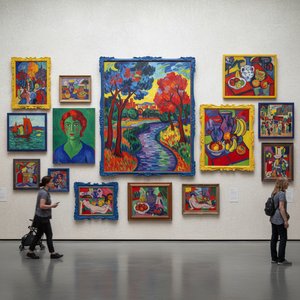
至福の色彩が彩る:フォーヴィズムを定義づけた10大名作
鮮烈な色彩が時代を席巻!フォーヴィズムを代表する10大名作を徹底解剖。マティスら巨匠の技と情熱に触れ、アートの新たな世界を発見。TopImpressionists.comで至高の美術館級レプリカと洗練されたインテリアアイデアを見つけよう。

Fauvism's Boldest Visions: 10 Masterpieces That Revolutionized Modern Art | TopImpressionists
Explore 10 Fauvist masterpieces by Matisse, Derain & Vlaminck that ignited Modern Art! Discover bold colors, expressionist landscapes & the history of this revolutionary movement. Find museum-quality prints at TopImpressionists.com.

The Raw Emotion of Color: Exploring Fauvism's Revolutionary Expression
Explore the revolutionary world of Fauvism! Discover the bold colors & expressive power of Matisse, Derain & Vlaminck. Learn about this pivotal art movement's history and lasting impact on modern painting.

The Wild Beast Within: Exploring Fauvism's Revolutionary Use of Color and Form
Explore the revolutionary Fauvism movement & Henri Matisse's bold use of color! Discover key characteristics, iconic artworks, and its lasting impact on modern art history with TopImpressionists.

Echoes of Isolation: Solitude in Western Art from Renaissance to Modernism
Explore the profound representation of solitude in Western art from the Renaissance to Modernism. Discover iconic paintings & artists like Goya, Friedrich, and Rossetti. Handmade oil reproductions available at TopImpressionists.
テーマ、スタイル、特徴別に分類された作品を探索しましょう。


