
 Oil On CanvasWallArtLate Medieval / Early Renaissance
 1490
1490 197.0 x 165.0 cm
 Chrysler Museum of Art




























作品のオリジナル比率に合わせた、当店の規定サイズからお選びください。

特定のフレームやスペースに合わせて、ご希望のサイズをご入力いただけます。選択されたサイズが元の画像の比率と異なる場合、アートワークをトリミングするか、手描きで要素を追加して絵画を拡張いたします。デジタルモックアップ を制作し、制作開始前にご確認(承認)をいただきます。
画面上のプレビューは、実際のトリミングや拡張を正確に反映しているものではありません。最終的な構図は、モックアップによってのみ正確にご確認いただけます。
カスタムサイズもご利用いただけますが、元の比率を維持するためには、あらかじめ用意されたリストからサイズを選択することをお勧めいたします。

Last Judgement
複製画のサイズ
Born in Bolzano, Italy, around 1460 – a time of burgeoning artistic innovation and religious fervor – Marx Reichlich emerged as a significant figure in late medieval Austrian painting. While details of his early life remain somewhat obscured by the passage of centuries, what is known paints a picture of a prolific artist deeply rooted in the traditions of tempera on wood, a technique favored for its durability and suitability for depicting intricate religious scenes.
Reichlich’s career unfolded primarily during the 15th and 16th centuries. He quickly established himself as a sought-after painter, commissioned by churches and religious institutions across Austria to create works that visually communicated profound spiritual narratives. His style is characterized by an impressive attention to detail, a masterful understanding of composition, and a remarkable ability to imbue his subjects with emotional weight – particularly evident in his depictions of biblical events and moral allegories.
Reichlich's artistic approach was firmly grounded in the conventions of his time. He predominantly employed tempera on wood, a medium that allowed for rich colors, subtle gradations, and a level of detail difficult to achieve with oil paints. This choice reflects not only technical proficiency but also a deep respect for established artistic practices. His works often feature vibrant hues—deep blues, reds, and golds—contrasting sharply against the darker tones of the wood panel, creating a dramatic visual impact.
A key element of Reichlich’s style is his ability to capture the essence of religious scenes with remarkable immediacy. He wasn't merely illustrating biblical stories; he was striving to evoke spiritual experience. His figures are often rendered with a sense of dynamism and movement, conveying not just what happened but *how* it felt – the awe of witnessing divine judgment, the reverence of an adoration scene, or the solemnity of a funeral procession.
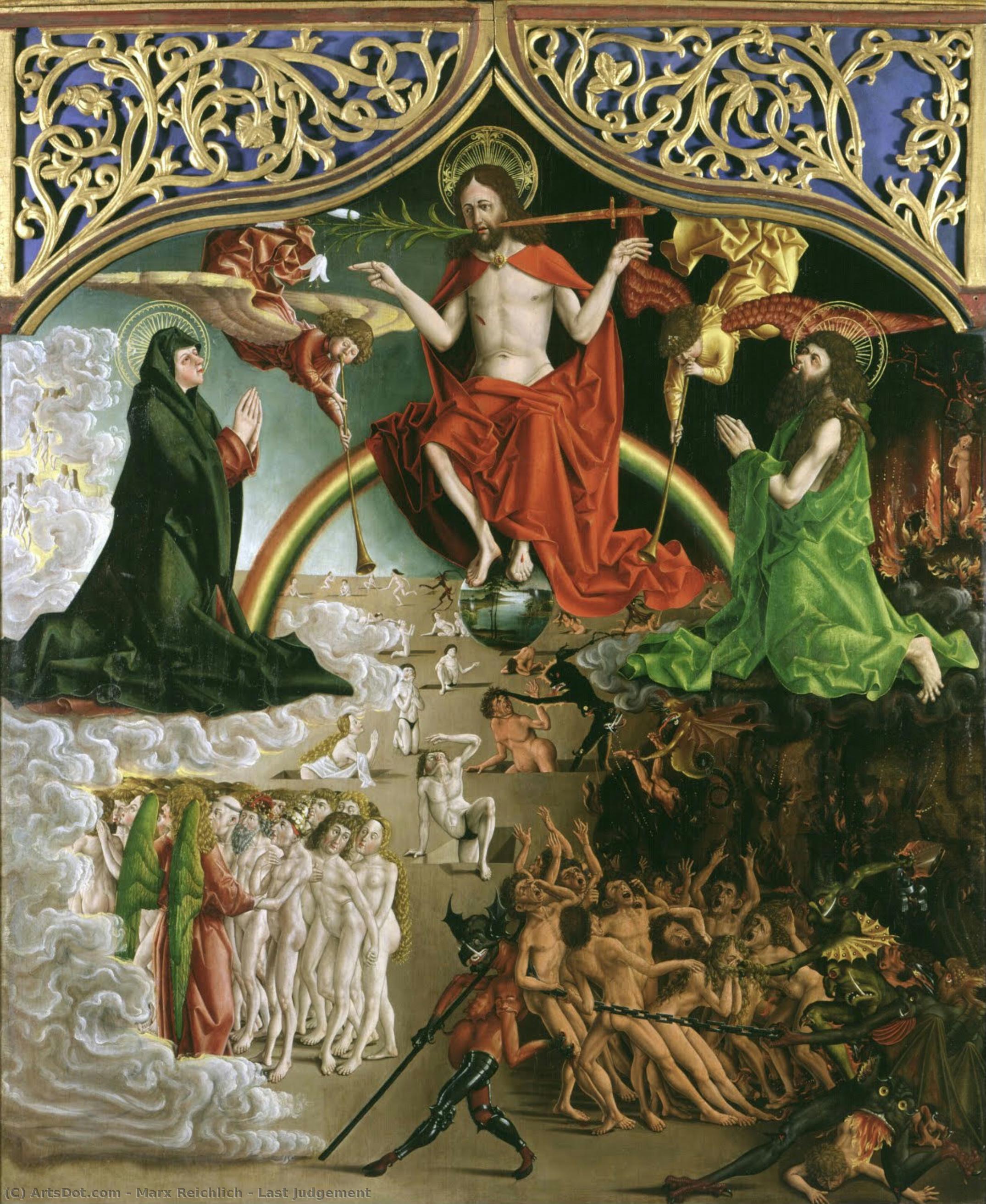
Among Reichlich’s most celebrated works are “The Last Judgement” (circa 1490) and “Adoration of the Magi.” The "Last Judgement," a monumental tempera panel measuring approximately 197 x 165 cm, is arguably his masterpiece. It's a visceral depiction of Christ’s judgment, brimming with symbolic imagery—cherubs, souls ascending to heaven, and demons dragging sinners into hell – designed to inspire both fear and hope. The painting powerfully conveys the medieval Christian understanding of divine justice and the consequences of earthly actions.
“Adoration of the Magi,” another significant work, showcases Reichlich’s skill in portraying a complex narrative with clarity and grace. The scene depicts the visit of the three wise men to the infant Jesus, rendered with meticulous detail and imbued with a sense of wonder and reverence. These works, along with others housed within the Kunsthistorisches Museum in Vienna, offer invaluable insights into the religious art of the period.
Marx Reichlich’s legacy extends beyond his individual creations. He represents a pivotal link between the late Gothic and early Renaissance artistic traditions in Austria. His works demonstrate a synthesis of established stylistic elements with emerging humanist concerns, reflecting the evolving cultural landscape of the 15th and 16th centuries.
His paintings continue to be studied and admired for their technical brilliance, emotional depth, and profound spiritual resonance. The Kunsthistorisches Museum in Vienna holds an extensive collection of Reichlich’s works, ensuring that his art remains accessible to scholars and the public alike. Furthermore, his influence can be seen in subsequent generations of Austrian artists who followed in his footsteps.

1460 - 1520 , Italy

Discover the enchanting alchemy of Impressionism. Explore how the mastery of oil on canvas, through glazing and impasto, captures eternal light and emotion. Perfect for lovers of Monet and Van Gogh seeking the profound depth of hand-painted fine art.

Embark on a soulful journey through High Medieval art. Explore the divine light of Gothic cathedrals, Byzantine splendor, and sacred masterpieces that shaped Western history with our expert-led cultural reflections.

Explore the profound beauty of divine judgment in art history. From sacred iconography to the sublime light of Impressionism, discover how masters capture the eternal. Expert insights for the discerning collector seeking depth and spiritual resonance in fine art.


最新の美術ニュース、限定オファー、そしてインテリアのアイデアをいち早くお届けします。
お客様のプロジェクトについてお聞かせください。当社の美術専門家が、お客様に合わせた3つのパーソナライズされた芸術提案をご提供いたします。
あなたにぴったりの3作品を無料で厳選いたします

 プレビュー
プレビュー
 プリントを購入
 シェアする
シェアする シェアする
シェアする
 詳細を見る
詳細を見る

 ダウンロード
 似ている作品
 X線調査
X線調査 スライドショー
 詳細を見る
詳細を見る









 ガラスオプションは、110cm未満のサイズでのみご利用いただけます。


