作品詳細説明
A Window into the Unconscious: Max Ernst’s Surreal Vision (1924)
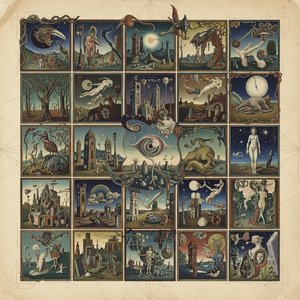
This captivating work by Max Ernst, created in 1924, is a prime example of his early explorations within Surrealism – a movement dedicated to unlocking the power of the unconscious mind. Measuring 81 x 65 cm, this piece draws the viewer into an intimate and enigmatic scene dominated by intensely focused eyes gazing upwards towards a floating scroll and celestial forms.
Subject & Composition: Eyes to the Heavens
The composition is strikingly centered around a pair of human eyes, rendered with remarkable detail and immediacy. Above them, suspended as if by unseen forces, is a large, rolled parchment scroll – a symbol often associated with knowledge, secrets, or destiny. Three circular shapes, evocative of moons or planets, partially obscure the scroll, adding to the dreamlike quality. The background, textured with a mottled green pattern suggestive of foliage or bark, grounds the fantastical elements in an organic setting. Ernst masterfully employs verticality, emphasizing the upward gaze and creating a sense of aspiration or revelation.
Style & Technique: Dada’s Legacy & Surrealist Innovation
Ernst's style here is deeply rooted in both Dadaism – with its rejection of logic and embrace of absurdity – and the burgeoning Surrealist movement. While not explicitly employing techniques like frottage (a method he later became famous for), this work shares a similar spirit of exploring chance and subconscious imagery. The technique appears to be watercolor or gouache on paper, evidenced by the delicate blending of colors and layered washes. This choice lends a softness and ethereality to the scene, enhancing its dreamlike quality. The rough texture of the paper itself contributes to the handmade feel, reminding us of the artist’s direct involvement in the creative process.
Symbolism & Interpretation: Unraveling the Mysteries
The symbolism within this piece is rich and open to interpretation. The eyes, often considered windows to the soul, suggest introspection and a search for inner truth. The scroll represents accumulated knowledge or perhaps a hidden narrative waiting to be deciphered. The celestial bodies introduce themes of fate, destiny, and the vastness of the unknown. Considering Ernst’s broader body of work – including pieces like “The Entire City” which blends realistic and fantastical elements – it's plausible this artwork explores humanity’s relationship with knowledge, the subconscious, and the mysteries of existence.
Historical Context: A Post-War World & Artistic Rebellion
Created in the aftermath of World War I, a period marked by disillusionment and societal upheaval, Ernst’s work reflects a profound questioning of traditional values. Dadaism and Surrealism emerged as artistic responses to the horrors of war, seeking new ways to express the anxieties and uncertainties of the modern world. Ernst, having served in the German army during the war, channeled his experiences into art that challenged conventional norms and explored the irrational depths of the human psyche.
Emotional Impact & Aesthetic Appeal
This artwork evokes a sense of mystery, contemplation, and perhaps even unease. The intense focus of the eyes draws the viewer in, creating an intimate connection with the subject matter. The surreal juxtaposition of elements – the realistic eyes against the fantastical scroll and celestial bodies – generates a captivating tension that lingers long after viewing. Its muted color palette and delicate technique create a calming yet thought-provoking atmosphere, making it a compelling addition to any art collection or interior space. This piece would be particularly striking in a study, library, or living room where its enigmatic quality can inspire reflection and conversation.