


 設置イメージを確認
 送る
送る シェア
シェア
 詳細情報
詳細情報 ガイドを表示

 画像をダウンロード
 似ている作品
 X線調査
X線調査 スライドショー
 統計情報
統計情報GOULPHER

Henry Moret’s "GOULPHER" captures a serene Breton coastline in Impressionistic brushstrokes. Explore this evocative landscape painting of light, texture & nature's beauty.
Henry Moret (1856-1913) was a French Impressionist painter associated with Paul Gauguin's Pont-Aven circle. Known for richly colored landscapes of Brittany, his work evolved from Symbolism to pure Impressionism, capturing light & nature with unique s
 続きを読む
続きを読む
手描き油彩複製画
当社のアーティストが、お客様のご希望のサイズと額縁に合わせて、キャンバスに手描きで制作する油彩画です。 ( プリント版に切り替え デジタル画像販売へ切り替え)




































標準サイズ
カスタムサイズ
CM
INCH
作品のオリジナル比率に合わせた、当店の規定サイズからお選びください。
Loading sizes...

横幅
高さ
フレームや壁のスペースに合わせて、ご希望の幅と高さを入力してください。本作品は手描きのため、異なる比率のサイズをご希望の場合、絵画の周囲を少し広げて描くか、あるいは端を少しカットして調整することが可能です。お客様のご要望に合わせます。制作を開始する前に、仕上がりを確認するためのデジタルモックアップをお送りいたします。このページに表示されている画像は完成品の実物ではなく、あくまでモックアップによるイメージです。
カスタマイズの例:顔をお客様の写真に置き換える、ペットを追加する(例:猫を犬に変更)、背景に隠れたメッセージを入れる、背景の風景や要素を変更するなど。
ご注文後、TopImpressionists.com チームより詳細な指示をお送りするとともに、仕上がりイメージ(モックアップ)をご提供いたします。
ご注文後、TopImpressionists.com チームより詳細な指示をお送りするとともに、仕上がりイメージ(モックアップ)をご提供いたします。


 ガラスオプションは、110cm未満のサイズでのみご利用いただけます。

GOULPHER
再現技法
複製画サイズ一覧
-


合計金額
¥ 42687
関連作品


アーティストについて
Henry Moret: A Breton Vision of Light and Symbol
The world of late 19th-century French art was a vibrant, shifting landscape, fueled by the burgeoning Impressionist movement yet yearning for something beyond mere optical representation. Within this dynamic scene emerged Henry Moret (1856-1913), a Breton painter whose work stands as a compelling synthesis of Symbolism, Impressionism, and a deeply rooted connection to his native coastal landscapes. Moret wasn’t merely depicting the Breton coast; he was translating its essence—its light, its moods, its ancient spirit—onto canvas with an intensity rarely matched by his contemporaries.
Born in Cherbourg, Normandy, Moret's early life remained somewhat shrouded in obscurity until he enlisted in the French army at the age of 19. It was during his military service in Lorient that a commanding officer, Jules La Villette, recognized his artistic talent and introduced him to Ernest Corroller, a drawing teacher and marine painter who provided Moret with foundational training in landscape techniques—drawing heavily from the masters of Corot and Courbet. This early instruction proved crucial, allowing Moret to enroll at the École des Beaux-Arts in Paris in 1876, where he studied under influential figures like Rudolf Lehmann, Jean-Léon Gérôme, and later, the history painter Jean-Paul Laurens. His initial studies reflected a more classical approach, but it was his relocation to Pont-Aven in 1888 that truly ignited his artistic trajectory.
The Pont-Aven Circle and the Rise of Symbolism
Pont-Aven, a small village nestled in Brittany’s Finistère department, became a magnet for artists seeking refuge from the constraints of Parisian art circles. It was here that Moret encountered Paul Gauguin, whose presence profoundly impacted his artistic development. The Pont-Aven Circle—comprising figures like Gauguin, Émile Jourdan, Charles Laval, and Ernest de Chamaillard—fostered an environment of experimentation and a shared desire to move beyond purely representational art. Moret’s work began to exhibit the hallmarks of Symbolism – a focus on subjective experience, emotional resonance, and the use of evocative color and form to convey deeper meanings. Unlike Gauguin's often overtly symbolic imagery, Moret’s symbolism was more subtly integrated into his landscapes, reflecting the spiritual and mythical associations inherent in Breton folklore and the dramatic interplay of light and shadow along the coast.
The move to Le Pouldu, a nearby village that quickly became the epicenter of the Pont-Aven artistic community, further solidified Moret’s connection to this influential group. He embraced the techniques championed by Gauguin – broken brushstrokes, vibrant color palettes, and an emphasis on capturing the fleeting effects of light—while simultaneously developing his own distinct style. His paintings during this period are characterized by a remarkable sensitivity to atmosphere, with a particular fascination for the dramatic sunsets and stormy seas that defined the Breton coastline.
A Distinctive Style: Impressionism Infused with Breton Soul
Moret’s artistic evolution can be traced through distinct phases. Initially influenced by classical techniques, he gradually absorbed the principles of Impressionism, adopting a looser brushstroke and prioritizing the depiction of light and color. However, it was his prolonged exposure to the Pont-Aven Circle and, particularly, Gauguin's influence that led him to incorporate Symbolist elements into his work. He moved away from the rigid structures of academic painting, embracing a more intuitive approach to composition and color. His palette became increasingly rich and luminous, reflecting the vibrant hues of the Breton landscape—the deep blues and greens of the sea, the fiery oranges and reds of the sunsets, and the earthy tones of the coastal cliffs.
Crucially, Moret’s work wasn't simply a transposition of Impressionistic techniques to a new subject matter. He imbued his landscapes with a sense of place—a palpable feeling for the rugged beauty and ancient spirit of Brittany. His paintings are not merely scenic views; they are windows into a world steeped in myth, legend, and the rhythms of nature. He skillfully captured the interplay of light and shadow, creating an atmosphere of both serenity and drama.
Legacy and Recognition
Following Paul Gauguin’s departure from Pont-Aven in 1891, Moret continued to develop his own unique style, refining his technique and exploring new themes. He established a fruitful partnership with Paul Durand-Ruel, a prominent art dealer who championed the work of many Impressionist and Post-Impressionist artists. Through Durand-Ruel’s network, Moret's paintings gained recognition in Paris, London, and New York, attracting a growing clientele. He exhibited his works at prestigious venues such as the Salon des Indépendants and continued to produce over 600 paintings throughout his career.
Henry Moret’s contribution to French art lies not only in his technical skill but also in his ability to capture the essence of a specific place—the wild, evocative beauty of Brittany. His work remains a testament to the power of landscape painting to evoke emotion and convey deeper meanings, solidifying his position as a significant figure within both the Impressionist and Symbolist movements.

Moret Henry
1856 - 1913
アーティスト情報
- Full Name: Henry Moret
- Nationality: French
- Date Of Birth: 1856
- Date Of Death: 1913
- Place Of Birth: Cherbourg, France
- Notable Artworks:
- La plage de Locqueltas à marée basse
- The Dunes of Tregune
- Artistic Movement Or Style: Impressionism, Symbolism
- Artists Who Influenced This Artist:
- Corot
- Courbet
- Gauguin
- Artists Or Movements Influenced By This Artist: ['Pont-Aven School']
関連記事

Whispers of Rural Serenity: A Journey Through the Enchanting Village Landscapes of Impressionism
Immerse yourself in the tranquil beauty of Impressionist village landscapes. Explore our exquisite collection of hand-painted oil reproductions, capturing the light and soul of masters like Monet and Pissarro. Bring a piece of art history into your home with TopImpressionists.com.

The Beauty of Impermanence: Capturing Decay through Impressionist Eyes
Explore the profound beauty of impermanence through Impressionist and Post-Impressionist eyes. Discover how masters like Monet and Van Gogh captured fleeting light and the poetic essence of nature's transitions in our deep dive into art history and emotional landscapes.

Capturing the Soul: The Most Emotionally Moving Impressionist and Post-Impressionist Masterpieces
Discover the profound emotional depth of Impressionist and Post-Impressionist masterpieces. Explore how legends like Monet, Van Gogh, and Gauguin captured light and soul through evocative landscapes and vibrant brushwork for a timeless connection to art history.
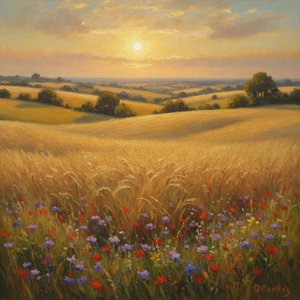
Golden Fields & Sun-Drenched Meadows: Capturing the Soul of Impressionist Landscapes
Immerse yourself in the luminous world of Impressionist landscapes. Discover how masters like Monet and Gauguin captured ephemeral light through plein air painting, and learn to bring the soul of sun-drenched meadows into your home with exquisite, hand-painted oil reproductions.

Beyond the Light: Capturing Raw Emotion and Subjective Vision in Post-Impressionist Landscapes
Explore the profound emotional depth of Post-Impressionist landscapes. Discover how masters like Van Gogh moved beyond light to capture raw human feeling through vibrant color and expressive texture in this expert art history retrospective.