


 設置イメージを確認
 送る
送る シェア
シェア
 詳細情報
詳細情報 ガイドを表示

 画像をダウンロード
 似ている作品
 X線調査
X線調査 スライドショー
 統計情報
統計情報Gethsemane
 Oil On Board
- Neo-Romanticism
 1926
1926- Modern
 42.0 x 32.0 cm
 Bergen Kunstmuseum
A somber and dramatic biblical scene from 1926 by Norwegian neo-romantic master Nikolai Astrup captures a visionary moment of faith that you can bring into your home through a beautiful hand-painted reproduction.
 続きを読む
続きを読む
ノルウェーの画家、ニコライ・アストルップをご紹介。ヴェステラン地方の鮮やかな風景と伝統的な生活を描いた作品で知られています。彼のネオ・ロマンティシズム様式と象徴的な名作をぜひご覧ください。
手描き油彩複製画
当社のアーティストが、お客様のご希望のサイズと額縁に合わせて、キャンバスに手描きで制作する油彩画です。 ( プリント版に切り替え デジタル画像販売へ切り替え)




P118B ¥10

P118H ¥10

P118W ¥10

P438Z ¥10

P508JH ¥12

P508YH ¥12

P805H ¥10

P805Z ¥10

P919BZ ¥10

P919G ¥10

P919XJ ¥10

P959ZH ¥10

P968JZ ¥12

W106C ¥8

W218G ¥10

W218JH ¥8

W218Y ¥10

W307PJ ¥10

W316G ¥10

W316PJ ¥8

W316Y ¥10

W398PJ ¥8

W4111J ¥10

W500HY ¥15

W500JH ¥15

W692G ¥12

W849H ¥8

W940BG ¥15

W953PJ ¥8




標準サイズ
カスタムサイズ
CM
INCH
作品のオリジナル比率に合わせた、当店の規定サイズからお選びください。
Loading sizes...

横幅
高さ
フレームや壁のスペースに合わせて、ご希望の幅と高さを入力してください。本作品は手描きのため、異なる比率のサイズをご希望の場合、絵画の周囲を少し広げて描くか、あるいは端を少しカットして調整することが可能です。お客様のご要望に合わせます。制作を開始する前に、仕上がりを確認するためのデジタルモックアップをお送りいたします。このページに表示されている画像は完成品の実物ではなく、あくまでモックアップによるイメージです。
カスタマイズの例:顔をお客様の写真に置き換える、ペットを追加する(例:猫を犬に変更)、背景に隠れたメッセージを入れる、背景の風景や要素を変更するなど。
ご注文後、TopImpressionists.com チームより詳細な指示をお送りするとともに、仕上がりイメージ(モックアップ)をご提供いたします。
ご注文後、TopImpressionists.com チームより詳細な指示をお送りするとともに、仕上がりイメージ(モックアップ)をご提供いたします。


 ガラスオプションは、110cm未満のサイズでのみご利用いただけます。

Gethsemane
再現技法
複製画サイズ一覧
-


合計金額
¥ 42321
A Visionary Encounter in the Norwegian Garden
In the quiet, evocative depths of Nikolai Astrup’s 1926 masterpiece, Gethsemane, the boundaries between biblical history and the intimate landscapes of Norway begin to dissolve. While the title refers to the sacred garden in Jerusalem where Christ faced his darkest hour, Astrup performs a profound act of artistic localization. He transports this monumental moment of spiritual agony into the familiar, lush surroundings of the parsonage garden in Ålhus. This is not merely a religious illustration; it is a dreamlike fusion of the divine and the terrestrial. The viewer is invited into a space where the heavy atmosphere of the crucifixion narrative meets the verdant, mystical textures of the West Norwegian landscape, creating a scene that feels both ancient and deeply personal.
The composition breathes with a sense of quiet drama, capturing a moment of profound transition. As the eye wanders through the painting, one encounters a scene that oscillates between a somber historical event and a visionary hallucination. The presence of figures—some appearing caught in the weight of the narrative, others seemingly lost in a trance-like state—suggests a world where the veil between reality and the supernatural is perilously thin. This sense of mystery is heightened by the scattered birds that drift through the sky and perch upon the landscape, acting as silent witnesses to the unfolding drama. For the collector or designer, this piece offers more than just a subject; it offers an atmosphere of contemplative depth that can anchor a room with its soulful, introspective energy.
Technique and the Language of Light
Astrup’s technical mastery is evident in his use of oil on cardboard, a medium that allows for a rich, concentrated application of pigment. His style, rooted in Neo-Romanticism, eschews clinical realism in favor of an intense, emotive color palette. The textures are tactile and layered, reflecting the artist's lifelong obsession with the "visual language" of his homeland. He employs light not just to illuminate form, but to evoke mood; the shadows are deep and heavy, yet they are pierced by a spectral luminosity that suggests the presence of a divine vision. This interplay of light and shadow creates a rhythmic movement across the canvas, guiding the viewer through the dense foliage and toward the heart of the spiritual struggle.
The brushwork possesses a certain raw, organic vitality that mirrors the ruggedness of the Norwegian fjords. There is no sterile perfection here; instead, there is a deliberate, expressive quality that celebrates the natural world's untamed spirit. For those seeking to incorporate fine art into a sophisticated interior, a high-quality reproduction of Gethsemane provides a centerpiece of immense character. The painting’s ability to command attention through its complex textures and brooding tones makes it an ideal choice for spaces designed for reflection, such as libraries, study alcoves, or quiet sitting rooms where the interplay of history and nature can be fully appreciated.
A Legacy of Spiritual and National Identity
To understand Gethsemane is to understand Nikolai Astrup’s broader mission: to capture the very soul of Norway. By situating a universal Christian narrative within his own local topography, he elevates the Norwegian landscape to a stage for the eternal. This technique of "sacralizing" the everyday—turning a simple garden patch into a site of cosmic significance—is what makes his work so enduringly powerful. The painting serves as a bridge between the theological and the topographical, making the profound accessible through the familiar.
For the discerning art lover, owning a reproduction of this work is an opportunity to possess a fragment of this visionary legacy. It is a piece that invites continuous re-examination, revealing new layers of symbolism and emotion with every viewing. Whether one is drawn to its historical weight, its masterful use of color, or its ability to evoke the misty, magical atmosphere of a Norwegian night, Gethsemane remains a breathtaking testament to the power of art to transform the world we see into a world we feel.
よくあるご質問
ニコライ・アストルップ作「Gethsemane」はパブリックドメインですか?
ニコライ・アストルップ作「Gethsemane」はパブリックドメイン(著作権消滅)です。このステータスは、作品の画像の複製方法を規定するものです。
Gethsemaneの制作年である1926年は、ニコライ・アストルップのキャリアにおけるどの時期にあたりますか?
1926年に制作された「Gethsemane」は、ニコライ・アストルップの画業におけるLate Periodに属する作品です。
美術史におけるニコライ・アストルップ作「Gethsemane」の立ち位置とはどのようなものでしょうか。
ニコライ・アストルップ作「Gethsemane」の美術史的な分類は、Modern期におけるNeo-Romanticismです。
アーティストについて
ニコライ・アストルップ:ヴェステランの先見者
ニコライ・アストルップ(1880–1928)は、ノルウェー美術史において類まれな存在感を放つ画家です。ヴェステラン地方の風景や伝統との間に結んだ深い絆は、彼を時代を代表する最も独創的なネオ・ロマンティシズムの芸術家の一人へと押し上げました。ソグン・オ・フィヨルネのブレムランガーに生まれたアストルップは、険しいフィヨルドと静謐な谷々に囲まれて育ち、その環境が彼の芸術的感性を深く形作りました。鮮烈な色彩を駆使し、ノルウェー農村部の日常を描き出そうとした揺るぎない情熱は、単に美しいキャンバスを残しただけでなく、故郷の伝統と伝承を呼び起こす「国家的な視覚言語」を確立しようとした先駆的な試みでもありました。- 幼少期と教育:アストルップの形成期は、神学者への道を促した父クリスチャン・アストルップによる敬虔な信仰心に彩られていました。当初は聖職者としての道にも傾いていましたが、描くことへの情熱が彼を突き動かしました。最終的に彼はトロンハイム大聖堂学校を離れ、クリスチャニア(現在のオスロ)へと向かい、ハーリエット・バッカーの指導のもとでその技量を磨き上げました。
- パリの影響:パリでの短い滞在は、アストルップを勃興するアヴァンギャルド運動へと導きました。クリスチャン・クログといった同時代の芸術家たちとの交流は、印象派の技法に対する理解を深め、実験的な試みへの意欲を固めるとともに、彼の芸術的視野を大きく広げることとなりました。
- イェルスターへの帰還と芸術的発展:1902年に先祖伝来の地であるイェルスターへと戻ったアストルップは、妻エンゲル・スンデとの間に8人の子供をもうけ、家庭を築きました。生活の経済的な困難は、かえって彼の創作意欲に火をつけ、周囲の風景――彼にとって永遠のインスピレーションの源であったその景色――を描写することに没頭させる原動力となったのです。
- 主要な展覧会:アストルップの名声は、クリスチャニア(1905年)、ベルゲン(1908年)、そしてオスロ(1911年)で開催された3つの重要な展覧会を通じて着実に高まりました。これらの展示は批評家たちの称賛を浴び、彼をノルウェー美術界の主要な旗手として確立させることとなりました。
- 偉大な功績と遺産:ノルウェー美術に対するアストルップの不朽の貢献は、芸術的な真実性の追求にあります。それは、妥協のない誠実さをもってヴェステランの美しさと精神を描き出そうとする決意でした。彼の作品は今日においても響き続け、国家の遺産の力強い象徴として、ネオ・ロマンティシズムの理想を体現しています。

ニコライ・アストルップ
1880 - 1928 , ノルウェー
アーティスト情報
- Artistic Movement Or Style: ネオ・ロマンティシズム
- Artists Or Movements Influenced By This Artist: ['スカンジナビア美術']
- Artists Who Influenced This Artist: ['クリスチャン・クログ']
- Date Of Birth: 1880年
- Date Of Death: 1928年
- Full Name: ニコライ・ヨハネス・アストルプ
- Nationality: ノルウェー
- Notable Artworks:
- 熱心な求婚者
- 裸の木々
- 糸を紡ぐ少女
- Place Of Birth: ノルウェー、ブレマンゲル
関連記事
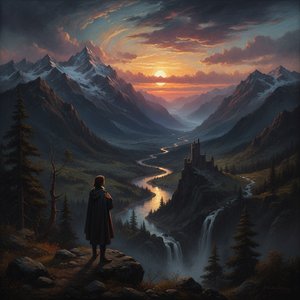
Capturing the Soul: The Emotional Majesty and Sublime Power of Romantic Landscape Painting
Explore the profound emotional depth of Romantic landscape painting. Discover how masters like Turner and Friedrich captured the sublime power of nature through intuition and imagination in this expert art history retrospective.

Capturing the Soul: The Emotional Magic and Sublime Grandeur of Romantic Landscape Painting
Explore the profound emotional depth of Romantic landscape painting. Discover how masters like Friedrich and Turner captured the sublime through light, shadow, and nature's power in this expert art history retrospective for discerning collectors.