

Shown: · With its frame:
 設置イメージを確認
 送る
送る シェア
シェア
 詳細情報
詳細情報 ガイドを表示

 画像をダウンロード
 似ている作品
 X線調査
X線調査 スライドショー
 Q&A
Q&A 統計情報
統計情報


¥ 42479
手描き油彩複製画
当社のアーティストが、お客様のご希望のサイズと額縁に合わせて、キャンバスに手描きで制作する油彩画です。 ( プリント版に切り替え デジタル画像販売へ切り替え)
Size
·標準サイズ
カスタムサイズ
CM
INCH
作品のオリジナル比率に合わせた、当店の規定サイズからお選びください。
Loading sizes...

横幅
高さ
フレームや壁のスペースに合わせて、ご希望の幅と高さを入力してください。本作品は手描きのため、異なる比率のサイズをご希望の場合、絵画の周囲を少し広げて描くか、あるいは端を少しカットして調整することが可能です。お客様のご要望に合わせます。制作を開始する前に、仕上がりを確認するためのデジタルモックアップをお送りいたします。このページに表示されている画像は完成品の実物ではなく、あくまでモックアップによるイメージです。
 詳細を見る
詳細を見るFinish
·
White ¥1

Blurside ¥1

Extended ¥1

P118B ¥10

P118H ¥10

P118W ¥10

P438Z ¥10

P508JH ¥12

P508YH ¥12

P805H ¥10

P805Z ¥10

P919BZ ¥10

P919G ¥10

P919XJ ¥10

P959ZH ¥10

P968JZ ¥12

W106C ¥8

W218G ¥10

W218JH ¥8

W218Y ¥10

W307PJ ¥10

W316G ¥10

W316PJ ¥8

W316Y ¥10

W398PJ ¥8

W4111J ¥10

W500HY ¥15

W500JH ¥15

W692G ¥12

W849H ¥8

W940BG ¥15

W953PJ ¥8

H24-GOLD ¥30

H24-SILVER ¥30

H36-GOLD ¥45

H36-SILVER ¥45
Shipped in a protective tube, ready for your own framer.
Above 105 cm the frame is shipped as a kit for a professional framer — read the details.
Extras
optionalWhat do the extras include?
Examples of what can be changed: Replace face with customer photo; Add pet (e.g., replace cat with dog); Include hidden message in background; Change background landscape or elements.
After order, TopImpressionists.com team will email client for instructions and provide a mockup preview
After order, TopImpressionists.com team will email client for instructions and provide a mockup preview
世界中への配送()は、通常の5週間ではなく、3〜4週間でお届けいたします。(30 10月)。品質には一切妥協いたしません。
保護用ワニス
銘板
刻印入りブロンズプレートの詳細
This elegant plaque features the artist's name and the title of the artwork, finely engraved for a timeless presentation.
It is made from bronze with a refined, elegant finish. The text is precisely laser-engraved for a sharp and permanent result. Measuring 9x2 cm, the plaque is compact yet easy to read. It's built to be durable and scratch-resistant, offering a professional, museum-quality look. Mounting is simple thanks to the included adhesive backing.
透明アクリル銘板の詳細
The plaque includes essential engraved details such as the artist's name, the title of the artwork, the date it was created, the type of media used-like oil on canvas or watercolor-a brief description of the piece, and a QR code that links to the complete artwork information.
It is crafted from clear acrylic, offering a sleek, modern appearance. The text is UV-engraved in black to ensure strong visual contrast. With a size of 10x15 cm, it ensures optimal readability. It comes equipped with two metal hooks for secure wall mounting. The plaque is designed to be weather-resistant, making it suitable for various environments, and it includes interactive features that work seamlessly with smartphone scanning.
黒アクリル製銘板の詳細
This elegant plaque includes engraved information such as the artist's name, the title of the artwork, the date it was created, the type of media used (like oil on canvas or watercolor), a short description of the artwork, and a QR code for quick access to more information.
The plaque itself is made from refined black acrylic with a premium finish. The text is laser-engraved in white for high contrast and readability. Its size is 10x15 cm, designed to be easy to read. It comes with two metal hooks for professional mounting. The design is sleek and fits any interior style. It is also weather-resistant and durable, with built-in digital integration for mobile compatibility.
ガラスオプションは、110cm未満のサイズでのみご利用いただけます。
 ガラスオプションは、110cm未満のサイズでのみご利用いただけます。
- 世界中へ無料エクスプレス配送
- 高品質なリネンキャンバス
- 配送時完全保険付
- 関税・輸入税の払い戻し保証
- 忠実な色彩再現の保証
- 100日間返品保証(製造上の欠陥がある場合のみ)
- 100% 全額返金保証
- まとめ買い割引のご案内


コレクション詳細
アーティストプロフィール
ピュッソンは、古典的な美しさを追求したフランスバロック絵画の巨匠であり、特に伝説や風景画で知られています。彼の作品群は、永遠の調和と秩序を表現する芸術家としての遺産です。
About the painting
A Moment Frozen in Time: Poussin’s ‘Two Silver Birches’
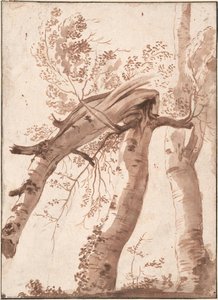
Nicolas Poussin's “Two Silver Birches, the Front One Fallen,” painted circa 1629, isn’t merely a depiction of trees; it’s a carefully constructed meditation on mortality, harmony, and the enduring power of classical ideals. Emerging from his formative years in France and culminating in his profound immersion within the Roman artistic landscape, Poussin sought to synthesize the sensual richness of Venetian painting with the rigorous order and intellectual depth of antiquity. This work, created during a pivotal period of his career, exemplifies this ambition – a quiet yet profoundly resonant scene that speaks volumes about the artist’s evolving philosophy.
The painting immediately draws the eye with its stark simplicity. Two birch trees dominate the composition, their silvery bark rendered with an almost luminous quality. The tree on the right stands tall and proud, branches reaching skyward as if in defiant grace, while its counterpart lies prone at the base of the canvas, a fallen sentinel marking the passage of time. The absence of leaves is deliberate; it strips away the seasonal distractions, focusing instead on the skeletal beauty of the trees themselves – a motif frequently associated with death and remembrance within classical art. This reduction to essential form allows Poussin to explore the underlying structure of nature, mirroring his broader interest in geometric principles and mathematical harmony.
The Language of Line and Light
Poussin’s technique is characterized by an exquisite control of line and light. He employs a meticulous layering of thin washes of paint – a hallmark of his style – to build up the forms with remarkable precision. The branches, particularly those of the upright birch, are delineated with delicate, almost hesitant strokes, creating a sense of movement and vulnerability. The fallen tree is rendered with a slightly heavier touch, suggesting its weight and the inevitability of decay. Light plays a crucial role in shaping the scene; it seems to emanate from an unseen source, bathing the trees in a soft, diffused glow that enhances their silvery sheen. This masterful manipulation of light not only creates visual beauty but also imbues the painting with a sense of spiritual depth.
Noticeably, Poussin includes a human figure – a small, dark silhouette standing near the base of the fallen tree. The identity and purpose of this figure remain deliberately ambiguous, adding another layer of complexity to the work. Some scholars interpret it as representing contemplation or perhaps even mourning, while others see it as a symbol of humanity’s relationship with nature—a witness to its cycles of growth and decline. The figure's presence subtly anchors the scene in the realm of human experience, reminding us that even within the grandeur of the natural world, we are confronted by our own mortality.
Symbolism Rooted in Antiquity
The birch tree itself carries a rich symbolic weight throughout Western art history. Often associated with purity, resilience, and the afterlife, it frequently appears in funerary monuments and depictions of mourning. Its slender form and delicate branches evoke images of fragility and vulnerability, while its ability to withstand harsh winters speaks to an enduring spirit. Poussin’s choice of birch trees aligns perfectly with his engagement with classical themes – particularly those found in Roman mythology and literature, where the tree frequently served as a symbol of transition and renewal.
Furthermore, the fallen tree can be interpreted as a representation of *memento mori*—a reminder of death. This concept was central to Renaissance art, serving as a powerful tool for prompting reflection on the transience of earthly life. Poussin’s painting, therefore, transcends mere botanical observation; it becomes a poignant meditation on the cyclical nature of existence and the inevitability of loss. The composition invites us to contemplate our own place within this grand scheme, fostering a sense of both melancholy and acceptance.
A Timeless Masterpiece for Reproduction
TopImpressionists offers meticulously crafted hand-painted reproductions of “Two Silver Birches, the Front One Fallen,” allowing you to bring this iconic work into your home or office. Our artists replicate Poussin’s delicate brushwork and masterful use of light with unparalleled precision, ensuring that every detail is faithfully reproduced. Whether you are an art enthusiast, a collector seeking to expand your collection, or an interior designer searching for a touch of classical elegance, our reproductions provide a beautiful and authentic representation of this timeless masterpiece. Experience the profound beauty and intellectual depth of Poussin’s vision – a moment frozen in time, brought vividly back to life.
よくあるご質問
ニコラ・プーサン作「Two Silver Birches, the Front One Fallen, c. 1629」は、強いコントラストを用いた構成でしょうか、それとも柔らかな調和を重んじた構成でしょうか?
「Two Silver Birches, the Front One Fallen, c. 1629」では、Gentleな対比とUnified Paletteな調和が共存しています。
ニコラ・プーサン作「Two Silver Birches, the Front One Fallen, c. 1629」には何が描かれており、どのような情緒が漂っていますか?
「Two Silver Birches, the Front One Fallen, c. 1629」にはbirches, trees, fallen tree, tranquility, poussin, landscape, classical, harmonyが描かれており、その情緒はCalmと表現されています。
ニコラ・プーサン作「Two Silver Birches, the Front One Fallen, c. 1629」において、芸術運動と時代はどのように交差しているのでしょうか?
「Two Silver Birches, the Front One Fallen, c. 1629」はFrench Baroque Paintingの様式に属しており、その作者は近世美術の時代に活動していました。
Quick facts and art quiz
About ニコラ・プーサン

ニコラ・プーサン
1594 - 1665, フランス
アーティストについて
ニコラ・プーサン:古典の精神を体現した画家
フランス絵画史において、ニコラ・プーサンはその名が古典主義の頂点を象徴する。1594年ノルマンディー地方のレ・アンデリーで生まれ、生涯の多くをローマで過ごした彼は、単なる風景を描く画家ではなく、古代ギリシア・ローマの世界に深く根ざし、その精神を絵画を通して表現した芸術家だった。幼少期からラテン語や文学に触れ、才能ある画家であったクアントゥ・ヴァランの下で基礎を学んだプーサンは、1612年にパリへ移り、ジョルジュ・ラルレマンやフェルディナン・エルの工房で研鑽を積む。しかし、彼の芸術的運命を決定づけたのは、1624年のローマへの旅だった。そこは、古代の遺産が息づく地であり、プーサンにとって無限のインスピレーションを与え続ける聖地となったのである。初期の作品にはヴェネツィア派の影響が見られ、ティツィアーノのような色彩豊かな表現も覗かせるものの、すぐに秩序と知的な厳格さが彼のスタイルを特徴づけるようになる。ローマでの成熟:古典理想の追求
ローマはプーサンにとって単なる制作拠点ではなく、芸術的・知的探求の場となった。カシアノ・ダル・ポッツォとの出会いは、彼の人生における重要な転換点となる。ダル・ポッツォの古代遺跡に対する深い理解と記録への情熱は、プーサンに歴史的正確さと普遍的な美を追求する姿勢を植え付けた。ローマでの生活を通して、プーサンはラファエロの作品を徹底的に研究し、その調和のとれた構成と優雅な形態を取り入れながらも、独自の芸術世界を構築していく。古代彫刻や文献からもインスピレーションを得て、彼の絵画は単なる物語の再現ではなく、道徳的・哲学的理想を体現した高尚な芸術へと昇華していった。プーサンは、感情的な奔放さを排し、明瞭さ、均衡、そして線描による構成を重視することで、古典主義絵画の新たな地平を開いたのである。歴史、神話、そして聖なる主題
プーサンの作品は、古代史、神話、宗教といった多様なテーマを探求しているが、その根底には常に普遍的な人間経験への深い洞察があった。ネルガリクスの死という悲劇を描くことで、彼は人間の運命の儚さと高潔さを表現し、神話画においては、単なる物語の再叙述ではなく、人間の本質や哲学的な考察を深める試みを見せている。『アルカディア』シリーズ、特に象徴的な『エト・イン・アルカディア・エゴ(我もまたアルカディアに)』は、死と記憶、そして過ぎ去りゆく時間という普遍的なテーマを深く掘り下げた作品として知られている。七つの秘跡の連作は、プーサンが神学的な理解と構成力を結集した壮大な試みであり、宗教画においても感情的な過剰さを避け、静謐で威厳のある表現を追求していることがわかる。晩年には、広大な風景を描くことで、自然との調和や精神的な安寧を表現し、人間の内面世界との深いつながりを暗示している。フランス美術への影響と遺産
プーサンは、一時的にフランスに戻りルイ13世の宮廷画家として活動したものの、その職務に苦悩し、すぐにローマへと帰還した。しかし、彼の古典主義的な芸術思想は、フランス美術に多大な影響を与え、アカデミー・ロワイヤル・ド・ペinture エ スкульпチュールにおいて重要な役割を果たした。ジャック=ルイ・ダヴィッドやポール・セザンヌといった後世の画家たちは、プーサンの厳格なアプローチと知的な深遠さに感銘を受け、その影響を強く受けた。プーサンは、単なる様式模倣を超え、秩序、明瞭さ、そして古典的理想への揺るぎない信念を体現した芸術家として、フランス絵画史に不朽の足跡を残したのである。- 主要作品: 『ネルガリクスの死』、『七つの秘跡シリーズ』、『ローマ街道』、『オリオンの盲目』、『四季』
- 特徴: 古典的な構成、線描による表現、歴史的・神話的主題、静謐な風景描写
Quick facts about ニコラ・プーサン
- フルネーム: ニコラ・プーサン
- 主な作品:
- Germanicusの死
- 七つの秘跡シリーズ
- ローマの道
- オリオン
- 四季
- 出生地: ル・アーヴル、フランス
- 国籍: フランス
- 影響を与えたアーティスト:
- ジャック=ルイ・ダヴィッド
- ポール・セザンヌ
- 影響を受けたアーティスト:
- ラファエロ
- ティツィアーノ
- 死亡年月日: 1665年11月19日
- 生年月日: 1594年6月
- 芸術運動またはスタイル: バロック、クラシシズム
テーマ、スタイル、特徴別に分類された作品を探索しましょう。


ニコラ・プーサン
Two Silver Birches, the Front One Fallen, c. 1629
() ·
With its frame: · Hand-painted in oil on linen
Total