































作品のオリジナル比率に合わせた、当店の規定サイズからお選びください。

特定のフレームやスペースに合わせて、ご自身でサイズを指定することも可能です。選択されたサイズが元の画像の比率と一致しない場合、作品をトリミングするか、鏡面反射または単色での塗りつぶしによって画像を拡張いたします。制作を開始する前に、ご確認用のデジタルモックアップをお送りいたします。
画面上のプレビューには、実際のトリミングや拡張は反映されませんのでご注意ください。最終的な構図を正確に確認できるのは、モックアップのみとなります。
カスタムサイズも承っておりますが、元の比率を維持するためには、あらかじめ用意されたリストからサイズを選択することをお勧めいたします。

Cazo esmaltado
複製画のサイズ
Pablo Picasso's Cazo Esmaltado (Enameled Pot), painted in 1908, is far more than a depiction of humble kitchen objects. It stands as a pivotal moment in the artist’s journey and, indeed, in the history of art itself—a quiet revolution unfolding on canvas. The painting isn't simply *about* a pot, a cup, or a candle; it’s about how we see, how we represent reality, and the very foundations upon which artistic tradition had been built for centuries. It marks a decisive break from the past, signaling the imminent arrival of Cubism and forever altering the course of modern art.
The scene presented is deceptively simple: everyday items arranged on a table. But look closer, and conventional representation begins to dissolve. Picasso doesn’t offer us a single, fixed viewpoint; instead, he fractures these ordinary objects into geometric planes, presenting multiple perspectives simultaneously. The enameled pot, the central focus, isn't rendered with smooth curves and realistic shading. It is broken down, analyzed, and reassembled as a collection of angular forms. This deliberate distortion—this deconstruction of reality—is not an attempt to misrepresent; it’s an exploration of how we *perceive* form and space. The muted palette, dominated by blues, grays, and browns, further emphasizes this intellectual approach, prioritizing the analysis of structure over purely aesthetic concerns. The flattening of the composition, minimizing depth, reinforces the two-dimensionality of the canvas, reminding us that we are looking at a constructed image, not a window onto the world.
Cazo Esmaltado is considered one of the earliest examples of Analytical Cubism, a style Picasso pioneered alongside Georges Braque. This movement arose from a desire to move beyond the limitations of traditional perspective—a system that had dominated Western art since the Renaissance. Artists were increasingly questioning established norms in all areas of life, spurred by rapid technological advancements and societal shifts. The early 20th century was a period of immense change, and Cubism reflected this fragmentation and uncertainty. Picasso and Braque sought to represent subjects not as they appeared at a single moment in time, but as they existed in their totality—a composite of multiple viewpoints experienced over time. The choice of mundane objects – a pot, a cup, a bowl – wasn’t accidental; it signified an interest in exploring the essence of form itself, independent of narrative or emotional content. It was about stripping away the superficial and revealing the underlying structure of reality.
While Cazo Esmaltado doesn’t evoke sentimental emotions in a traditional sense, it possesses a powerful intellectual and aesthetic impact. It challenges viewers to actively engage with the artwork, forcing us to reconsider our assumptions about representation and perception. This isn't an image meant to be passively consumed; it demands contemplation. The painting’s influence on art history is undeniable. It served as a catalyst for countless subsequent movements—Futurism, Constructivism, Surrealism—each building upon Picasso’s revolutionary foundation. Today, *Enamel Saucepan* remains a testament to Picasso's genius and his enduring contribution to the evolution of modern art, a potent reminder that true innovation often lies in questioning everything we think we know.

1881 - 1973 , スペイン

Explore the revolutionary world of Cubist Still Life with TopImpressionists. Discover Picasso & Braque's groundbreaking techniques, its philosophical roots, and lasting impact on modern art. Expert insights for collectors.

TopImpressionistsの熟練画家が、お客様の写真をもとにレストラン空間を彩るカスタム静物油彩を制作。高品質な手描き油絵で、美食の記憶と個性を永遠に。無料アート相談も実施中。

Explore the rich history of still life painting & the symbolism of fruit across art movements. Discover masterpieces from Caravaggio to Cézanne with TopImpressionists – expert guidance & museum-quality reproductions.
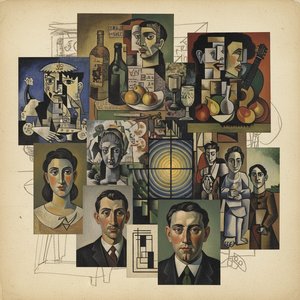
Explore 10 Cubist masterpieces by Picasso, Braque & more! Delve into the history of this revolutionary art movement. Find museum-quality reproductions and elevate your home decor with TopImpressionists. Discover all masterpieces on TopImpressionists.com

Explore 10 Cubist masterpieces by Picasso, Braque & more! Discover the stories behind these revolutionary paintings and their impact on modern art. Find museum-quality reproductions for your home at TopImpressionists.com – where art comes to life.


最新の美術ニュース、限定オファー、そしてインテリアのアイデアをいち早くお届けします。
お客様のプロジェクトについてお聞かせください。当社の美術専門家が、お客様に合わせた3つのパーソナライズされた芸術提案をご提供いたします。
あなたにぴったりの3作品を無料で厳選いたします
 Preview
 手描き複製画を注文する
 シェアする
シェアする シェアする
シェアする
 詳細を見る
詳細を見る

 ダウンロード
 似ている作品
 X線調査
X線調査 スライドショー

 詳細を見る
詳細を見る









 ガラスオプションは、110cm未満のサイズでのみご利用いただけます。


