































作品のオリジナル比率に合わせた、当店の規定サイズからお選びください。

特定のフレームやスペースに合わせて、ご自身でサイズを指定することも可能です。選択されたサイズが元の画像の比率と一致しない場合、作品をトリミングするか、鏡面反射または単色での塗りつぶしによって画像を拡張いたします。制作を開始する前に、ご確認用のデジタルモックアップをお送りいたします。
画面上のプレビューには、実際のトリミングや拡張は反映されませんのでご注意ください。最終的な構図を正確に確認できるのは、モックアップのみとなります。
カスタムサイズも承っておりますが、元の比率を維持するためには、あらかじめ用意されたリストからサイズを選択することをお勧めいたします。

Composition with a Skull
複製画のサイズ
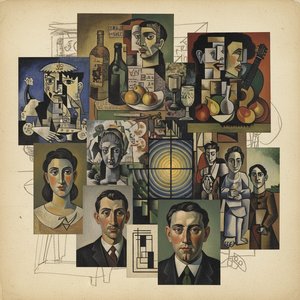
Pablo Picasso’s "Composition with a Skull," created between 1912 and 1914 during his Synthetic Cubism period, is more than just a still life; it's a profound exploration of mortality, memory, and the evolving language of art. This work exemplifies Picasso's revolutionary approach to representation, breaking down traditional forms into fragmented geometric shapes while retaining an underlying sense of meaning and emotional resonance.
"Composition with a Skull" is a quintessential example of Synthetic Cubism. Unlike the earlier Analytical Cubism which focused on dissecting objects from multiple viewpoints, Synthetic Cubism saw Picasso and Braque incorporating collage elements – newspaper clippings, wallpaper fragments – alongside painted forms to create layered compositions. While this particular piece doesn't feature overt collage, it embodies the spirit of Synthetic Cubism through its flattened perspective, overlapping planes, and simplified shapes. The skull itself is not rendered realistically but rather constructed from geometric components—triangles, circles, and rectangles—creating a stylized yet recognizable image. The muted color palette – primarily browns, blacks, whites, and touches of ochre – contributes to the painting’s somber mood and reinforces its thematic focus on transience.
Created in the years leading up to World War I, "Composition with a Skull" reflects the anxieties and uncertainties of the era. The early 20th century was a period of rapid social and technological change, marked by both optimism and profound unease. The skull, a traditional symbol of mortality, takes on added significance within this context, perhaps representing the fragility of life in an increasingly unstable world. Picasso’s artistic experimentation during this time mirrored broader cultural shifts away from traditional values and towards new forms of expression that challenged conventional notions of beauty and representation.
The central motif of the skull is undeniably laden with symbolic weight. It serves as a memento mori—a reminder of death's inevitability—a common theme in art history. However, Picasso’s Cubist treatment transforms this traditional symbol into something more complex and ambiguous. The surrounding objects – musical instruments (possibly a guitar), playing cards, and what appears to be a framed picture – suggest themes of leisure, entertainment, and perhaps even memory or illusion. The fragmented nature of the composition itself can be interpreted as a metaphor for the fractured experience of modern life, where reality is often perceived through multiple perspectives and mediated by cultural constructs.
"Composition with a Skull" evokes a range of emotions—a sense of melancholy, contemplation, and perhaps even unease. The painting’s stark geometric forms and muted colors create a visually arresting image that demands attention while simultaneously conveying a feeling of quiet introspection. Despite its somber subject matter, the work is also intellectually stimulating, inviting viewers to engage with Picasso's innovative approach to representation and to consider the deeper philosophical questions it raises about life, death, and the nature of art itself.

1881 - 1973 , スペイン

パブロ・ピカソの至高の25選。キュビズム、ゲルニカなど、時代を揺るがした名画の物語と芸術的魅力に迫ります。リビングやオフィスを彩るインテリアアートにも最適。TopImpressionists.comで高品質なピカソ作品をコレクション。

ジョルジュ・ブラックの傑作25選。キュビスムを代表する画家、その革新的な色彩と技法に迫ります。名画から知られざる逸品まで、美術史に残る作品群をTopImpressionists.comで鑑賞。お部屋を彩るアートプリントも多数ご用意。今すぐオンラインでコレクションをご覧ください。
Explore 10 Cubist masterpieces by Picasso, Braque & more! Delve into the history of this revolutionary art movement. Find museum-quality reproductions and elevate your home decor with TopImpressionists. Discover all masterpieces on TopImpressionists.com

フェルナン・レジェの傑作25選。機械美と色彩が織りなすキュビズムの世界を紐解きます。TopImpressionistsで、フランス絵画の巨匠レジェの作品を高精細プリントで。インテリアアートやギフトにも最適です。全コレクションはこちら: TopImpressionists.com

メトロポリタン美術館の至宝25選。モネ、ゴッホ、レンブラント…名画に秘められた物語と技法を紐解きます。印象派からルネサンスまで、時代を超えて輝く芸術作品をウォールアートで暮らしに取り入れませんか?TopImpressionists.comで全コレクションをご覧ください。


最新の美術ニュース、限定オファー、そしてインテリアのアイデアをいち早くお届けします。
お客様のプロジェクトについてお聞かせください。当社の美術専門家が、お客様に合わせた3つのパーソナライズされた芸術提案をご提供いたします。
あなたにぴったりの3作品を無料で厳選いたします
 手描き複製画を注文する
 シェアする
シェアする シェアする
シェアする
 詳細を見る
詳細を見る

 ダウンロード
 似ている作品
 X線調査
X線調査 スライドショー

 詳細を見る
詳細を見る









 ガラスオプションは、110cm未満のサイズでのみご利用いただけます。


