
 Acrylic On CanvasWallArtCubist Surrealism
 1957
1957 129.0 x 161.0 cm




























作品のオリジナル比率に合わせた、当店の規定サイズからお選びください。

特定のフレームやスペースに合わせて、ご希望のサイズをご入力いただけます。選択されたサイズが元の画像の比率と異なる場合、アートワークをトリミングするか、手描きで要素を追加して絵画を拡張いたします。デジタルモックアップ を制作し、制作開始前にご確認(承認)をいただきます。
画面上のプレビューは、実際のトリミングや拡張を正確に反映しているものではありません。最終的な構図は、モックアップによってのみ正確にご確認いただけます。
カスタムサイズもご利用いただけますが、元の比率を維持するためには、あらかじめ用意されたリストからサイズを選択することをお勧めいたします。

Las Meninas (Velazquez)
複製画のサイズ
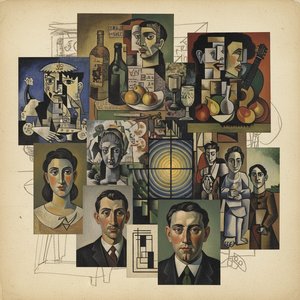
Pablo Picasso's 1957 painting, “Las Meninas (Velazquez),” isn’t merely a copy; it’s a profound dialogue with history, a vibrant reimagining of Diego Velázquez’s iconic masterpiece. This work, measuring 129 x 161 cm, transcends the simple act of reproduction, becoming an intensely personal exploration of perception, memory, and the very nature of representation. Picasso, already a titan of modern art, here deliberately disrupts the established order, inviting us into a dreamlike space where reality and illusion intertwine with breathtaking skill.
To understand Picasso’s ambition, one must first appreciate the original. Velázquez's “Las Meninas,” painted around 1656, depicts the Spanish royal family in a grand hall at the Alcázar palace in Madrid. The scene is meticulously observed – the posture of the Infanta Margarita, the attentive gaze of her maids of honor, the subtle gestures of King Philip IV and his queen, Mariana. Picasso doesn’t simply replicate this; he actively engages with it. He borrows the composition, the figures, even the suggestion of a royal portrait being painted, but then subtly – and sometimes dramatically – alters them. The most striking element is the presence of Picasso himself, standing in the background, seemingly observing the scene alongside an artist (likely Picasso’s friend Georges Braque) and a model. This inclusion immediately destabilizes the viewer's perspective, forcing us to question who is truly being painted and by whom.
Picasso employs his signature Cubist techniques with remarkable precision in this work. The figures are fragmented, broken down into geometric shapes and reassembled from multiple viewpoints simultaneously. This isn’t a haphazard deconstruction; it's a deliberate strategy to convey the simultaneous experience of seeing – a concept central to Picasso’s artistic philosophy. Notice how the faces are rendered with sharp angles and planes, creating an unsettling yet captivating effect. The use of color is equally significant. While retaining some of Velázquez’s muted palette, Picasso introduces vibrant blues and greens, injecting a sense of dynamism and emotional intensity into the scene. The brushwork itself is loose and expressive, contributing to the overall feeling of movement and instability.
Beyond the purely formal elements, “Las Meninas” is rich in symbolism. The presence of Picasso and Braque within the painting suggests a meditation on the act of artistic creation itself – the process of representation and the role of the artist. The mirror at the back reflects not just the figures in the room but also a blurred image of Velázquez himself, further blurring the lines between reality and illusion. The bowl of fruit, the bottle, and the other objects are rendered with meticulous detail, echoing Velázquez’s masterful observation, yet they exist within a context that feels distinctly Picassoesque – dreamlike and unsettling. The painting ultimately invites us to consider how our own perceptions shape our understanding of the world around us, challenging us to question what is ‘real’ and what is merely a constructed image.
TopImpressionists offers exquisite hand-painted reproductions of “Las Meninas (Velazquez),” allowing you to bring this iconic work into your home or office. Each reproduction captures the painting's complex layers of meaning and technical brilliance, providing a stunning tribute to Picasso’s genius and Velázquez’s legacy.

1881 - 1973 , スペイン

パブロ・ピカソの至高の25選。キュビズム、ゲルニカなど、時代を揺るがした名画の物語と芸術的魅力に迫ります。リビングやオフィスを彩るインテリアアートにも最適。TopImpressionists.comで高品質なピカソ作品をコレクション。
Explore 10 Cubist masterpieces by Picasso, Braque & more! Delve into the history of this revolutionary art movement. Find museum-quality reproductions and elevate your home decor with TopImpressionists. Discover all masterpieces on TopImpressionists.com

Explore the life & work of Diego Velázquez, master of the Spanish Golden Age. Discover his innovative techniques, iconic paintings like Las Meninas, and lasting influence on art history. Expert insights for collectors.

ルネ・マグリット傑作25選。シュルレアリスムを代表するベルギー絵画の巨匠、その幻想的な世界と隠されたメッセージを紐解きます。TopImpressionistsで高品質なアートプリントや複製画を見つけ、お部屋に名画の感動を。今すぐコレクションをご覧ください。

Explore 10 Cubist masterpieces by Picasso, Braque & more! Discover the stories behind these revolutionary paintings and their impact on modern art. Find museum-quality reproductions for your home at TopImpressionists.com – where art comes to life.


最新の美術ニュース、限定オファー、そしてインテリアのアイデアをいち早くお届けします。
お客様のプロジェクトについてお聞かせください。当社の美術専門家が、お客様に合わせた3つのパーソナライズされた芸術提案をご提供いたします。
あなたにぴったりの3作品を無料で厳選いたします


 プレビュー
プレビュー
 プリントを購入
 シェアする
シェアする シェアする
シェアする
 詳細を見る
詳細を見る

 ダウンロード
 似ている作品
 X線調査
X線調査 スライドショー
 詳細を見る
詳細を見る









 ガラスオプションは、110cm未満のサイズでのみご利用いただけます。


