Pablo Picasso’s “Skull and Leeks”: A Meditation on Mortality
Pablo Picasso's "Skull and Leeks," painted in 1945, stands as a poignant emblem of existential contemplation within the realm of modern art. Measuring 89 x 130 cm and currently residing in The Peggy Guggenheim Collection in Venice, Italy—a museum celebrated for its groundbreaking assemblage of avant-garde masterpieces—this Cubist artwork transcends mere visual representation to delve into profound themes concerning life’s fragility and inevitable demise. Its enduring power lies not only in Picasso's masterful stylistic innovation but also in the intricate layering of symbolism that invites viewers to confront fundamental questions about human existence.
Composition and Symbolism: A Dialogue Between Decay and Vitality
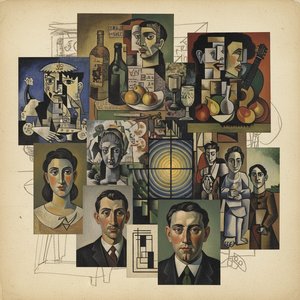
At first glance, “Skull and Leeks” presents itself as a deceptively simple still life—a tabletop arrangement featuring a skull prominently positioned before a man seated at the table. However, Picasso’s genius resides in transforming this apparent simplicity into a complex visual narrative brimming with symbolic significance. The skull serves as an undeniable emblem of mortality, reminding us of our own impermanence and confronting us with the inescapable reality of death. Yet, juxtaposed against this grim symbol is the inclusion of leeks—vegetables traditionally associated with prosperity and vitality—creating an arresting paradox. This deliberate contrast underscores Picasso’s intention to explore the duality inherent in human experience: the constant interplay between life's exuberance and death's encroaching shadow. Furthermore, the man cradling a guitar symbolizes creativity and joy—a defiant assertion of spirit against the backdrop of existential uncertainty.
Artistic Influences: Echoes of Cézanne and Gris
Picasso’s artistic vision was undeniably shaped by influential predecessors who championed similar explorations of form and emotion. Notably, he drew inspiration from Juan Gris, whose work like “Seated Woman” (1916) similarly embraced Cubist principles—fragmentation and multiple viewpoints—to generate a dynamic visual tension. Similarly, Picasso absorbed the aesthetic sensibilities of Paul Cézanne, evident in paintings such as “Portrait of Madame Cezanne in a Red Dress” (1890-1894), where Cézanne’s use of bold colors and geometric forms foreshadowed Picasso's own stylistic breakthroughs. These connections illuminate Picasso’s artistic lineage and demonstrate his engagement with the broader intellectual currents shaping European art at the turn of the century.
Contextualizing the Work: Guernica and the Shadow of War
To fully appreciate “Skull and Leeks,” it is crucial to situate it within the context of Picasso's oeuvre—particularly during World War II, when he resided in Paris under Nazi occupation. The painting emerged as a direct response to the devastating bombing of Guernica by German Luftwaffe squadrons on April 26, 1937—an event that galvanized Picasso’s artistic impulse and solidified his commitment to confronting social injustices through art. Like Guernica, “Skull and Leeks” embodies Picasso's characteristic stylistic approach—characterized by stark monochrome palettes and emotionally charged imagery—reflecting the pervasive atmosphere of fear and disillusionment during wartime. The artwork serves as a powerful reminder of humanity’s vulnerability in the face of violence and underscores Picasso’s enduring legacy as an artist who dared to grapple with profound philosophical questions.
Conclusion: A Timeless Reflection on Existence
“Skull and Leeks” by Pablo Picasso transcends its formal characteristics—Cubist technique, muted color palette—to deliver a timeless meditation on the human condition. It compels viewers to contemplate the inescapable confrontation between life’s fleeting beauty and death's inevitable dominion. For those seeking inspiration or contemplating acquiring a high-quality reproduction of this iconic artwork,
Pablo Picasso at TopImpressionists offers an unparalleled collection of his masterpieces—a testament to his enduring influence on the history of art and thought. To delve deeper into the world of modern art and Cubism, visit
The Peggy Guggenheim Collection at TopImpressionists.