
 Oil On CanvasWallArtAnalytical Cubism
 1946Modern
 146.0 x 89.0 cm
迅速な制作と多彩な仕上げオプションを備えた、ミュージアムクオリティのジークレーまたはキャンバスプリント。 ( 手描きの絵画を購入 画像を購入)





























作品のオリジナル比率に合わせた、当店の規定サイズからお選びください。

特定のフレームやスペースに合わせて、ご自身でサイズを指定することも可能です。選択されたサイズが元の画像の比率と一致しない場合、作品をトリミングするか、鏡面反射または単色での塗りつぶしによって画像を拡張いたします。制作を開始する前に、ご確認用のデジタルモックアップをお送りいたします。
画面上のプレビューには、実際のトリミングや拡張は反映されませんのでご注意ください。最終的な構図を正確に確認できるのは、モックアップのみとなります。
カスタムサイズも承っておりますが、元の比率を維持するためには、あらかじめ用意されたリストからサイズを選択することをお勧めいたします。

Standing woman
複製画のサイズ
In the vast, transformative landscape of Pablo Picasso’s oeuvre, few works capture the post-war spirit with as much luminous intensity as Standing Woman. Painted in 1946, this masterpiece serves as a radiant testament to an artist who, even after decades of revolutionizing the visual language, continued to find profound new ways to dissect and celebrate the human form. The canvas is bathed in a striking palette of yellow hues—warm, golden, and sun-drenched—that imbues the composition with an unexpected aura of serenity. This choice of color does more than merely decorate the surface; it acts as a unifying force, weaving together the fragmented planes of the figure into a cohesive, glowing entity that seems to radiate light from within.
The subject itself is a captivating study in balance and tension. A female figure, rendered through the lens of Picasso’s evolved Cubist vision, sits gracefully upon a chair, her presence anchoring the left side of the frame. Yet, there is a restless energy at play; her head tilts subtly toward the right, creating a dynamic imbalance that compels the viewer's eye to dance across the textured surface. The composition utilizes the bold, geometric language of Analytical Cubism, where the body is not merely depicted but meticulously deconstructed into interlocking shapes—cubes, spheres, and sharp angles. This fragmentation does not obscure the woman; rather, it invites us to perceive her from multiple perspectives simultaneously, capturing the essence of her physical presence and her psychological depth in a single, breathtaking moment.
To gaze upon Standing Woman is to witness a masterful dialogue between two seemingly opposing worlds: the intellectual rigor of Cubism and the raw, emotive simplicity of Naïve Art. While the structural foundation of the piece relies on the complex, multi-faceted planes characteristic of Picasso’s earlier radical experiments, there is an undeniable warmth and directness in the execution that speaks to his later interest in Primitivism. The features of the face are simplified, almost elemental, providing a focal point of intense, unblinking gaze that connects the subject directly to the observer. This stylistic duality creates a profound emotional impact, offering a sense of structural stability paired with a vulnerable, human intimacy.
For the discerning collector or interior designer, this artwork offers much more than mere aesthetic appeal; it provides a sophisticated focal point capable of anchoring a room with its commanding scale and vibrant energy. The 146 x 89 cm dimensions allow the painting to dominate a space, while its warm earth tones and brilliant yellows can breathe life into contemporary, minimalist, or even classical settings. A high-quality reproduction of this work allows one to bring the transformative power of Picasso’s post-war optimism into a private sanctuary, serving as a constant reminder of the beauty found in fragmentation and the enduring strength of the human spirit.

1881 - 1973 , スペイン

パブロ・ピカソの至高の25選。キュビズム、ゲルニカなど、時代を揺るがした名画の物語と芸術的魅力に迫ります。リビングやオフィスを彩るインテリアアートにも最適。TopImpressionists.comで高品質なピカソ作品をコレクション。
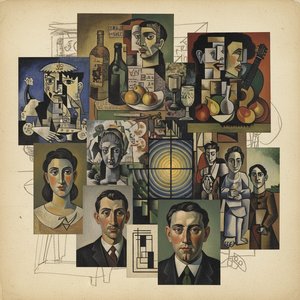
Explore 10 Cubist masterpieces by Picasso, Braque & more! Delve into the history of this revolutionary art movement. Find museum-quality reproductions and elevate your home decor with TopImpressionists. Discover all masterpieces on TopImpressionists.com

Explore 10 revolutionary Cubist portraits by Picasso, Braque & more! Discover the stories behind these iconic paintings and how they shaped modern art. Find museum-quality reproductions to elevate your home decor on TopImpressionists.com.

キュビスムを代表する10大名作の世界へ。ピカソ、ブラックら巨匠の革新的な技と色彩が織りなす、時代を超越した芸術体験を。TopImpressionists.comで、至高のアートプリントとインテリアアイデアを発見しましょう。

Explore the revolutionary world of Cubism. Discover how masters Pablo Picasso and Georges Braque dismantled reality through geometric abstraction to redefine modern art history.


最新の美術ニュース、限定オファー、そしてインテリアのアイデアをいち早くお届けします。
お客様のプロジェクトについてお聞かせください。当社の美術専門家が、お客様に合わせた3つのパーソナライズされた芸術提案をご提供いたします。
あなたにぴったりの3作品を無料で厳選いたします


 プレビュー
プレビュー
 シェアする
シェアする シェアする
シェアする
 詳細を見る
詳細を見る

 ダウンロード
 似ている作品
 X線調査
X線調査 スライドショー
 詳細を見る
詳細を見る









 ガラスオプションは、110cm未満のサイズでのみご利用いただけます。


