
当社のアーティストが、お客様のご希望のサイズと額縁に合わせて、キャンバスに手描きで制作する油彩画です。 ( プリント版に切り替え 画像に切り替え)





























作品のオリジナル比率に合わせた、当店の規定サイズからお選びください。

特定のフレームやスペースに合わせて、ご希望のサイズをご入力いただけます。選択されたサイズが元の画像の比率と異なる場合、アートワークをトリミングするか、手描きで要素を追加して絵画を拡張いたします。デジタルモックアップ を制作し、制作開始前にご確認(承認)をいただきます。
画面上のプレビューは、実際のトリミングや拡張を正確に反映しているものではありません。最終的な構図は、モックアップによってのみ正確にご確認いただけます。
カスタムサイズもご利用いただけますが、元の比率を維持するためには、あらかじめ用意されたリストからサイズを選択することをお勧めいたします。

The Mirror
複製画のサイズ
Pablo Picasso's 1932 painting, “The Mirror,” isn’t a straightforward depiction of a reflective surface; it’s a profoundly layered exploration of identity, perception, and the unsettling nature of self-representation. Captured in a deceptively simple composition – a woman reclining on the floor with her head resting against a mirror – the work immediately draws us into a space of quiet contemplation. The painting's power lies not in its realism but in the deliberate ambiguity surrounding the figures present, creating an atmosphere of psychological depth rarely found in Picasso’s earlier Cubist explorations.
The initial impression is one of vulnerability and repose. The woman, rendered with a loose, expressive brushstroke characteristic of Picasso's later work, appears lost in thought or perhaps drifting into sleep. Her posture suggests both surrender and a certain melancholy. However, the inclusion of two secondary figures – a man partially visible at the top left and another near the bottom right – introduces an element of unease. They are not fully integrated into the scene; their presence feels almost spectral, as if they represent fragments of memory or perhaps alternate versions of herself. This deliberate fragmentation mirrors the fractured nature of identity that Picasso so often explored in his art.
“The Mirror” firmly places Picasso within the context of his mature style, bridging the gap between his earlier Cubist experiments and the more emotionally charged works he produced during the 1930s. While retaining elements of Cubism – the fractured planes, multiple perspectives, and flattened space – the painting moves beyond purely analytical deconstruction. The forms are less rigidly geometric and more fluid, allowing for a greater sense of organic movement and psychological intensity. The color palette is muted, dominated by browns, grays, and ochres, contributing to the overall mood of introspection and quiet sadness.
Picasso’s technique here demonstrates a remarkable control over his materials. He employs a layering of paint – glazes and scumbles – that creates a rich surface texture and imbues the figures with a palpable sense of physicality. The mirror itself isn't rendered as a perfect, flawless reflection; it’s subtly distorted, adding to the painting’s unsettling quality. This deliberate imperfection suggests that the image presented is not an objective truth but rather a subjective interpretation – a fragmented representation of reality filtered through the woman’s own consciousness.
The mirror, of course, is central to the painting's symbolism. It represents not just a physical surface for reflection but also the complex process of self-awareness. Picasso frequently used mirrors as metaphors for the elusive nature of identity, suggesting that we are always both observer and observed, subject and object. The woman’s head resting against it implies a confrontation with her own image – a moment of introspection where she is forced to confront her own vulnerabilities and uncertainties.
The presence of the two secondary figures adds another layer of complexity. They could represent lost loves, forgotten memories, or perhaps even aspects of herself that she has suppressed. Their ambiguous positioning reinforces the idea that identity is not a fixed entity but rather a constantly evolving construct shaped by experience and relationships. Ultimately, “The Mirror” invites us to contemplate the mysteries of selfhood and the ways in which we perceive ourselves and others – a timeless theme explored with Picasso’s characteristic brilliance and emotional depth.

1881 - 1973 , スペイン

Explore the powerful history of social commentary in art! Discover key movements like Realism & Satire, influential artists, and how art reflects—and shapes—society. Expert insights at TopImpressionists.
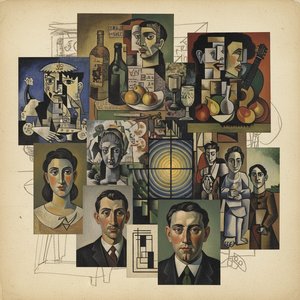
Explore 10 Cubist masterpieces by Picasso, Braque & more! Delve into the history of this revolutionary art movement. Find museum-quality reproductions and elevate your home decor with TopImpressionists. Discover all masterpieces on TopImpressionists.com

キュビスムを代表する10大名作の世界へ。ピカソ、ブラックら巨匠の革新的な技と色彩が織りなす、時代を超越した芸術体験を。TopImpressionists.comで、至高のアートプリントとインテリアアイデアを発見しましょう。

Explore the revolutionary art of Pablo Picasso with TopImpressionists.com. Discover Cubism's origins, symbolism in his masterpieces & investment insights for collectors. Expert appraisal & custom reproductions available.

ジョルジュ・ブラックの傑作25選。キュビスムを代表する画家、その革新的な色彩と技法に迫ります。名画から知られざる逸品まで、美術史に残る作品群をTopImpressionists.comで鑑賞。お部屋を彩るアートプリントも多数ご用意。今すぐオンラインでコレクションをご覧ください。


最新の美術ニュース、限定オファー、そしてインテリアのアイデアをいち早くお届けします。
お客様のプロジェクトについてお聞かせください。当社の美術専門家が、お客様に合わせた3つのパーソナライズされた芸術提案をご提供いたします。
あなたにぴったりの3作品を無料で厳選いたします


 プレビュー
プレビュー
 シェアする
シェアする シェアする
シェアする
 詳細を見る
詳細を見る

 ダウンロード
 似ている作品
 X線調査
X線調査 スライドショー

 詳細を見る
詳細を見る









 ガラスオプションは、110cm未満のサイズでのみご利用いただけます。


