
迅速な制作と多彩な仕上げオプションを備えた、ミュージアムクオリティのジークレーまたはキャンバスプリント。 ( 手描きの絵画を購入 画像を購入)





























作品のオリジナル比率に合わせた、当店の規定サイズからお選びください。

特定のフレームやスペースに合わせて、ご自身でサイズを指定することも可能です。選択されたサイズが元の画像の比率と一致しない場合、作品をトリミングするか、鏡面反射または単色での塗りつぶしによって画像を拡張いたします。制作を開始する前に、ご確認用のデジタルモックアップをお送りいたします。
画面上のプレビューには、実際のトリミングや拡張は反映されませんのでご注意ください。最終的な構図を正確に確認できるのは、モックアップのみとなります。
カスタムサイズも承っておりますが、元の比率を維持するためには、あらかじめ用意されたリストからサイズを選択することをお勧めいたします。

The painter and his model 26
複製画のサイズ
Pablo Picasso's “The Painter and His Model” (1926) isn’t merely a depiction of an artist at work; it’s a profound meditation on creation, isolation, and the complex relationship between creator and subject. This deceptively simple painting, rendered in a muted palette of greys and whites, immediately draws the viewer into a carefully constructed space—a studio stripped bare of extraneous detail, yet brimming with unspoken narrative. It's a work that invites prolonged contemplation, revealing layers of meaning with each return visit.
The scene is dominated by Picasso himself, seated at a desk cluttered with tools and sketches. He’s not actively painting; instead, he appears lost in thought, his gaze directed towards the viewer with an almost unnerving intensity. His doubled head—a recurring motif in Picasso's work—suggests a fractured self, a simultaneous awareness of his own creative process and its external representation. The model, rendered as a diminutive figure with elongated limbs and a hauntingly blank expression, occupies the left side of the composition. Her reduced scale emphasizes her vulnerability and perhaps hints at the objectification inherent in artistic creation – she exists primarily to serve the artist’s vision.
Painted during a period when Picasso was experimenting with a more classical style, “The Painter and His Model” still retains strong elements of Cubism. The figures are broken down into geometric shapes and reassembled in an unconventional manner, challenging traditional notions of perspective and representation. This fragmentation isn’t merely stylistic; it mirrors the fractured nature of the artist's psyche – his simultaneous awareness of himself as both creator and subject. The use of monochromatic tones further contributes to this sense of detachment and introspection, focusing attention on form and structure rather than color or emotional expression.
Interestingly, Picasso abandoned the painting mid-way through, leaving it unfinished. This deliberate incompleteness adds another layer of complexity to the work. Some scholars believe that Picasso was deliberately exploring the act of creation itself—the moment of hesitation, the struggle to capture an elusive idea—rather than striving for a definitive outcome. The visible underdrawing and the unfinished state serve as a testament to this process, inviting us to witness the artist’s creative journey.
The inclusion of various objects within the studio – a vase, cups, a television—adds subtle layers of meaning. The television, a relatively new invention at the time, represents the intrusion of modern technology into the traditional world of art. It’s a visual metaphor for the changing landscape of creativity and the challenges faced by artists in a rapidly evolving society. The presence of the vase, reminiscent of Picasso's earlier “Still Life with Vase” series, connects this work to his exploration of form and composition.
Created in 1926, during a period of relative stability after the horrors of World War I, "The Painter and His Model" reflects a shift in Picasso’s artistic focus. While he continued to grapple with themes of war and suffering, this painting represents a move towards introspection and a celebration of the creative process itself. It's a poignant reminder that art is not simply about depicting reality but about exploring the complexities of human experience—the joys, sorrows, and uncertainties that shape our lives.
TopImpressionists offers meticulously crafted hand-painted reproductions of “The Painter and His Model,” allowing you to bring this iconic work into your home or office. Each reproduction is created by skilled artists using archival quality materials, ensuring a faithful representation of Picasso’s masterpiece for generations to come.

1881 - 1973 , スペイン

パブロ・ピカソの至高の25選。キュビズム、ゲルニカなど、時代を揺るがした名画の物語と芸術的魅力に迫ります。リビングやオフィスを彩るインテリアアートにも最適。TopImpressionists.comで高品質なピカソ作品をコレクション。
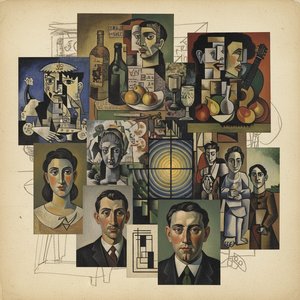
Explore 10 Cubist masterpieces by Picasso, Braque & more! Delve into the history of this revolutionary art movement. Find museum-quality reproductions and elevate your home decor with TopImpressionists. Discover all masterpieces on TopImpressionists.com

キュビスムを代表する10大名作の世界へ。ピカソ、ブラックら巨匠の革新的な技と色彩が織りなす、時代を超越した芸術体験を。TopImpressionists.comで、至高のアートプリントとインテリアアイデアを発見しましょう。

Explore the revolutionary art of Pablo Picasso with TopImpressionists.com. Discover Cubism's origins, symbolism in his masterpieces & investment insights for collectors. Expert appraisal & custom reproductions available.

Explore the revolutionary world of Cubism. Discover how Pablo Picasso and Georges Braque dismantled perspective to redefine modern art through geometric innovation and analytical mastery. An essential guide for art students, collectors, and history enthusiasts.


最新の美術ニュース、限定オファー、そしてインテリアのアイデアをいち早くお届けします。
お客様のプロジェクトについてお聞かせください。当社の美術専門家が、お客様に合わせた3つのパーソナライズされた芸術提案をご提供いたします。
あなたにぴったりの3作品を無料で厳選いたします


 プレビュー
プレビュー
 シェアする
シェアする シェアする
シェアする
 詳細を見る
詳細を見る

 ダウンロード
 似ている作品
 X線調査
X線調査 スライドショー

 詳細を見る
詳細を見る









 ガラスオプションは、110cm未満のサイズでのみご利用いただけます。


