





























作品のオリジナル比率に合わせた、当店の規定サイズからお選びください。

特定のフレームやスペースに合わせて、ご希望のサイズをご入力いただけます。選択されたサイズが元の画像の比率と異なる場合、アートワークをトリミングするか、手描きで要素を追加して絵画を拡張いたします。デジタルモックアップ を制作し、制作開始前にご確認(承認)をいただきます。
画面上のプレビューは、実際のトリミングや拡張を正確に反映しているものではありません。最終的な構図は、モックアップによってのみ正確にご確認いただけます。
カスタムサイズもご利用いただけますが、元の比率を維持するためには、あらかじめ用意されたリストからサイズを選択することをお勧めいたします。

The toilette
複製画のサイズ
In the quiet, sun-drenched summer of 1906, amidst the rugged beauty of the Pyrenees village of Gósol, Pablo Picasso captured a moment that would forever alter the trajectory of modern art. La Toilette is far more than a mere depiction of a daily ritual; it is a profound meditation on femininity and the dual nature of the human spirit. During this celebrated Rose Period, Picasso moved away from the somber, monochromatic tones of his Blue Period, embracing instead a palette of warm ochres, soft pinks, and muted reds. This shift in color was not merely aesthetic but emotional, signaling a period of relative stability and burgeoning passion fueled by his relationship with Fernande Olivier. In this intimate tableau, we find ourselves voyeurs to a private world, where the boundaries between the sensual and the modest begin to blur.
The composition presents a captivating study in contrasts, utilizing two figures—both modeled after Fernande—to explore different facets of womanhood. On one side, a nude figure stands frontally, her body caught in the act of self-admiration as she gazes into a mirror. This figure embodies a raw, uninhibited vitality, a celebration of the flesh that feels both timeless and immediate. In stark contrast, a second, clothed figure sits in profile, her demeanor quiet and perhaps even timid. Through this juxtaposition, Picasso creates a psychological depth that transcends the physical subject matter, inviting the viewer to contemplate the interplay between vulnerability and strength, between the public persona and the private self.
While La Toilette retains a certain charm reminiscent of Naïve Art, it is secretly pregnant with the revolutionary ideas that would soon birth Cubism. Picasso’s technique in this piece demonstrates a masterful command of flattened planes and geometric simplification. He eschews the heavy, academic realism of his predecessors, opting instead for broken brushstrokes and a deliberate reduction of form. By fragmenting the contours of the figures, he begins to experiment with how light and volume can be suggested through surface rather than traditional shading. This approach draws heavily from the influence of Paul Cézanne, whose work taught Picasso that an artist could capture the essence of a subject by treating nature through the cylinder, the sphere, and the cone.
For the discerning collector or interior designer, the allure of this piece lies in its ability to anchor a space with both historical weight and aesthetic grace. The painting’s soft, earthy tones allow it to integrate seamlessly into a variety of sophisticated environments, from a contemporary minimalist gallery setting to a classic, richly textured study. It possesses an understated elegance that does not demand attention through loudness, but rather commands it through its quiet, rhythmic composition. To possess a high-quality reproduction of this work is to bring a piece of art history’s most transformative era into one's personal sanctuary, offering a daily encounter with the very moment when the foundations of modernism were being laid.
Beyond its stylistic innovations, La Toilette is steeped in historical echoes. Picasso’s fascination with ancient iconography—particularly the dignified, profile-oriented depictions found in Egyptian art—is palpable here. By positioning his subjects with such monumental stillness, he elevates a mundane moment of grooming into something sacred and eternal. The mirror itself serves as a powerful symbol of introspection and the fragmented perception of reality, a theme that would become central to the Cubist movement. As we look upon this work, we are not just seeing a woman preparing for her day; we are witnessing the birth of a new way of seeing, where the subject is no longer a fixed entity but a collection of perspectives, moments, and emotions captured in a single, breathless instant.

1881 - 1973 , スペイン

パブロ・ピカソの至高の25選。キュビズム、ゲルニカなど、時代を揺るがした名画の物語と芸術的魅力に迫ります。リビングやオフィスを彩るインテリアアートにも最適。TopImpressionists.comで高品質なピカソ作品をコレクション。
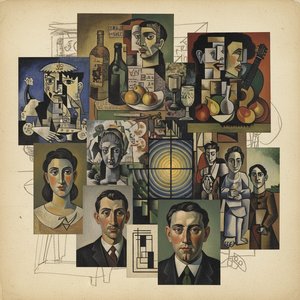
Explore 10 Cubist masterpieces by Picasso, Braque & more! Delve into the history of this revolutionary art movement. Find museum-quality reproductions and elevate your home decor with TopImpressionists. Discover all masterpieces on TopImpressionists.com

Explore the revolutionary art of Pablo Picasso with TopImpressionists.com. Discover Cubism's origins, symbolism in his masterpieces & investment insights for collectors. Expert appraisal & custom reproductions available.

キュビスムを代表する10大名作の世界へ。ピカソ、ブラックら巨匠の革新的な技と色彩が織りなす、時代を超越した芸術体験を。TopImpressionists.comで、至高のアートプリントとインテリアアイデアを発見しましょう。

Explore 10 revolutionary Cubist portraits by Picasso, Braque & more! Discover the stories behind these iconic paintings and how they shaped modern art. Find museum-quality reproductions to elevate your home decor on TopImpressionists.com.


最新の美術ニュース、限定オファー、そしてインテリアのアイデアをいち早くお届けします。
お客様のプロジェクトについてお聞かせください。当社の美術専門家が、お客様に合わせた3つのパーソナライズされた芸術提案をご提供いたします。
あなたにぴったりの3作品を無料で厳選いたします


 プレビュー
プレビュー
 プリントを購入
 シェアする
シェアする シェアする
シェアする
 詳細を見る
詳細を見る

 ダウンロード
 似ている作品
 X線調査
X線調査 スライドショー

 詳細を見る
詳細を見る









 ガラスオプションは、110cm未満のサイズでのみご利用いただけます。


