作品詳細説明
Pablo Picasso’s Woman Reading: A Study in Quiet Intensity
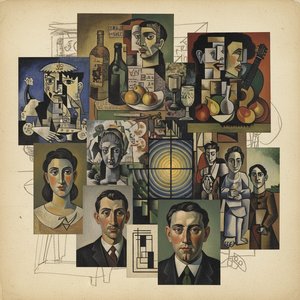
The painting “Woman Reading,” executed by Pablo Picasso in 1935, stands as a testament to the artist's masterful command of Cubism and his profound exploration of human emotion. More than just a depiction of a woman absorbed in her reading material—a commonplace scene rendered with extraordinary precision—it embodies a deeper resonance concerning contemplation, vulnerability, and the subtle complexities of inner life. Picasso’s deliberate fracturing of form isn’t merely an aesthetic exercise; it serves as a conduit for conveying psychological states that transcend literal representation.
Cubist Innovation: Deconstructing Reality
Picasso's stylistic approach aligns perfectly with the tenets of Cubism, pioneered alongside Georges Braque during their collaborative period. Rejecting traditional perspective and illusionistic techniques, he dismantles objects into geometric planes—cubes, cylinders, and cones—juxtaposing them simultaneously from multiple viewpoints. This technique isn’t about portraying an objective reality but rather capturing its essence through fragmented forms that challenge the viewer's perception. As exemplified in “Guernica,” Picasso relentlessly interrogated how visual language could communicate trauma and suffering; here, he applies similar principles to portray a woman’s internal experience. The careful layering of planes creates a palpable sense of depth without resorting to conventional shading, emphasizing texture and dimensionality through spatial ambiguity.
Symbolism Within Fragmentation
Despite the apparent simplicity of the subject matter—a woman seated in a chair reading—Picasso imbues “Woman Reading” with symbolic significance. The woman herself represents introspection and solitude, qualities that Picasso frequently explored throughout his oeuvre. Her posture conveys stillness and concentration, mirroring the act of absorbing knowledge or experiencing profound emotion. The inclusion of the chair and the bed subtly reinforces themes of domestic tranquility juxtaposed against an unspoken yearning for connection. Furthermore, the muted palette—primarily ochre, brown, and gray—contributes to the painting’s melancholic atmosphere, reflecting a contemplative mood rather than exuberant joy.
Historical Context: Navigating Turbulent Times
Created during Picasso's prolific period following World War I, “Woman Reading” reflects the anxieties and uncertainties of the era. The rise of fascism in Europe fueled artistic experimentation as artists sought new ways to express disillusionment and challenge established conventions. Picasso’s Cubist style served as a deliberate rejection of academic art traditions—a conscious effort to forge a path toward artistic freedom. Like Vermeer's "Woman Reading a Letter," Picasso aimed for an emotional impact that surpassed mere visual representation, inviting viewers to engage in a dialogue about the human condition.
Emotional Resonance: A Portrait of Quiet Reflection
Ultimately, “Woman Reading” succeeds as a powerful portrayal of inner contemplation. The painting’s understated elegance and masterful execution capture a moment of profound stillness—a space for introspection and emotional vulnerability. It speaks to the universal desire for solace amidst chaos and reminds us that beauty can be found in simplicity and quiet observation. Picasso's legacy extends far beyond his groundbreaking artistic innovations; he gifted us with images that continue to resonate with viewers today, prompting contemplation on themes of identity, emotion, and the enduring power of art to illuminate the human spirit.