

 設置イメージを表示
 シェアする
シェアする シェアする
シェアする
 詳細を見る
詳細を見る ガイドを表示

 ダウンロード
 似ている作品
 X線調査
X線調査 スライドショーを表示
 Q&A
Q&A 統計情報
統計情報Boy in a Red Vest 3

 詳細を表示
詳細を表示
ジークレー/アートプリント
スピーディーな制作と多彩な仕上げオプションが魅力の、ミュージアムクオリティなジークレー・キャンバスプリント。 ( 手描き複製画を注文する デジタル画像販売へ切り替え)




P118B ¥10

P118H ¥10

P118W ¥10

P438Z ¥10

P508JH ¥12

P508YH ¥12

P805H ¥10

P805Z ¥10

P919BZ ¥10

P919G ¥10

P919XJ ¥10

P959ZH ¥10

P968JZ ¥12

W106C ¥8

W218G ¥10

W218JH ¥8

W218Y ¥10

W307PJ ¥10

W316G ¥10

W316PJ ¥8

W316Y ¥10

W398PJ ¥8

W4111J ¥10

W500HY ¥15

W500JH ¥15

W692G ¥12

W849H ¥8

W940BG ¥15

W953PJ ¥8




標準サイズ
オーダーメイド
CM
INCH
作品のオリジナル比率に合わせた、当店の規定サイズからお選びください。
Loading sizes...

横幅
高さ
額縁や壁のスペースに合わせて、ご希望の幅と高さを入力してください。プリントはカットすることは可能ですが、元の画像より大きくすることはできないため、異なる比率のサイズを選択された場合は、画像の一部が欠けることになります。印刷を開始する前に、内容を確認していただくためのデジタルモックアップをお送りいたします。このページに表示されている画像は、実際のカット後の状態を示すものではありません。実際の仕上がりはモックアップにてご確認ください。


 ガラスオプションは、110cm未満のサイズでのみご利用いただけます。

Boy in a Red Vest 3
ジークレー/アートプリント
複製画サイズ一覧
-


合計金額
¥ 10882
A Revolutionary Portrait: Decoding Cézanne’s ‘Boy in the Red Vest’
Paul Cézanne's *The Boy in the Red Vest* (Le Garçon au gilet rouge) isn’t merely a depiction of youthful innocence; it’s a cornerstone of modern art, representing a decisive break from Impressionism and establishing Cézanne as one of the progenitors of Cubism. Painted around 1882 during his formative years in Aix-en-Provence, this deceptively simple composition belies a complex exploration of form and perspective that continues to fascinate scholars and artists alike. Venturing beyond mere visual representation, Cézanne sought to capture not just what he saw but how he *felt* about seeing it—a characteristic ambition that would define his entire artistic career.The Style & Technique: Pioneering Geometric Abstraction
Cézanne’s approach departed dramatically from Impressionism's focus on fleeting light and color, prioritizing solidity and structure. He employed a technique known as “alla prima,” applying paint directly onto the canvas without preliminary sketches, resulting in textured surfaces that convey palpable physicality. The painting utilizes thick impasto—heavy application of pigment—creating ridges and valleys that sculpt the form of the boy and subtly suggest the contours of the surrounding landscape. Notice how Cézanne dismantles traditional perspective, flattening the space and presenting multiple viewpoints simultaneously. This deliberate fragmentation anticipates Cubism’s radical simplification of forms, foreshadowing a revolution in artistic representation. The use of muted earthy tones—primarily ochre and umber—further enhances the painting's contemplative mood.Historical Context: Impressionism's Legacy & Cézanne's Artistic Quest
Cézanne emerged from the shadow of Impressionism, influenced by artists like Monet and Renoir who championed capturing atmospheric effects. However, Cézanne rejected Impressionism’s ephemeral beauty, arguing that it failed to convey the essence of reality. He was driven by a profound conviction that art should strive for permanence—a belief rooted in his fascination with sculpture and his desire to depict objects as they truly exist, independent of optical perception. This intellectual pursuit fueled his experimentation with form and color, pushing him toward increasingly abstract representations. The painting’s creation coincided with Cézanne's growing disillusionment with the artistic conventions of his time—a sentiment echoed in his famously terse pronouncements about “making it over.”Symbolism & Emotional Resonance: Beyond Surface Appearance
While seemingly straightforward, *The Boy in the Red Vest* is laden with symbolic significance. The red waistcoat itself serves as a focal point, drawing the eye and injecting vibrancy into the muted palette. Color, according to Cézanne, possessed emotional power—a conviction he rigorously tested throughout his artistic life. The boy’s gaze directs outwards, suggesting contemplation and introspection; he embodies a quiet dignity that transcends mere portraiture. Furthermore, the inclusion of the boat – likely Cézanne's studio – subtly reinforces the artist’s connection to nature and his desire to capture its enduring presence within the confines of the canvas. Ultimately, the painting evokes feelings of serenity and melancholy—a testament to Cézanne’s ability to distill profound emotion into a deceptively simple visual form.A Lasting Influence: Shaping Modern Art's Future
Cézanne’s influence extended far beyond his own lifetime, inspiring generations of artists who embraced abstraction and geometric simplification. Picasso famously declared that Cézanne “destroyed perspective.” Matisse acknowledged Cézanne as "the father of us all." His groundbreaking technique paved the way for Cubism and Surrealism, fundamentally reshaping artistic conventions and establishing Cézanne’s place among the titans of modern art. Reproductions of *The Boy in the Red Vest* continue to captivate audiences today, offering a glimpse into the mind of an artist who dared to challenge convention and forge his own path toward artistic innovation.Q&A
「Boy in a Red Vest 3」の解説ページはどこにありますか?
セザンヌ作「Boy in a Red Vest 3」の解説資料ページでは、印刷して活用できる2枚構成のファクトシートを提供しています。これには、作品の詳細をまとめたデータテーブル、アーティストの生涯における時代背景を示す年代チャート、同アーティストによる他の作品、抽出されたカラーパレット、そしてそのままコピーして使用できる4つの形式の引用文献情報が含まれています。
セザンヌ作「Boy in a Red Vest 3」 に近い雰囲気の作品を探すには?
セザンヌ作「Boy in a Red Vest 3」の関連作品ページでは、関連する作品をご紹介しています。
「Boy in a Red Vest 3」の詳細を確認することはできますか?
「Boy in a Red Vest 3」は、作品のX線解析ページにて、層ごとに詳しく観察することができます。このビューアは修復家のライトベンチに着想を得ており、画像の11層にわたる光学的な読み取りを可能にしています。


作家プロフィール
ポール・セザンヌ:近代美術の礎を築いた画家
ポール・セザンヌは、1839年に南フランスのエクス=アン=プロヴァンスで生まれ、印象派の儚い光の描写と、キュビスムの断片化された形態を結びつける架け橋となった、まさに革命的な芸術家でした。彼の人生は、一躍成功を収めるのではなく、自己探求の長い道のりであり、自己疑念や批判に直面しながらも、近代美術の流れを根底から変える遺産を残しました。裕福な家庭に生まれ、父親は帽子職人から銀行家へと転身し、セザンヌは経済的な安定を得て、商業的な成功のプレッシャーなしに芸術に専念することができました。当初は父親の意向により法学を志しましたが、芸術への情熱がそれを上回り、最終的には法律を捨て、絵画の世界に飛び込みました。ロマン主義の影響やバルビゾン派の風景描写への傾倒など、初期には様々な影響を受けましたが、ポール・ゴーギャンやジョルジュ・スーラといった画家たちとの出会いを通じて、革新的な色彩と形態に対する彼らのアプローチに触発され、独自の道を切り開いていきます。印象を超えて:構造へと至る芸術的進化
セザンヌの初期作品には、ロマン主義特有の劇的で感情的なテーマが反映されており、暗いパレットと表現力豊かな筆致が特徴でした。しかし、この初期段階は、より分析的で画期的なアプローチへの移行のための単なるステップに過ぎませんでした。印象派が好んだ光の儚い瞬間を捉えるだけでは不満を感じたセザンヌは、対象物の背後にある構造を理解し、表現することを追求しました。彼は、自分が何を見ているかだけでなく、現実を構成する根本的な形態がいかに認識されているのかを知りたいと考えました。この探求が、自然の形を幾何学的な等価物へと分解するという手法を生み出しました。彼の技法は、複雑な色彩とテクスチャのフィールドを作り上げるために注意深く重ねられた小さな反復筆致によって特徴づけられ、前例のない安定感と奥行きを生み出します。彼は単なる写実性ではなく、対象を複数の視点から同時に提示することで、伝統的な遠近法の概念に挑戦し、鑑賞者に彼の構成の構築された性質と積極的に関わることを強いるのです。この意図的な歪みは恣意的なものではなく、時間の一瞬だけでなく、知覚の統合を表す、より完全な形の理解を伝えるための試みでした。風景、静物、そして人体:主要作品と繰り返されるモチーフ
セザンヌの作品群は非常に多様で、風景画、静物画、肖像画、そして沐浴者の描写などを含みますが、そのすべてが彼の独特な形態と色彩のアプローチによって統一されています。1880年に描かれたジャス・ド・ブーファンの池は、形を注意深く配置し、色調を調整することで自然の本質を捉える能力を示す代表的な風景画です。1866年のエミール・ゾラの肖像は、彼の発展途上のスタイルを示し、親友であり作家であるゾラへの魅力的な洞察を提供します。リンゴなどの果物を取り上げた静物画は、単なる対象の描写ではなく、ボリューム、光、空間関係を探求する試みです。モン・サン=ヴィクトールシリーズはセザンヌにとって強迫観念とも言えるモチーフであり、何十年にもわたって形態と遠近法を徹底的に調査することを可能にしました。これらの絵画は単なる山の描写ではなく、私たちが奥行き、ボリューム、光と影の相互作用をどのように認識するかを探求する研究なのです。最後に、牧歌的な風景の中に裸婦を描いた沐浴者シリーズは、人体と自然とのつながりを深く探求し、しばしば時の流れを超越した静けさと瞑想に満ちた雰囲気で表現されています。革新によって築かれた遺産:近代美術への影響
ポール・セザンヌの芸術が後世の世代に与えた影響は計り知れません。彼は、画期的な絵画言語への貢献により、「近代美術の父」として広く認められており、20世紀の主要な芸術運動の多くへの道を開きました。パブロ・ピカソやジョルジュ・ブラックは、セザンヌの幾何学的形態と複数の視点への強調に深く負い目を抱いており、それがキュビスムの中核となる原則となりました。彼の大胆な色彩の使用はまた、アンリ・マティスが率いるフォーヴィズム運動にも影響を与え、彼らは非現実的で鮮やかな色調を受け入れました。シュルレアリスムの芸術家でさえ、セザンヌの主観的な知覚と心理的な深さの探求に共鳴を見出しました。特定の運動を超えて、セザンヌは芸術家の個人的なビジョンを重視し、伝統的な学術的制約を拒絶することで、世代を超えた画家たちに新たな表現形態を探求する自由を与えました。彼は表象の定義そのものを覆し、現実を模倣することから、構造と主観的な知覚に基づいた視覚体験を構築することへの焦点をシフトさせました。1906年の彼の死は終わりではなく、始まりを告げるものでした。それは、彼の革命的なビジョンによって深く形作られた、芸術史における新たな時代の幕開けでした。
セザンヌ
1839 - 1906 , フランス
プロフィール概要
- フルネーム: ポール・セザンヌ
- 主な作品:
- ジャス・ド・ブーファン池の上の昼
- エミール・ゾラの肖像
- 森
- モン・サン=ヴィクトワールシリーズ
- バテュ
- 出生地: エクス=アン=プロヴァンス (フランス)
- 国籍: フランス
- 影響を与えたアーティスト:
- キュビスム
- フォーヴィスム
- シュルレアリスム
- 影響を受けたアーティスト:
- ロマン主義
- バルビゾン学派
- ポール・ゴーギャン
- ジョルジュ・スーラ
- 没年月日: 1906年10月22日
- 生年月日: 1839年1月19日
- 芸術運動: 後期印象派
関連記事
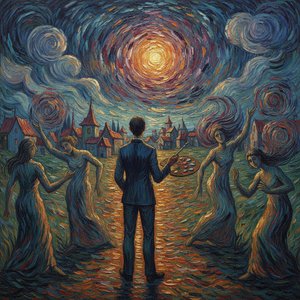
Beyond the Light: Capturing Emotion Through the Expressive Soul of Post-Impressionism
Explore the profound emotional depth of Post-Impressionism. Discover how masters like Van Gogh and Cézanne moved beyond light to capture raw feeling through color and texture. A journey into art history for the true connoisseur.

Beyond the Light: Discovering the Soul and Emotional Depth of Post-Impressionism
Embark on a cultural journey through Post-Impressionism. Discover the profound emotional depth of masters like Van Gogh and Cézanne, exploring how they moved beyond light to capture the very soul of human experience through vibrant color and symbolic form.

Capturing the Light: A Journey Through the Ethereal Magic of Impressionism and Post-Impressionism
Embark on a cultural journey through the luminous world of Impressionism. Discover the profound beauty of Monet, Van Gogh, and Cézanne through expert art history insights and explore how to bring these timeless masterpieces into your home with museum-quality hand-painted reproductions.
テーマ、スタイル、特徴別に分類された作品を探索しましょう。


