

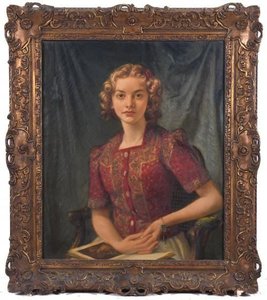
 50.0 x 43.0 cm
 Doncaster Museum And Art Gallery
当社のアーティストが、お客様のご希望のサイズと額縁に合わせて、キャンバスに手描きで制作する油彩画です。 ( プリント版に切り替え 画像に切り替え)
作品のオリジナル比率に合わせた、当店の規定サイズからお選びください。

特定のフレームやスペースに合わせて、ご希望のサイズをご入力いただけます。選択されたサイズが元の画像の比率と異なる場合、アートワークをトリミングするか、手描きで要素を追加して絵画を拡張いたします。デジタルモックアップ を制作し、制作開始前にご確認(承認)をいただきます。
画面上のプレビューは、実際のトリミングや拡張を正確に反映しているものではありません。最終的な構図は、モックアップによってのみ正確にご確認いただけます。
カスタムサイズもご利用いただけますが、元の比率を維持するためには、あらかじめ用意されたリストからサイズを選択することをお勧めいたします。

Romance
複製画のサイズ
Born in Allegheny City, Pennsylvania – now part of Pittsburgh – in 1844, Mary Stevenson Cassatt was a remarkably independent and influential figure in the late 19th-century art world. Her life story is one of transatlantic journeys, artistic mentorships, and a profound dedication to capturing the intimate realities of women’s lives, particularly within the context of family and domesticity. Unlike many female artists of her era, Cassatt wasn't initially groomed for a career in painting; her father, Robert Simpson Cassat, a successful stockbroker, envisioned a more conventional path for his daughter. However, fueled by an innate artistic sensibility and supported by her equally financially secure mother, Katherine Kelso Johnston, she pursued her passion, ultimately forging her own distinctive voice within the burgeoning Impressionist movement.
Cassatt’s early training was initially rooted in academic traditions. She studied at the Pennsylvania Academy of the Fine Arts, a common starting point for aspiring American artists. However, it was her relocation to Paris in 1865 that proved transformative. There, she immersed herself in the vibrant artistic community, taking private lessons from established masters like Jean-Léon Gérôme and diligently copying works by Old Masters such as Correggio and Parmigianino. This period of intensive study laid the groundwork for her later stylistic developments, particularly her meticulous attention to detail and her ability to render fabrics with remarkable realism.
Unlike many of her male contemporaries who frequently depicted historical or mythological scenes, Cassatt’s work centered almost exclusively on the lives of women – mothers, children, nurses, and domestic servants. She wasn't interested in grand narratives; instead, she meticulously observed and portrayed the quiet moments of everyday existence within the confines of the home. Her paintings are imbued with a sense of intimacy and empathy, offering poignant glimpses into the emotional landscape of her subjects.
Her most celebrated series, “Little Girls,” captures the tender bond between mothers and children. These works, rendered in soft pastels and delicate brushstrokes, are characterized by their psychological depth and subtle expressions of affection. Similarly, her depictions of nurses attending to sick children reveal a compassionate understanding of human vulnerability. Cassatt’s choice of subject matter was not merely aesthetic; it reflected her belief that women's experiences were worthy of artistic representation and that the domestic sphere held profound significance.
Notably, she often depicted these scenes from a slightly elevated perspective, subtly shifting the viewer’s position to one of observation – mirroring the role of the artist as a witness to private moments.Cassatt's artistic style evolved significantly throughout her career. Initially influenced by academic traditions, she gradually embraced the Impressionist principles of *plein air* painting, broken brushstrokes, and an emphasis on capturing fleeting effects of light. She experimented with various media, including oil paint, pastels, and prints, each offering unique possibilities for expression.
Mary Stevenson Cassatt's contribution to the art world is multifaceted. As one of the few American artists associated with the Impressionist movement, she challenged conventional notions of artistic representation and paved the way for future generations of female painters. Her focus on domestic life and female subjects offered a fresh perspective on human experience, moving beyond traditional heroic narratives.
Her work continues to resonate today, admired for its emotional depth, technical skill, and insightful portrayal of women’s lives. She remains an important figure in the history of art, demonstrating the power of observation, empathy, and artistic innovation.
The Metropolitan Museum of Art in New York City holds a significant collection of Cassatt’s works, providing invaluable insights into her artistic development and creative vision. Their extensive holdings include paintings, pastels, prints, and drawings that showcase the breadth and depth of her oeuvre. The museum's essays on Cassatt offer a comprehensive overview of her life and career, solidifying her place as a pivotal figure in 19th-century art.
1926 - 2011 , Austria


最新の美術ニュース、限定オファー、そしてインテリアのアイデアをいち早くお届けします。
お客様のプロジェクトについてお聞かせください。当社の美術専門家が、お客様に合わせた3つのパーソナライズされた芸術提案をご提供いたします。
あなたにぴったりの3作品を無料で厳選いたします

 プレビュー
プレビュー
 シェアする
シェアする シェアする
シェアする
 詳細を見る
詳細を見る

 ダウンロード
 似ている作品
 X線調査
X線調査 スライドショー
 詳細を見る
詳細を見る






































 ガラスオプションは、110cm未満のサイズでのみご利用いただけます。


