

当社のアーティストが、お客様のご希望のサイズと額縁に合わせて、キャンバスに手描きで制作する油彩画です。 ( Switch to Print Switch to Image)
作品のオリジナル比率に合わせた、当店の規定サイズからお選びください。

特定のフレームやスペースに合わせて、ご希望のサイズをご入力いただけます。選択されたサイズが元の画像の比率と異なる場合、アートワークをトリミングするか、手描きで要素を追加して絵画を拡張いたします。デジタルモックアップ を制作し、制作開始前にご確認(承認)をいただきます。
画面上のプレビューは、実際のトリミングや拡張を正確に反映しているものではありません。最終的な構図は、モックアップによってのみ正確にご確認いただけます。
カスタムサイズもご利用いただけますが、元の比率を維持するためには、あらかじめ用意されたリストからサイズを選択することをお勧めいたします。

Untitled
複製画のサイズ
Born in the historic German city of Lübeck on August 18, 1935, Peter Klasen emerged as a profound witness to the transformations of the twentieth century. His early life was steeped in an environment sensitive to the arts; he grew up in a family where creative inclinations were nurtured, boasting an uncle who was a pupil of the legendary expressionist Otto Dix and a grandfather who served as a dedicated patron of art. This rich lineage provided the fertile soil from which his complex artistic vision would grow. Between 1956 and 1959, Klasen refined his technical prowess at the avant-garde Berlin University of the Arts, an experience that laid the groundwork for his later explorations into the friction between humanity and the machine.
Following his studies, a scholarship granted him passage to Paris in 1959, a move that would expand his horizons beyond German borders. It was during the 1960s that Klasen established himself as a pivotal figure in the Nouvelle Figuration, or Narrative Figuration, movement. This era marked the beginning of his lifelong interrogation of the modern landscape. He did not merely paint scenes; he constructed visual metaphors that critiqued the rapid standardization of Western society. His work began to capture the signs of our urban existence, utilizing the language of mass media to condemn the creeping uniformity of a consumer-driven world.
As his career progressed into the 1970s, Klasen achieved international renown through his groundbreaking "binary paintings." These works are characterized by a haunting tension, often presenting a stark opposition between fragments of the human body and industrial or commercial objects. Through this technique, he explored the profound anxiety of a contemporary society split between the concept of being and the impulse of having. His canvases became battlegrounds where the sensuality of the human form collided with the cold, often "disgusting" reality of industrial progress.
His mastery of photorealism serves as more than a technical feat; it is a deliberate tool for confrontation. By rendering factories, workshops, and technological advancements with breathtaking precision, he forces the viewer to confront the dehumanizing effects of mass production. In his most evocative works, the human figure often appears fragmented or intertwined with machinery, existing within environments that feel devoid of warmth or organic connection. This meticulous detail serves to highlight the hostility of the modern city, where the individual is frequently reduced to a mere commodity within a larger, impersonal system.
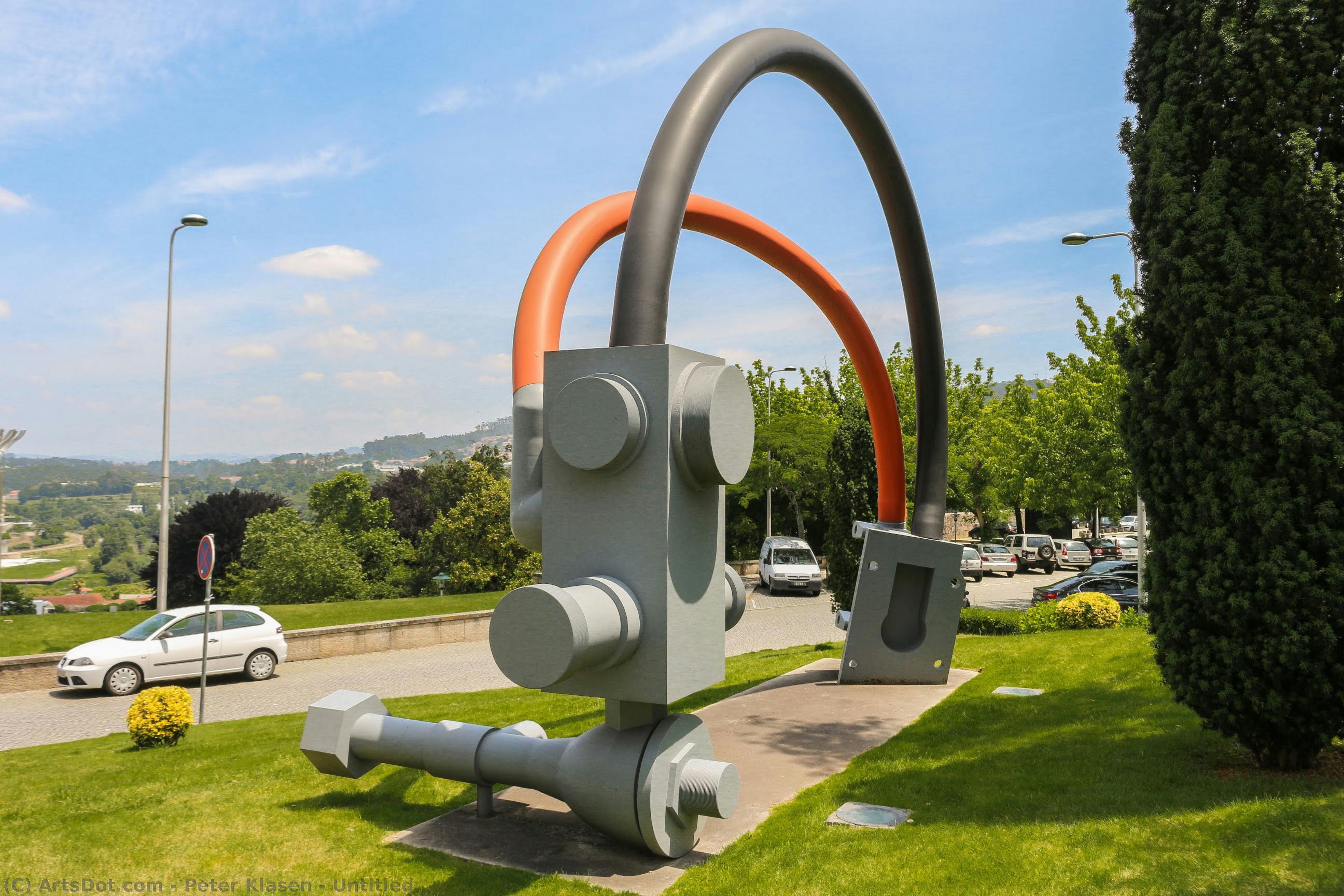
The significance of Peter Klasen’s contribution to modern art lies in his ability to translate the complexities of technological advancement into a visceral visual language. His work transcends simple representation, acting as a sociological critique of the late twentieth century. Whether through his expansive paintings or his striking industrial sculptures—which utilize materials like steel, aluminum, and vibrant orange accents to evoke urban installations—Klasen remains a master of contrast.
His enduring impact can be summarized through several key artistic pillars:
Today, Klasen stands as a pioneer whose work continues to resonate in an era still grappling with the consequences of digital and industrial saturation. He remains an essential voice for anyone seeking to understand the intersection of human identity and the relentless march of progress.

1935 - , Germany

メトロポリタン美術館の至宝25選。モネ、ゴッホ、レンブラント…名画に秘められた物語と技法を紐解きます。印象派からルネサンスまで、時代を超えて輝く芸術作品をウォールアートで暮らしに取り入れませんか?TopImpressionists.comで全コレクションをご覧ください。

Journey through Wassily Kandinsky's 25 most iconic abstract paintings. Explore his revolutionary use of color, form & spiritual expressionism. Find museum-quality Kandinsky reproductions and elevate your home decor with TopImpressionists.com. Discover all masterpieces on TopImpressionists.com!

フェルナン・レジェの傑作25選。機械美と色彩が織りなすキュビズムの世界を紐解きます。TopImpressionistsで、フランス絵画の巨匠レジェの作品を高精細プリントで。インテリアアートやギフトにも最適です。全コレクションはこちら: TopImpressionists.com

Journey through art history with our Top 10 bronze sculptures! Explore masterpieces by Rodin, Michelangelo & more. Discover stories behind iconic statues and find museum-quality reproductions for your home decor at TopImpressionists.com.

モンドリアン、マレーヴィチ…幾何学的抽象絵画を代表する傑作10選。各作品の背景や色彩構成、アーティストの情熱に迫ります。美術館品質の複製画はTopImpressionists.comで。オンラインでアートコレクションをご覧ください。


最新の美術ニュース、限定オファー、そしてインテリアのアイデアをいち早くお届けします。
お客様のプロジェクトについてお聞かせください。当社の美術専門家が、お客様に合わせた3つのパーソナライズされた芸術提案をご提供いたします。
あなたにぴったりの3作品を無料で厳選いたします
 Preview
 シェアする
シェアする シェアする
シェアする
 詳細を見る
詳細を見る

 ダウンロード
 似ている作品
 X線調査
X線調査 スライドショー


 詳細を見る
詳細を見る






































 ガラスオプションは、110cm未満のサイズでのみご利用いただけます。


