





























作品のオリジナル比率に合わせた、当店の規定サイズからお選びください。

特定のフレームやスペースに合わせて、ご希望のサイズをご入力いただけます。選択されたサイズが元の画像の比率と異なる場合、アートワークをトリミングするか、手描きで要素を追加して絵画を拡張いたします。デジタルモックアップ を制作し、制作開始前にご確認(承認)をいただきます。
画面上のプレビューは、実際のトリミングや拡張を正確に反映しているものではありません。最終的な構図は、モックアップによってのみ正確にご確認いただけます。
カスタムサイズもご利用いただけますが、元の比率を維持するためには、あらかじめ用意されたリストからサイズを選択することをお勧めいたします。

Quadro I
複製画のサイズ
Pieter Cornelis Mondriaan’s artistic odyssey began in Amersfoort, Netherlands, amidst the familiar landscapes of his youth – a stark contrast to the radical transformations that would define his legacy. Initially drawn to landscape painting influenced by the Hague School and Dutch Impressionism, notably *The Red Mill*, young Piet diligently honed his craft, mastering technique while simultaneously grappling with an unspoken desire for something more profound than mere visual imitation.
Early explorations encompassed Pointillism and Fauvism, each offering a distinct perspective on color and form. However, Mondrian swiftly recognized that these styles lacked the capacity to capture the core of his artistic aspirations – a yearning for simplification that transcended stylistic conventions. He wasn’t merely replicating nature; he sought to distill its fundamental principles into geometric abstraction.
This pivotal shift towards geometric abstraction marked a decisive break from traditional representation. Mondrian abandoned naturalistic depictions altogether, opting instead for a visual language comprised exclusively of straight lines and squares – a deliberate rejection of organic forms and a commitment to pure abstraction.
The resulting canvases—characterized by their monochrome palette and rigorously structured compositions—became emblems of modern art’s quest for universality. Mondrian believed that these geometric elements could express the underlying harmony of the cosmos, mirroring the mathematical order he perceived as inherent in nature itself. This conviction fueled his unwavering dedication to his artistic vision throughout his prolific career.
Despite his rejection of naturalism, Mondrian’s artistic development was undeniably shaped by Cubism, particularly Picasso's pioneering experiments with fractured perspectives. The influence of Cézanne’s emphasis on underlying geometric forms can also be discerned in Mondrian’s approach to depicting space.
However, Mondrian steadfastly maintained his commitment to pure abstraction, refining his technique and expanding his palette—introducing subtle variations in color—to heighten the expressive potential of his compositions. He meticulously considered every element within each painting, striving for a balance between visual clarity and emotional resonance.
Beyond its formal rigor, Mondrian’s art carries profound symbolic significance. The black lines represent stability and horizontality—reflecting the grounding forces of earth—while the white squares symbolize purity and verticality—representing the aspiration towards heaven. Together, these elements convey a sense of spiritual contemplation and affirm Mondrian's belief in the transformative power of geometric abstraction.
Today, Mondrian’s paintings continue to inspire artists and designers alike, captivating viewers with their timeless elegance and conveying an enduring message of harmony and balance. Reproductions of his iconic canvases offer a window into the intellectual and aesthetic convictions that underpinned one of modern art's most influential figures—a testament to the enduring beauty and profound contemplation inherent in pure geometric abstraction.

1872 - 1944 , オランダ

モンドリアン、マレーヴィチ…幾何学的抽象絵画を代表する傑作10選。各作品の背景や色彩構成、アーティストの情熱に迫ります。美術館品質の複製画はTopImpressionists.comで。オンラインでアートコレクションをご覧ください。

Journey through Wassily Kandinsky's 25 most iconic abstract paintings. Explore his revolutionary use of color, form & spiritual expressionism. Find museum-quality Kandinsky reproductions and elevate your home decor with TopImpressionists.com. Discover all masterpieces on TopImpressionists.com!

Explore the evolution of geometric abstraction from Cubism to contemporary art. Discover key artists like Malevich & Mondrian, investment insights, and expert collecting advice at TopImpressionists.
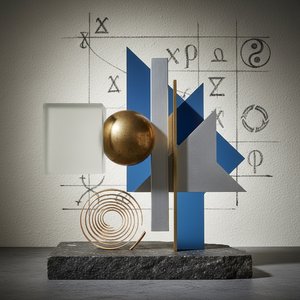
Explore the philosophical roots & artistic evolution of geometric abstraction with TopImpressionists. Discover Mondrian, Malevich, De Stijl & more. Expert insights for collectors and art enthusiasts.

フェルナン・レジェの傑作25選。機械美と色彩が織りなすキュビズムの世界を紐解きます。TopImpressionistsで、フランス絵画の巨匠レジェの作品を高精細プリントで。インテリアアートやギフトにも最適です。全コレクションはこちら: TopImpressionists.com


最新の美術ニュース、限定オファー、そしてインテリアのアイデアをいち早くお届けします。
お客様のプロジェクトについてお聞かせください。当社の美術専門家が、お客様に合わせた3つのパーソナライズされた芸術提案をご提供いたします。
あなたにぴったりの3作品を無料で厳選いたします


 プレビュー
プレビュー
 プリントを購入
 シェアする
シェアする シェアする
シェアする
 詳細を見る
詳細を見る

 ダウンロード
 似ている作品
 X線調査
X線調査 スライドショー
 詳細を見る
詳細を見る









 ガラスオプションは、110cm未満のサイズでのみご利用いただけます。


