
当社のアーティストが、お客様のご希望のサイズと額縁に合わせて、キャンバスに手描きで制作する油彩画です。 ( Switch to Print Switch to Image)





























作品のオリジナル比率に合わせた、当店の規定サイズからお選びください。

特定のフレームやスペースに合わせて、ご希望のサイズをご入力いただけます。選択されたサイズが元の画像の比率と異なる場合、アートワークをトリミングするか、手描きで要素を追加して絵画を拡張いたします。デジタルモックアップ を制作し、制作開始前にご確認(承認)をいただきます。
画面上のプレビューは、実際のトリミングや拡張を正確に反映しているものではありません。最終的な構図は、モックアップによってのみ正確にご確認いただけます。
カスタムサイズもご利用いただけますが、元の比率を維持するためには、あらかじめ用意されたリストからサイズを選択することをお勧めいたします。

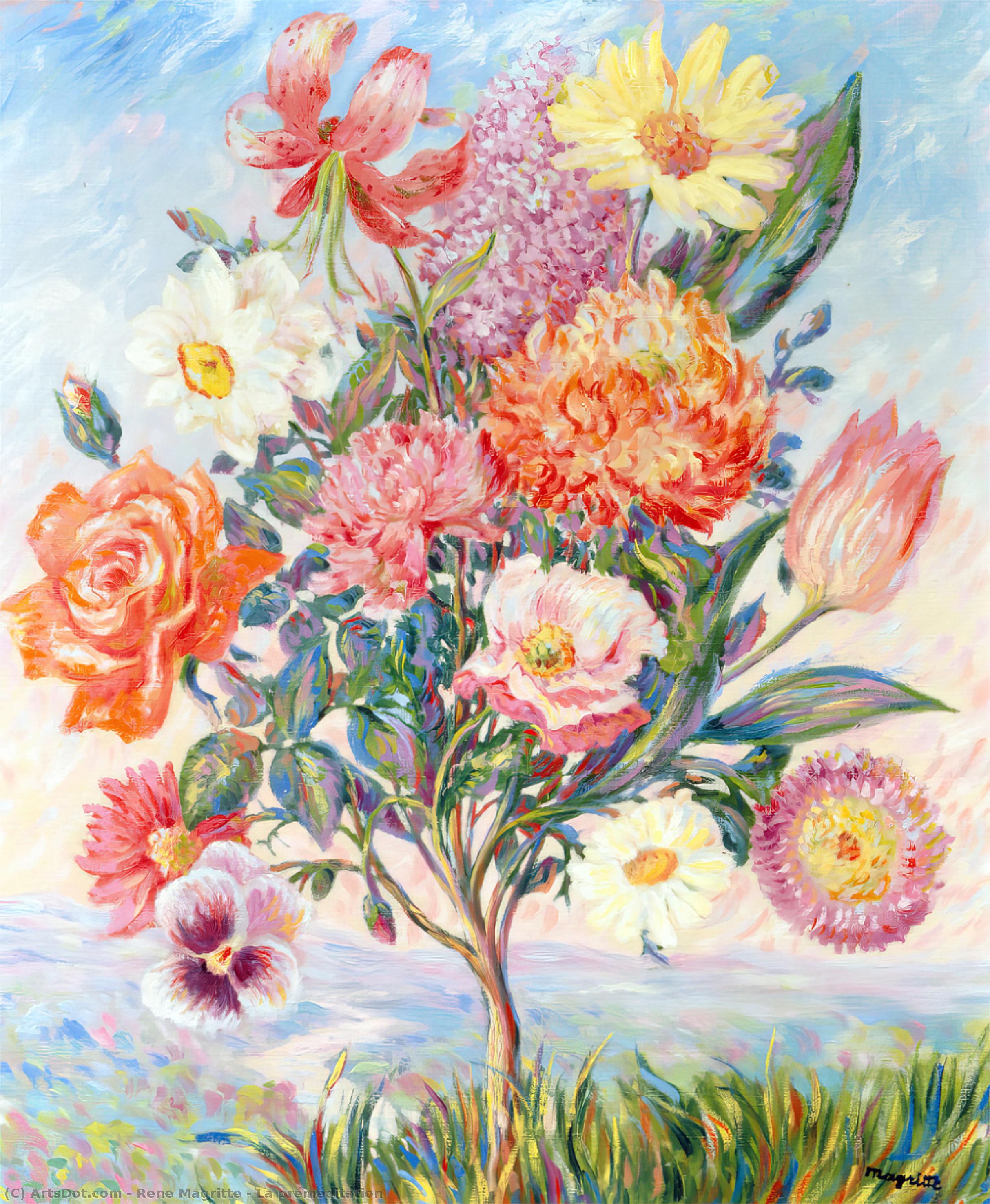
Forethought
複製画のサイズ
René Magritte's Forethought is not merely a depiction of flowers; it’s an invitation into the subconscious, a carefully constructed puzzle designed to challenge our perceptions of reality. Painted with a vibrant palette characteristic of his mature style, this bouquet – a riot of color and form – immediately draws the viewer in, yet subtly unsettles with its deliberate ambiguity. The arrangement itself mimics a stylized tree, lending a sense of both natural beauty and an almost architectural rigidity to the composition. It’s a scene brimming with quiet contemplation, a feeling amplified by the suggestion of a distant beach or outdoor setting that provides a grounding element to the otherwise dreamlike quality of the floral display.
Magritte’s oeuvre is deeply rooted in the exploration of memory, loss, and the elusive nature of truth. The recurring motif of veiled figures, a direct consequence of his mother’s tragic death at a young age – her image forever imprinted on the canvas through the obscured face in the River Sambre – subtly informs Forethought. While not overtly present, this foundational trauma contributes to the painting's overall sense of melancholy and invites us to consider what remains unseen, unspoken, and ultimately, unrecoverable. The flowers themselves can be interpreted as symbols of fleeting beauty and the ephemeral nature of existence, mirroring the transient quality of memory.
Executed with Magritte's signature meticulous technique, Forethought exemplifies his mastery of illusionistic painting. The artist employs a smooth, almost photographic realism to render the flowers, creating an uncanny sense of depth and three-dimensionality. This precision contrasts sharply with the underlying surrealist intent, generating a tension that is central to Magritte’s artistic strategy. His use of color is particularly noteworthy – bold hues are juxtaposed with muted tones, further enhancing the painting's dreamlike quality. The layering of paint creates subtle variations in tone and texture, adding to the overall richness and complexity of the work.
Painted during a period of significant artistic experimentation, Forethought aligns with the core tenets of Surrealism. Magritte, along with artists like Salvador Dalí, sought to liberate art from the constraints of representational accuracy, instead exploring the realm of dreams, fantasies, and irrationality. This work reflects a broader movement questioning established notions of reality and inviting viewers to engage in a more subjective interpretation of visual experience. The painting’s impact resonates within the larger context of 20th-century art's fascination with psychology and the subconscious mind.
Forethought possesses a quiet, contemplative power that transcends its subject matter. It evokes a sense of both beauty and unease, inviting viewers to pause and consider their own perceptions of reality. The painting’s harmonious composition and vibrant colors create a visually arresting experience, while the underlying symbolism encourages deeper reflection on themes of memory, loss, and the mysteries of the human condition. This piece is ideal for those seeking to infuse their spaces with a touch of intellectual intrigue and emotional resonance.
1898年11月21日、ベルギーのレシーヌで生まれたルネ・マグリットは、20世紀美術史における最も重要なシュルレアリストの一人として、その名を刻みました。幼少期のトラウマ的な出来事——母親の自殺——は、彼の芸術的探求に深く影を落とし、隠された現実、喪失感、そして見えないものへの執着というテーマを作品全体に織り込みました。マグリットの初期は印象派の影響を受けましたが、すぐに独自の視覚言語を確立し、日常的なオブジェクトを予期せぬ文脈で配置することで、私たちの認識と現実に対する固定観念を揺さぶるようになりました。
マグリットの芸術的転換点となったのは、1922年にジョルジュ・ド・キリコの絵画『愛の歌』に出会った瞬間でした。ド・キリコの夢幻的な風景と不条理な組み合わせは、マグリットに新たな視覚的可能性を提示し、シュルレアリスムへの道を切り開きました。しかし、マグリットのシュルレアリスムは、他の多くの芸術家とは一線を画していました。彼は無意識からの自動的な表現や夢の解釈といった手法を避け、むしろ緻密な描写と論理的な構成を用いて、現実の矛盾を浮き彫りにすることに焦点を当てました。彼の作品は、まるで精密な写真のように見える一方で、その配置や組み合わせによって、見る者を混乱させ、思考を刺激するのです。
マグリットの作品における象徴性は、単なる装飾ではなく、彼の哲学的な探求の中心です。パイプが「これはパイプではありません」と宣言する『イメージの裏切り』は、最も有名な例の一つであり、表現と現実の関係について深く考えさせられます。また、『愛人たち』に見られるベールで顔を覆われた人物は、隠蔽、秘密、そして人間関係における不可解さを暗示しています。マグリットは、日常的なオブジェクトを組み合わせることで、視覚的トリックを生み出し、私たちの認識を欺きます。『時の停止』では、機関車が壁を突き破り、時間と空間の概念を混乱させます。これらの作品は、単なる奇抜なイメージではなく、現実の本質に対するマグリットの深い問いかけなのです。
マグリットは生涯を通じて、自身の芸術的探求を深め続けました。1960年代には、反復や錯覚、そして言語の力をテーマにした作品を発表し、その表現はますます洗練されていきました。1967年8月15日、マグリットは68歳でこの世を去りましたが、彼の遺産は美術界に深く刻まれています。ポップアート、ミニマリズム、そしてコンセプチュアルアートなど、20世紀の様々な芸術運動に影響を与え、現代においても多くのアーティストにインスピレーションを与え続けています。現在では、ブリュッセルの王立美術館内にマグリット博物館が設立され、彼の作品を包括的に展示しています。ルネ・マグリットは、日常の中に潜む謎を解き明かし、現実の境界線を揺さぶる視覚的パラドックスを通して、私たちに新たな視点を与え続けているのです。

1898 - 1967 , ベルギー

ルネ・マグリット傑作25選。シュルレアリスムを代表するベルギー絵画の巨匠、その幻想的な世界と隠されたメッセージを紐解きます。TopImpressionistsで高品質なアートプリントや複製画を見つけ、お部屋に名画の感動を。今すぐコレクションをご覧ください。

メトロポリタン美術館の至宝25選。モネ、ゴッホ、レンブラント…名画に秘められた物語と技法を紐解きます。印象派からルネサンスまで、時代を超えて輝く芸術作品をウォールアートで暮らしに取り入れませんか?TopImpressionists.comで全コレクションをご覧ください。

ワシントン美術館の至宝25選。セザンヌ、マティス、ピカソ…名画に秘められた物語と色彩を紐解きます。TopImpressionistsで高品質な絵画複製やインテリアアートを見つけ、お部屋に芸術の輝きを。今すぐコレクションをご覧ください!

アンリ・マティスの傑作25選🎨 色彩と情熱が織りなす世界を旅する。フォーヴィスム代表の巨匠、マティスの絵画の魅力と歴史を紐解きます。TopImpressionistsで高品質なアートプリントや複製画を見つけ、インテリアに芸術的な輝きを✨ Explore the full collection online

パウル・クレーの傑作25選🎨 色彩と象徴に満ちた抽象絵画の世界を旅。ドイツ表現主義からバウハウスまで、クレーの革新的な技法と感動的な作品群をTopImpressionistsで。高品質な美術品複製やインテリアアートも豊富です。オンラインストアで全コレクションをご覧ください。


最新の美術ニュース、限定オファー、そしてインテリアのアイデアをいち早くお届けします。
お客様のプロジェクトについてお聞かせください。当社の美術専門家が、お客様に合わせた3つのパーソナライズされた芸術提案をご提供いたします。
あなたにぴったりの3作品を無料で厳選いたします

 Preview
 シェアする
シェアする シェアする
シェアする
 詳細を見る
詳細を見る

 ダウンロード
 似ている作品
 X線調査
X線調査 スライドショー

 詳細を見る
詳細を見る









 ガラスオプションは、110cm未満のサイズでのみご利用いただけます。


