
迅速な制作と多彩な仕上げオプションを備えた、ミュージアムクオリティのジークレーまたはキャンバスプリント。 ( 手描きの絵画を購入 画像を購入)
作品のオリジナル比率に合わせた、当店の規定サイズからお選びください。

特定のフレームやスペースに合わせて、ご自身でサイズを指定することも可能です。選択されたサイズが元の画像の比率と一致しない場合、作品をトリミングするか、鏡面反射または単色での塗りつぶしによって画像を拡張いたします。制作を開始する前に、ご確認用のデジタルモックアップをお送りいたします。
画面上のプレビューには、実際のトリミングや拡張は反映されませんのでご注意ください。最終的な構図を正確に確認できるのは、モックアップのみとなります。
カスタムサイズも承っておりますが、元の比率を維持するためには、あらかじめ用意されたリストからサイズを選択することをお勧めいたします。

L
複製画のサイズ
Born on August 12, 1900, in the vibrant heart of Kingston, Jamaica, Ron Clive Moody was a sculptor whose hands possessed the rare ability to breathe life into the silent medium of wood. While his early path seemed destined for the clinical precision of medicine—having moved to England in 1923 to pursue dentistry at King's College London—his spirit was irrevocably drawn to the tactile and the expressive. After earning his degree in 1930, Moody underwent a profound metamorphosis, setting aside the scalpel for the chisel. This transition from the scientific to the sculptural allowed him to approach his medium with a unique blend of anatomical understanding and raw, creative intuition.
The genesis of Moody's aesthetic was deeply rooted in his encounters with the British Museum’s vast collection of non-Western art. These ancient, powerful forms provided a spiritual blueprint for his burgeoning style. He found himself captivated by the rhythmic strength and symbolic depth of African and indigenous carvings, which inspired him to teach himself the intricate complexities of woodcarving. His first significant carved figure, Wohin, emerged in 1934, marking the beginning of a prolific career that would bridge the gap between Caribbean identity and international modernism.
Moody’s artistic development was characterized by an extraordinary ability to manipulate texture and volume. His sculptures are not merely representations but are evocations of presence. Through his mastery of wood, he captured the essence of human emotion and cultural narrative. His works often possess a rhythmic, organic quality that suggests movement even within the stillness of the grain. This is perhaps most evident in his celebrated pieces such as Midonz (1937) and the profound Savacou (1964), where the interplay of light and shadow on the carved surfaces creates a sense of living breath.
The significance of his work lies in its ability to transcend geographical boundaries. While deeply influenced by the ancestral echoes found in non-Western art, Moody’s voice was distinctly his own—a synthesis of his Jamaican heritage and his European training. His sculptures serve as a testament to the power of cultural fusion, standing as monumental achievements in 20th-century woodcarving. The following elements define his artistic essence:
Throughout his life, Ron Clive Moody achieved a level of recognition that placed his work in some of the most prestigious institutions in the world. His sculptures are not merely objects of beauty but historical artifacts that reside within the National Portrait Gallery and Tate Britain in London, as well as the National Gallery of Jamaica. These placements ensure that his contribution to the sculptural canon remains accessible to scholars and art lovers alike, bridging the Atlantic through his carved legacies.
Beyond his individual achievements, Moody belonged to a family of significant intellectual influence, being the brother of the renowned anti-racist campaigner Harold Moody and the award-winning physiologist Ludlow Moody. When he passed away on February 6, 1984, at the age of 83, he left behind more than just a collection of carvings; he left a legacy of transformation. His journey from a dental student to a master sculptor remains an inspiring narrative of following one's true calling, proving that art is not just something one makes, but something one becomes.

1900 - 1984 , Jamaica

Explore 10 iconic paintings with captivating 'mushroom' tones! Discover Van Gogh, Monet & Rembrandt’s masterpieces—earthy palettes, rich history & artistic techniques. Find museum-quality art reproductions and curated decor ideas at

Explore 10 famous paintings bathed in rich 'burly wood' tones! Discover masterpieces by Rembrandt, Van Gogh & more. Learn their stories and find museum-quality art reproductions for your home at TopImpressionists.com.

Explore 10 iconic paintings bathed in captivating rosy brown tones! From Rembrandt to Titian, discover the stories behind these masterpieces & their warm color palettes. Find museum-quality art reproductions and decor inspiration at .
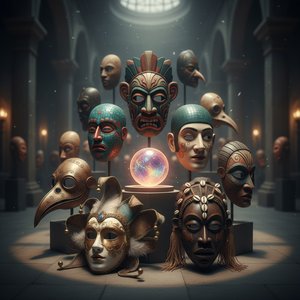
Embark on a profound journey through the world's most iconic mask artworks. Explore the spiritual depth, intricate craftsmanship, and rich cultural heritage of global traditions, from Chhau to Gomira, in this expert-led exploration of ancestral artistry and symbolic beauty.

Explore 10 iconic paintings bathed in captivating sandy brown tones! From Rembrandt to Monet, discover the stories behind these timeless masterpieces & find museum-quality art reproductions for your home. Explore the full collection on TopImpressionists.com.


最新の美術ニュース、限定オファー、そしてインテリアのアイデアをいち早くお届けします。
お客様のプロジェクトについてお聞かせください。当社の美術専門家が、お客様に合わせた3つのパーソナライズされた芸術提案をご提供いたします。
あなたにぴったりの3作品を無料で厳選いたします


 シェアする
シェアする シェアする
シェアする
 詳細を見る
詳細を見る

 ダウンロード
 似ている作品
 スライドショー


 詳細を見る
詳細を見る






































 ガラスオプションは、110cm未満のサイズでのみご利用いただけます。


