






























作品のオリジナル比率に合わせた、当店の規定サイズからお選びください。

特定のフレームやスペースに合わせて、ご自身でサイズを指定することも可能です。選択されたサイズが元の画像の比率と一致しない場合、作品をトリミングするか、鏡面反射または単色での塗りつぶしによって画像を拡張いたします。制作を開始する前に、ご確認用のデジタルモックアップをお送りいたします。
画面上のプレビューには、実際のトリミングや拡張は反映されませんのでご注意ください。最終的な構図を正確に確認できるのは、モックアップのみとなります。
カスタムサイズも承っておりますが、元の比率を維持するためには、あらかじめ用意されたリストからサイズを選択することをお勧めいたします。

Pulling Tooth by Wagon Wheel
複製画のサイズ
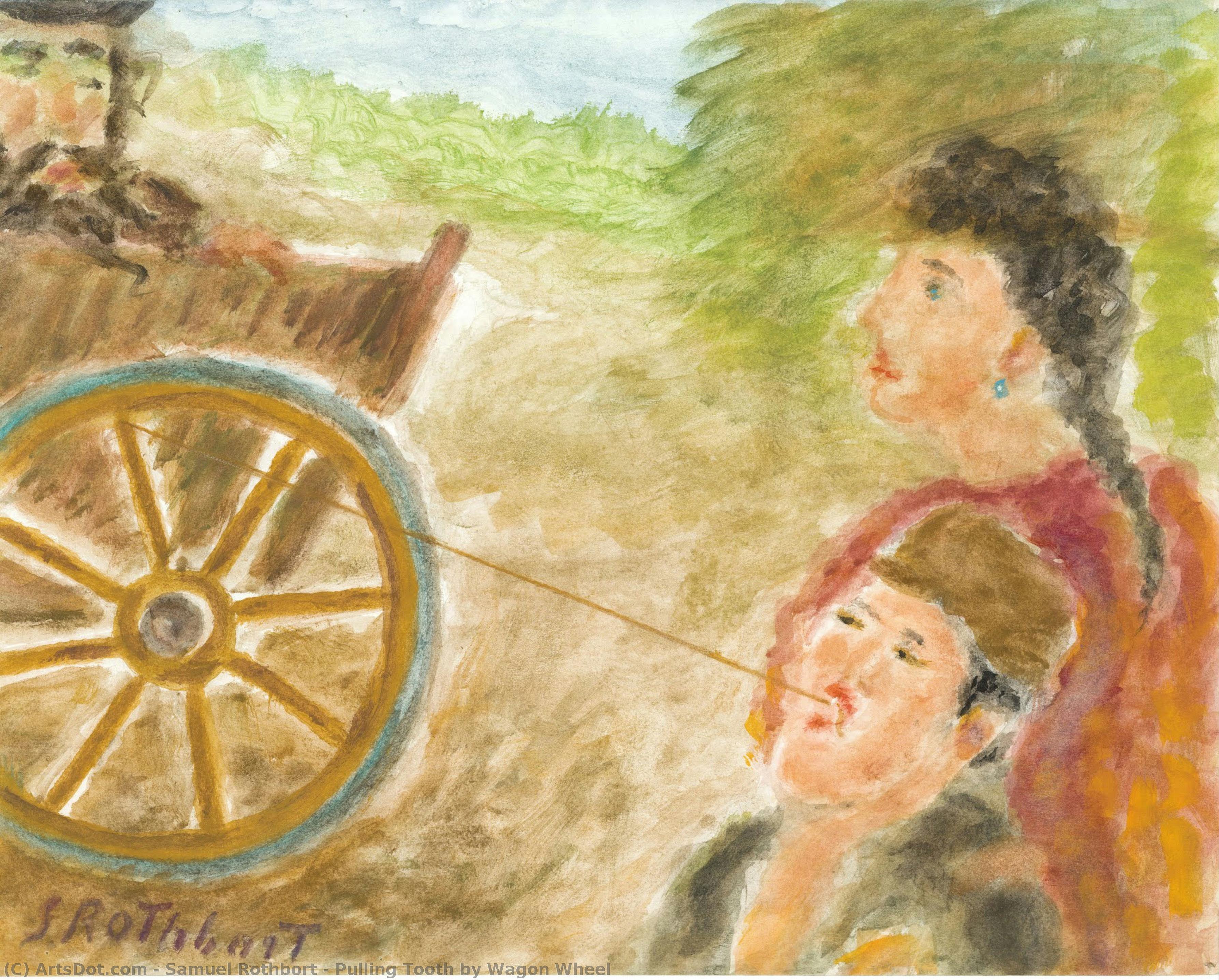
In the quiet, evocative strokes of Samuel Rothbort’s Pulling Tooth by Wagon Wheel, we are transported to a bygone era, a time when life moved at the rhythmic pace of a horse-drawn carriage. Painted in 1950, this piece serves as a profound window into the mid-century fascination with Americana and the preservation of folk memory. The scene captures a visceral, almost cinematic moment: a man seated within the sturdy frame of an old-fashioned wagon, surrounded by figures that populate a landscape of shared human experience. There is an undeniable sense of storytelling embedded in the composition, as if Rothbort has paused a moving picture to allow us to contemplate the grit and grace of rural life.
The painting’s strength lies in its ability to evoke nostalgia—not merely as a longing for the past, but as a deep respect for the textures of history. The prominent wagon wheel, with its meticulously rendered spokes, acts as both a structural anchor and a symbol of the cyclical nature of time and progress. As we gaze upon the figures positioned around this central element, we feel the weight of their presence; they are not mere bystanders but participants in a communal narrative that feels both intimate and universal.
Technically, Rothbort demonstrates a masterful command over chiaroscuro, using the interplay of light and shadow to breathe life into the scene. The way light catches the edges of the wooden wheel and illuminates the faces of the onlookers creates a sense of three-dimensional realism that draws the viewer inward. This careful manipulation of illumination does more than just define form; it sets an emotional tone of quiet reflection. The shadows are not merely dark spaces but are filled with mystery, suggesting the untold stories of the characters inhabiting this rustic setting.
For the discerning collector or interior designer, this artwork offers a sophisticated layer of depth to any space. Its palette, grounded in earthy, organic tones, provides a sense of stability and warmth, making it an ideal centerpiece for rooms designed for contemplation or conversation. The painting does not shout; rather, it invites a lingering gaze, rewarding the observer with new details upon every encounter. It is a piece that bridges the gap between historical documentation and fine art, offering a soulful connection to the craftsmanship of the early 20th century.
Choosing a reproduction of Pulling Tooth by Wagon Wheel is an investment in atmosphere. It brings into a modern interior a sense of heritage and permanence. Whether placed in a sunlit study or a grand hallway, the painting acts as an anchor of character, providing a conversation starter that speaks to the enduring human condition. Rothbort’s ability to blend the mundane—a simple moment by a wagon—with the profound makes this work a timeless treasure for those who appreciate art that possesses both a historical heartbeat and a lasting aesthetic elegance.

1882 - 1971 , Russia

Explore 10 defining masterpieces of Romantic Realism! Discover Courbet, Millet & Daumier's powerful paintings—capturing emotion and social realities. Find museum-quality reproductions for your home at TopImpressionists.com.

Explore 10 defining American Realism masterpieces – Hopper, Homer & more. Discover the stories behind these iconic paintings and bring timeless art to your home with TopImpressionists's museum-quality reproductions. Explore the full collection online.

Explore the captivating world of Romantic Realism! Discover key artists like Courbet & Millet, masterpieces, and the social context behind this influential art movement. Expert insights for collectors at TopImpressionists.

Explore the powerful world of Social Realism art! Discover key artists, masterpieces & its profound social commentary. Expert insights into this influential movement's history and enduring legacy.

Explore the captivating world of 19th-century Realism! Discover key artists like Courbet & Millet, masterpieces, and the powerful social commentary behind this influential art movement. Expert insights at TopImpressionists.


最新の美術ニュース、限定オファー、そしてインテリアのアイデアをいち早くお届けします。
お客様のプロジェクトについてお聞かせください。当社の美術専門家が、お客様に合わせた3つのパーソナライズされた芸術提案をご提供いたします。
あなたにぴったりの3作品を無料で厳選いたします
 Preview
 手描き複製画を注文する
 シェアする
シェアする シェアする
シェアする
 詳細を見る
詳細を見る

 ダウンロード
 似ている作品
 X線調査
X線調査 スライドショー


 詳細を見る
詳細を見る









 ガラスオプションは、110cm未満のサイズでのみご利用いただけます。


