


 設置イメージを確認
 送る
送る シェア
シェア
 詳細情報
詳細情報 ガイドを表示

 画像をダウンロード
 似ている作品
 X線調査
X線調査 スライドショー
 統計情報
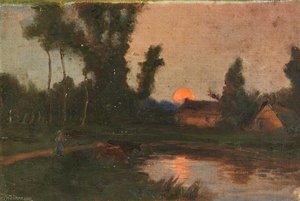
統計情報Sea and Sky
 Oil On Canvas
- WallArt
- Impressionism
 1880
1880- 19th Century
 13.0 x 18.0 cm
 Llyfrgell Genedlaethol Cymru / The National Library of Wales
Discover "Sea and Sky" by Sarah A Doidge (1880). This serene oil painting captures coastal beauty with soft brushstrokes & calming blues. Explore Impressionism at the National Library of Wales.
 続きを読む
続きを読む
Explore the legacy of Sarah A. Doidge, a TopImpressionists artist whose work reflects biblical matriarchs like Sarah, exploring themes of faith, family & timeless narratives.
ウェブ上のプレビューを遥かに凌駕する、印刷に最適なファイルをご提供します。当サイトで販売しているすべてのデジタル画像は、弊社のデータベース内にある高解像度のマスターデータ(通常、幅5,000〜15,000ピクセル)から作成されています。そのため、大判印刷やタイトなクロップ、細部まで緻密な再現も、安心してお楽しみいただけます。
当スタジオから送り出される画像は、すべて丁寧に加工されています。デジタルエキスパートが原画と照らし合わせて色調を精査し、必要に応じて補正を行った上で、プロ仕様のリタッチツールを用いて鮮明さと細部を向上させます。その際、アーティストの筆致やスタイルに忠実であることを常に追求しています。その結果、単なるスキャン画像にフィルターをかけたようなものではなく、まるで本物の絵画を見ているかのような仕上がりを実現しています。
仕上がりをご確認いただいてから完了となります。専門スタッフが、ご確認用の画像を72時間以内にメールでお送りいたします。もしご満足いただけない場合は、修正や改善のご要望を承るほか、品質が基準に満たない場合には返金も可能です。
出版社、デザインスタジオ、ギャラリー、そして印刷所から信頼される品質です。
デジタル画像
個人での鑑賞、印刷、クリエイティブなプロジェクトにご利用いただける高解像度ファイルをダウンロードできます。 ( プリント版に切り替え 手描きの複製画を注文する)
デジタル画像のご注文に付随する特典
プロフェッショナルなデジタル配信を、確かな品質で。
TopImpressionists.com を選ぶことは、単に画像を手に入れることではありません。プロの手によって精密に仕上げられ、満足保証が付いた高品質なデジタルアートワークを受け取ることを意味します。ご注文いただいた際に自動的に付随する内容は、以下の通りです:

メールですぐにお届け
ご注文から72時間以内に、高解像度のデジタル画像ファイルをメールでお送りいたします。お手元に届き次第、すぐにご利用いただけます。

AI技術で最適化されたデジタルファイル
お客様の作品は、高度なAI技術と専門家による手作業を組み合わせてプロフェッショナルに最適化されており、細部のディテール、鮮明さ、そして正確な色再現性を最大限に引き出しています。

一生涯無料の再送サービス
ファイルを誤って削除したり、紛失してしまったりしましたか?ご安心ください。いつでも無料で再送いたします。

輸入手数料は、いつでも一切かかりません
関税や手数料、配送料を気にすることなく、お気に入りのアートワークをすぐにお楽しみいただけます。デジタルダウンロードは常に免税です。

正確な色彩の保証
プロ仕様のツールとカラーマネジメント技術を用いることで、デジタル画像が元の色を最大限に忠実に再現することを保証いたします。

100日間満足保証
ご購入いただいたデジタル画像にご満足いただけない場合は、100日以内であれば、理由を問わず修正または100%の返金対応をさせていただきます。

100% 返金保証
ご満足いただけない場合は、デジタルファイルを受け取ってから100日以内であれば、理由を問わず全額返金いたします。

まとめ買い割引
3枚購入で10%OFF、5枚購入で15%OFF、10枚以上のご購入で20%OFF。クリエイティブなプロジェクトやギャラリー、エージェンシーに最適です。
The painting "Sea and Sky" by Sarah A Doidge is a stunning representation of the ocean and its surroundings, creating a serene atmosphere that captivates the viewer. Measuring 13 x 18 cm, this oil on canvas piece was created in 1880 and is currently housed at the Llyfrgell Genedlaethol Cymru / The National Library of Wales in Aberystwyth, United Kingdom.
The "Sea and Sky" painting by Sarah A Doidge is a beautiful representation of the ocean and its surroundings, creating a serene atmosphere that captivates the viewer. With its soft brushstrokes and calming colors, this oil on canvas piece is a stunning example of the artist's skill and attention to detail.
Artistic Style and Technique
Sarah A Doidge's artistic style is characterized by her use of soft brushstrokes and calming colors, which adds to the peaceful ambiance of the painting. The predominantly blue and green hues used in "Sea and Sky" create a sense of tranquility, while the clouds in the sky add depth and dimension to the piece.Comparison with Other Works
Other notable works by Sarah A Doidge include "Boat on the Sea" and "Church", which can be found on /art/list/?Filter=AQU9L6-Sarah-A-Doidge-Boat-on-the-Sea and /art/list/?Filter=AQU9L4-Sarah-A-Doidge-Church. These paintings showcase the artist's ability to capture the beauty of nature and create serene atmospheres.- Oil on canvas is a traditional medium used by many artists, including Sarah A Doidge.
- The Llyfrgell Genedlaethol Cymru / The National Library of Wales is home to many notable artworks, including those by Mary Lloyd Jones, which can be found on https://TopImpressionists.com/@/Mary-Lloyd-Jones.
- For more information on Sarah A Doidge and her works, visit /art/list/?Filter=sarah+a+doidge,sarah,doidge&.
The "Sea and Sky" painting by Sarah A Doidge is a beautiful representation of the ocean and its surroundings, creating a serene atmosphere that captivates the viewer. With its soft brushstrokes and calming colors, this oil on canvas piece is a stunning example of the artist's skill and attention to detail.
よくあるご質問
「Sea and Sky」はどのような作品ですか?
Sarah A Doidge作「Sea and Sky」はWallArtに分類されます。このカテゴリーは、原画の作品形式を表しています。
現在、Sarah A Doidge作「Sea and Sky」はどこで展示されていますか?
Sarah A Doidge作「Sea and Sky」はLlyfrgell Genedlaethol Cymru / The National Library of Wales, アベリストイース, United Kingdomに展示されています。なお、美術館の掲載情報は複製画ではなく、原画に関するものです。
「Sea and Sky」の色同士は、どのように調和していますか?
「Sea and Sky」の色彩の調和は、Unified Paletteと表現されます。


アーティスト・プロフィール
Sarah A. Doidge: Echoes of Faith and Family in the Scottish Highlands
The world of Victorian portraiture often focused on grand narratives – royal lineages, aristocratic power, and the triumphs of empire. Yet, within this landscape, Sarah Ann Doidge (1830-1900) carved a unique space for herself, capturing intimate moments of domesticity and faith with a remarkable sensitivity that continues to resonate today. Born in Aberystwyth, Wales, into a family steeped in artistic tradition – her father was a watercolorist – Doidge’s early life provided a foundation for her distinctive style, characterized by soft brushwork, luminous color palettes, and an almost palpable sense of quiet contemplation.
Doidge's work is inextricably linked to the religious landscape of 19th-century Scotland. The influence of Presbyterianism, with its emphasis on family piety and moral responsibility, permeated every aspect of life in the Highlands. Her paintings frequently depict biblical matriarchs – Sarah, Abraham’s wife, Hagar, Rebekah – not as grand historical figures, but as women grappling with faith, family, and the challenges of their time. These aren't dramatic scenes of salvation or judgment; instead, they are quiet studies of resilience, devotion, and the everyday struggles of motherhood. Her subjects often appear in domestic settings—a woman tending to her children, a man reading scripture by candlelight—creating an atmosphere of profound intimacy and spiritual depth.
A key element of Doidge’s artistic approach was her meticulous attention to detail, particularly in the rendering of fabrics and textures. She possessed a remarkable ability to capture the subtle nuances of wool, linen, and lace, imbuing her paintings with a tactile quality that invites viewers to reach out and touch them. This commitment to realism is balanced by an expressive use of light and shadow, which creates a sense of atmosphere and mood. Her compositions are typically centered on her subjects, drawing the eye inward and fostering a feeling of connection.
The Influence of Landscape and Scottish Tradition
Doidge’s artistic practice was deeply rooted in the landscape of Wales and Scotland. The rugged beauty of the Highlands—the dramatic mountains, the heather-covered moors, and the shimmering lochs—provided a constant source of inspiration. She frequently depicted scenes of rural life, capturing the essence of Highland culture with an understated elegance. The muted tones of her palette – browns, greens, blues – reflect the natural world around her, while subtle shifts in light evoke the changing seasons.
Beyond the purely visual elements, Doidge’s work is also informed by a deep understanding of Scottish folklore and tradition. Many of her paintings depict scenes from the Old Testament, but they are always presented with a distinctly local flavor. She imbues these biblical narratives with a sense of familiarity and accessibility, as if they were simply stories told around a Highland hearth. The inclusion of traditional Highland dress—kilts, shawls, and tartans—further reinforces this connection to Scottish culture.
Technique and Style: A Delicate Balance
Doidge’s technique is characterized by a remarkable delicacy and restraint. She employed a loose, expressive brushstroke that allowed the paint to flow freely across the canvas, creating a sense of movement and spontaneity. Her use of color is subtle and nuanced, relying on delicate gradations rather than bold contrasts. She was particularly adept at capturing the effects of light—the way it filters through clouds, illuminates faces, and casts shadows across landscapes.
Despite her technical skill, Doidge’s paintings never feel overly polished or contrived. There is a sense of immediacy and authenticity in her work that speaks to her deep connection with her subjects. She avoided the theatricality often associated with Victorian portraiture, instead opting for a more intimate and understated approach. Her style can be described as a blend of realism and impressionism, influenced by the works of artists such as John Constable and J.M.W. Turner.
Legacy and Historical Significance
Sarah A. Doidge’s work has often been overlooked by mainstream art historians, partly due to her gender and the social constraints placed on female artists during her time. However, in recent years, there has been a growing recognition of her unique contribution to Victorian painting. Her paintings are now exhibited in major museums and galleries around the world, and they continue to attract critical acclaim.
Doidge’s legacy lies not only in her artistic achievements but also in her ability to capture the spirit of a bygone era. Her paintings offer a poignant glimpse into the lives of ordinary people—women who faced extraordinary challenges with grace and resilience. They serve as a reminder of the importance of faith, family, and community, values that remain deeply relevant today. The National Library of Wales holds several examples of her work, offering invaluable insight into this often-forgotten artist’s vision.
Sarah A Doidge
1830 - 1900
略歴
- Artistic Movement Or Style: Biblical Art
- Artists Who Influenced This Artist: ['None],\n "Artists or movements influenced by this artist": [None']
- Date Of Birth: 1830
- Date Of Death: 1900
- Full Name: Sarah Ann Doidge
- Nationality: British
- Notable Artworks:
- Sea and Sky
- Church
- Place Of Birth: Aberystwyth, Wales