
当社のアーティストが、お客様のご希望のサイズと額縁に合わせて、キャンバスに手描きで制作する油彩画です。 ( プリント版に切り替え 画像に切り替え)





























作品のオリジナル比率に合わせた、当店の規定サイズからお選びください。

特定のフレームやスペースに合わせて、ご希望のサイズをご入力いただけます。選択されたサイズが元の画像の比率と異なる場合、アートワークをトリミングするか、手描きで要素を追加して絵画を拡張いたします。デジタルモックアップ を制作し、制作開始前にご確認(承認)をいただきます。
画面上のプレビューは、実際のトリミングや拡張を正確に反映しているものではありません。最終的な構図は、モックアップによってのみ正確にご確認いただけます。
カスタムサイズもご利用いただけますが、元の比率を維持するためには、あらかじめ用意されたリストからサイズを選択することをお勧めいたします。

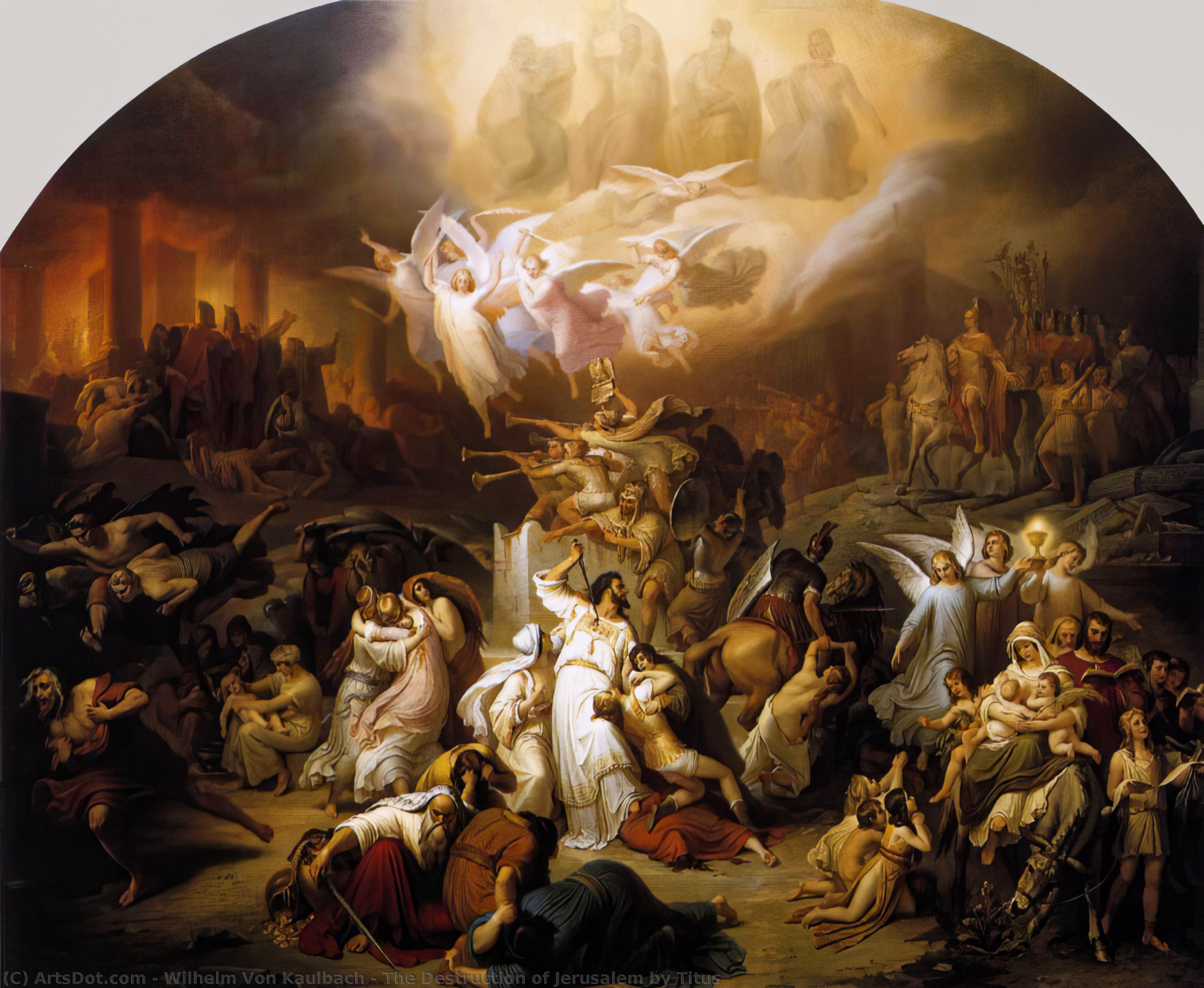
テウツのエルサレム破壊
複製画のサイズ
ウィルヘルム・フォン・カウルバッハ(1805-1874)は、ドイツ美術史において最も重要な人物の一人です。特に壁画制作における卓越した才能で知られ、その作品はデュッセルドルフのアカデミーの芸術を大きく左右しました。彼の生涯は、貧困と苦難に満ちていましたが、それらの経験が、人々の生活と信仰に対する深い理解を生み出し、その芸術表現に反映されました。本作品『エルサレム崩壊』は、まさにカウルバッハの才能と情熱が凝縮された傑作であり、その壮大さとドラマティックな表現力は、見る者の心を捉えます。
『エルサレム崩壊』は、主に油絵の具を用いて制作されています。カウルバッハは、油彩の持つ豊かな色彩感と、厚塗りの表現技法を最大限に活用し、作品に深みと立体感を付与しています。特に、光の表現には卓越した技術を示しており、天使たちの輝きや、燃え盛る都市の炎など、様々な光源から発せられる光の効果を巧みに再現しています。また、衣類や建築物の質感も細部まで丁寧に描き込まれており、まるで実際にその場に立っているかのような臨場感を味わうことができます。
『エルサレム崩壊』は、単なる宗教絵画にとどまらず、人間の存在意義や運命といった普遍的なテーマを問いかける作品です。描かれている人々は、信仰と恐怖、希望と絶望といった相反する感情に翻弄されながら、それぞれの立場から神の裁きを受け入れています。この作品は、見る者に深い感動と省察を与え、人間の脆弱性と信仰の重要性を改めて認識させます。
本作品を鑑賞することで、カウルバッハが描いた壮大な宗教絵画の世界に浸り、その芸術的才能と歴史的背景を感じ取ることができるでしょう。また、この傑作は、インテリアデザインにおいても、空間に荘厳さとドラマティックな雰囲気を加えるための理想的な選択肢となるでしょう。
In the sweeping landscape of nineteenth-century German art, few figures loom as large or as dramatically as Wilhelm von Kaulbach. Born in 1805 in the quiet town of Bad Arolsen, Kaulbach’s early years were far from the gilded halls of academia; instead, they were defined by a profound struggle against poverty and the harsh realities of rural life. This early exposure to hardship did not stifle his ambition but rather forged a resilient spirit that would later allow him to tackle the most monumental canvases of his era. His journey into the heart of the art world began with a transformative opportunity at the Düsseldorf Academy of Fine Arts, where the mentorship of luminaries like Peter von Cornelius would fundamentally reshape his artistic trajectory.
Kaulbach’s development was inextricably linked to the rise of the Düsseldorf School, a movement characterized by its pursuit of classical ideals blended with a distinctly German emotional depth. Under the guidance of Cornelius, Kaulbach learned to navigate the complex intersection of historical narrative and allegorical symbolism. His time at the academy was marked by intense dedication, often persevering through periods of hunger and deprivation to master the intricate techniques required for large-scale compositions. This period of rigorous training prepared him for his most significant professional undertaking: the creation of massive frescoes that would breathe life into the walls of Munich’s Glyptothek. Working alongside fellow artists like Schweitzer, Kaulbach participated in a painstaking process of translating detailed cartoons into vibrant, permanent displays of color and history.
The true essence of Kaulbach’s genius lies in his ability to weave complex historical and biblical narratives into visually arresting compositions. He possessed a rare talent for capturing the chaotic energy of human conflict while maintaining a sense of divine order or tragic inevitability. His works often serve as windows into the soul of Romanticism, where the line between the earthly and the eternal becomes blurred. To understand his impact, one must look at the thematic breadth of his repertoire:
His technical prowess was not limited to a single medium; whether working in the delicate precision of an engraving or the expansive reach of a fresco, Kaulbach maintained a signature style characterized by rich symbolism and a profound sense of drama. His ability to utilize Baroque-inspired elements—such as the dramatic shadows seen in his depictions of the Fall of Babylon—allowed him to create works that felt both ancient and urgently contemporary to his nineteenth-century audience.
The historical significance of Wilhelm von Kaulbach extends far beyond the physical boundaries of the murals he painted. He was a pivotal figure who helped revitalize German art, moving it away from mere imitation of foreign styles toward a robust, self-assured aesthetic that celebrated national history and classical myth. By bridging the gap between the academic rigor of the Düsseldorf School and the emotive power of Romanticism, he provided a visual language for a generation seeking identity in a changing Europe.
Though the era of monumental mural painting eventually gave way to new artistic movements, Kaulbach’s influence remains etched in the annals of art history. He transformed the walls of museums and the pages of books into stages for the grandest human dramas, ensuring that his vision of history, faith, and struggle would endure. Today, he is remembered not just as a painter, but as a titan of his age—a man who took the hardships of his youth and transmuted them into a legacy of unparalleled artistic grandeur.

1805 - 1874 , Germany

Explore the evocative beauty of Romantic illustration. From Art Nouveau to Victorian classics, discover how master illustrators capture profound emotion through exquisite line and light. Perfect for fine art enthusiasts and collectors seeking timeless elegance.


最新の美術ニュース、限定オファー、そしてインテリアのアイデアをいち早くお届けします。
お客様のプロジェクトについてお聞かせください。当社の美術専門家が、お客様に合わせた3つのパーソナライズされた芸術提案をご提供いたします。
あなたにぴったりの3作品を無料で厳選いたします

 プレビュー
プレビュー
 シェアする
シェアする シェアする
シェアする
 詳細を見る
詳細を見る

 ダウンロード
 似ている作品
 X線調査
X線調査 スライドショー


 詳細を見る
詳細を見る









 ガラスオプションは、110cm未満のサイズでのみご利用いただけます。


