

Shown: · With its frame:
 設置イメージを確認
 送る
送る シェア
シェア
 詳細情報
詳細情報 ガイドを表示

 画像をダウンロード
 似ている作品
 X線調査
X線調査 スライドショー
 Q&A
Q&A 統計情報
統計情報


¥ 42479
手描き油彩複製画
当社のアーティストが、お客様のご希望のサイズと額縁に合わせて、キャンバスに手描きで制作する油彩画です。 ( プリント版に切り替え デジタル画像販売へ切り替え)
Size
·標準サイズ
カスタムサイズ
CM
INCH
作品のオリジナル比率に合わせた、当店の規定サイズからお選びください。
Loading sizes...

横幅
高さ
フレームや壁のスペースに合わせて、ご希望の幅と高さを入力してください。本作品は手描きのため、異なる比率のサイズをご希望の場合、絵画の周囲を少し広げて描くか、あるいは端を少しカットして調整することが可能です。お客様のご要望に合わせます。制作を開始する前に、仕上がりを確認するためのデジタルモックアップをお送りいたします。このページに表示されている画像は完成品の実物ではなく、あくまでモックアップによるイメージです。
 詳細を見る
詳細を見るFinish
·
White ¥1

Blurside ¥1

Extended ¥1

P118B ¥10

P118H ¥10

P118W ¥10

P438Z ¥10

P508JH ¥12

P508YH ¥12

P805H ¥10

P805Z ¥10

P919BZ ¥10

P919G ¥10

P919XJ ¥10

P959ZH ¥10

P968JZ ¥12

W106C ¥8

W218G ¥10

W218JH ¥8

W218Y ¥10

W307PJ ¥10

W316G ¥10

W316PJ ¥8

W316Y ¥10

W398PJ ¥8

W4111J ¥10

W500HY ¥15

W500JH ¥15

W692G ¥12

W849H ¥8

W940BG ¥15

W953PJ ¥8

H24-GOLD ¥30

H24-SILVER ¥30

H36-GOLD ¥45

H36-SILVER ¥45
Shipped in a protective tube, ready for your own framer.
Above 105 cm the frame is shipped as a kit for a professional framer — read the details.
Extras
optionalWhat do the extras include?
Examples of what can be changed: Replace face with customer photo; Add pet (e.g., replace cat with dog); Include hidden message in background; Change background landscape or elements.
After order, TopImpressionists.com team will email client for instructions and provide a mockup preview
After order, TopImpressionists.com team will email client for instructions and provide a mockup preview
世界中への配送()は、通常の5週間ではなく、3〜4週間でお届けいたします。(31 10月)。品質には一切妥協いたしません。
保護用ワニス
銘板
刻印入りブロンズプレートの詳細
This elegant plaque features the artist's name and the title of the artwork, finely engraved for a timeless presentation.
It is made from bronze with a refined, elegant finish. The text is precisely laser-engraved for a sharp and permanent result. Measuring 9x2 cm, the plaque is compact yet easy to read. It's built to be durable and scratch-resistant, offering a professional, museum-quality look. Mounting is simple thanks to the included adhesive backing.
透明アクリル銘板の詳細
The plaque includes essential engraved details such as the artist's name, the title of the artwork, the date it was created, the type of media used-like oil on canvas or watercolor-a brief description of the piece, and a QR code that links to the complete artwork information.
It is crafted from clear acrylic, offering a sleek, modern appearance. The text is UV-engraved in black to ensure strong visual contrast. With a size of 10x15 cm, it ensures optimal readability. It comes equipped with two metal hooks for secure wall mounting. The plaque is designed to be weather-resistant, making it suitable for various environments, and it includes interactive features that work seamlessly with smartphone scanning.
黒アクリル製銘板の詳細
This elegant plaque includes engraved information such as the artist's name, the title of the artwork, the date it was created, the type of media used (like oil on canvas or watercolor), a short description of the artwork, and a QR code for quick access to more information.
The plaque itself is made from refined black acrylic with a premium finish. The text is laser-engraved in white for high contrast and readability. Its size is 10x15 cm, designed to be easy to read. It comes with two metal hooks for professional mounting. The design is sleek and fits any interior style. It is also weather-resistant and durable, with built-in digital integration for mobile compatibility.
ガラスオプションは、110cm未満のサイズでのみご利用いただけます。
 ガラスオプションは、110cm未満のサイズでのみご利用いただけます。
- 世界中へ無料エクスプレス配送
- 高品質なリネンキャンバス
- 配送時完全保険付
- 関税・輸入税の払い戻し保証
- 忠実な色彩再現の保証
- 100日間返品保証(製造上の欠陥がある場合のみ)
- 100% 全額返金保証
- まとめ買い割引のご案内


コレクション詳細
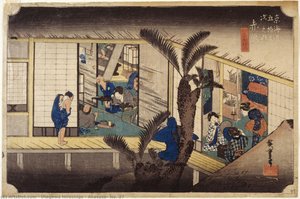
Experience Utagawa Hiroshige's "Asakusa River" – a stunning woodblock print capturing a serene night scene with boats and figures, reflecting Edo Japan’s poetic beauty.
アーティストプロフィール
浮世絵の最後を飾る巨匠、歌川広重(1797-1858)の世界へ。代表作『東海道五十三次』などの象徴的な風景画、詩情豊かな画風、そして印象派やゴッホに与えた多大な影響について詳しくご紹介します。
About the painting
The Essence of a Nighttime Journey
Utagawa Hiroshige’s “Asakusa River” isn't merely a depiction of a scene; it’s an immersion into the heart of Edo-era Tokyo. Painted in 1857, during a period of profound transformation for Japan – grappling with Western influence while clinging fiercely to its traditions – this woodblock print captures a fleeting moment of serenity amidst bustling urban life. The image unfolds like a carefully orchestrated memory: a lone boat glides along the Sumida River under a velvet night sky, reflecting the distant glow of lanterns and the subtle shimmer of water. It’s a scene imbued with a quiet melancholy, a poignant awareness of time's passage, characteristic of Hiroshige’s signature style.
Technique and the Art of *Ukiyo-e*
Hiroshige’s mastery lies in his meticulous application of *ukiyo-e*, or “pictures of the floating world.” This technique, perfected over centuries, involved carving intricate designs onto wooden blocks – one block for each color – then painstakingly printing them onto paper. “Asakusa River” exemplifies this process brilliantly. The artist employs a delicate gradation of Prussian blue and grey to render the sky, creating an atmospheric depth that belies the relatively flat surface of the print. Notice how subtle variations in tone suggest movement within the water and the gentle sway of the boat. The use of *nagashi-zuri*, or loose-ink washes, adds a sense of fluidity and spontaneity, mimicking the ephemeral nature of light and shadow. The composition itself is carefully balanced – the boat’s trajectory draws the eye across the scene, while the distant trees and buildings provide grounding elements.
A Window into Edo Life
Asakusa in 1857 was a vibrant hub, a crossroads of commerce, religion, and entertainment. The temple of Sensō-ji, visible faintly in the background, stood as a focal point for pilgrims and locals alike. The river served as a vital artery for trade and transportation, connecting the city to its surrounding regions. Hiroshige’s choice to depict a simple boat journey – a commonplace activity for many Edo residents – elevates it into something profound. It speaks to the everyday rhythms of life, the quiet moments of contemplation amidst the constant flow of urban activity. The inclusion of figures in the boat, though largely obscured, hints at the human element within this landscape.
Symbolism and a Poetic Mood
Beyond its realistic depiction, “Asakusa River” is rich with symbolic meaning. The lone boat can be interpreted as representing the journey of life itself – a solitary voyage through an uncertain world. The river, a recurring motif in Hiroshige’s work, symbolizes both passage and transformation. The muted colors and soft lighting evoke a sense of nostalgia and melancholy, reflecting the artist's awareness of the fleeting nature of beauty and the inevitable decline of traditional Japan. It is a testament to Hiroshige’s ability to capture not just a scene, but an entire mood – a poignant meditation on time, memory, and the enduring spirit of Edo.
Collecting and Displaying This Masterpiece
Reproductions of “Asakusa River” are available in various sizes and mediums, offering collectors a chance to bring this iconic image into their homes. Consider framing it with simple, natural wood to complement the print’s understated elegance. Its calming aesthetic would be particularly well-suited for spaces seeking tranquility – bedrooms, libraries, or meditation rooms. The print's subtle color palette also harmonizes beautifully with a range of interior design styles, from minimalist to traditional Japanese.
よくあるご質問
「Asakusa River:」に著作権はかかっていますか?
著作権について、「Asakusa River:」はパブリックドメイン(著作権消滅)です。
歌川広重作「Asakusa River:」は、明るい印象の作品ですか、それとも暗い印象の作品ですか?
歌川広重作「Asakusa River:」の明るさはdeep_shadow、輝度はSoft Shadowと記録されています。
制作時期から見て、"Asakusa River:"は歌川広重のキャリアにおけるどの時期にあたりますか?
1857年という制作年代から、「Asakusa River:」は歌川広重のLate Periodに属します。
Quick facts and art quiz
About 歌川広重

歌川広重
1797 - 1858
アーティストについて
江戸の詩的な情景:歌川広重の生涯と芸術
1797年、活気あふれる江戸(現在の東京)に安藤徳太郎として生まれた歌川広重は、「浮世絵」という、いわば「浮き世の絵」の世界において極めて重要な役割を果たした人物です。日本の木版画の伝統に深く根ざしながらも、広重は単なる模倣を超越しました。彼は自身の風景画に詩的な感性を吹き込み、それが日本国内のみならず、後には西洋の芸術界にも深い共鳴を呼び起こしたのです。彼の生涯は徳川幕府による比較的平和で豊かな時代に展開されましたが、同時に社会の変化と西洋化の波が押し寄せた時代でもありました。こうした潮流は、最終的には浮世絵の衰退を招く要因となりましたが、一方で広重が遺した不朽のレガシーをより輝かしいものへと昇華させたのです。もともとは火消しの家系という武士の端くれとして、より保守的な道を歩む運命にありました。しかし、広重の芸術への情熱は彼を歌川派の巨匠、歌川豊広のもとへと導きました。この出会いが決定的な転換点となり、多くの浮世絵師が好んだ美人画や役者絵といった主題から離れ、彼が後に再定義することとなる「風景画」というジャンルへと彼を向かわせたのです。風俗画から情緒溢れる風景画へ
広重の初期の作品は、師匠の流儀に従い、肖像画や日常の情景を描いたものでした。しかし、彼を真に際立たせたのは、風景画への情熱的な取り組みでした。すでに観衆を魅了していた葛飾北斎の「富嶽三十六景」などの先達から影響を受けつつも、広重は空気遠近法、繊細な色彩、そして移ろいゆく四季に対する深い感受性を特徴とする独自のスタイルを確立しました。彼は単に場所を描写したのではなく、その場所が持つ情緒を呼び起こし、特定の瞬間の本質を捉えようとしたのです。彼の最も輝かしい業績とされる「東海道五十三次」(1833–1834年)は、まさにこの手法の典型です。江戸と京都を結ぶ主要街道である東海道の旅を記録したこの記念碑的な作品は、単なる旅行記ではなく、情緒豊かな一場面の連なりとして描かれています。庄野の突然の夕立、金谷から望む遠くの富士、小田原の賑わい――。それぞれの版画には、無常観と静かな美しさが宿っており、見る者を旅人と共にその道のりへと誘います。また、彼は「ぼかし」という技法を巧みに操りました。複数の摺りを重ねることで繊細な色の階調を生み出し、画面に奥行きと情緒的な空気感を与えたのです。 <模範的な雰囲気と技法の達人 広重の技術的な卓越性は、その芸術的ビジョンに勝るとも劣らないものでした。彼は単なる正確な描写に関心があったのではなく、その場所が持つ「感覚」を捉えることを追求したのです。色彩の使用は、同時代の他の絵師と比較すると控えめなこともありましたが、この効果を達成するためには不可欠な要素でした。彼は一つの色に対して頻繁に複数の版を用いることで、再現が極めて困難なほど微細な陰影や空気的な効果を生み出しました。雨や霧を描いた際の繊細な青の階調、秋の紅葉が放つ温かな色彩――これらは決して偶然の産物ではなく、特定の感情や感覚を呼び起こすために緻密に計算された要素でした。さらに「ぼかし」に留まらず、広重は日本美学の中核をなす「間(ま)」、すなわち余白を活用することにも長けていました。これにより、版画の中に「呼吸」する空間が生まれ、作品全体の静謐さがより一層引き立てられたのです。彼の「名所江戸百景」(1856–1858年)は、その熟練の技をさらに示すものであり、愛した江戸の街の生活と風景を、親密な眼差しで描き出しています。不朽の遺産:ジャポニスム、そしてその先へ
1858年の広重の没後、明治維新とそれに続く西洋文化の流入によって浮世絵の伝統は衰退へと向かいますが、芸術界に与えた彼の影響は驚くほど永続的なものでした。19世紀後半、日本の版画はヨーロッパへと渡り、「ジャポニスム」として知られる現象を引き起こしました。エドゥアール・マネ、クロード・モネ、エドガー・ドガといった芸術家たちは、浮世絵の大胆な構図、平面的な遠近法、そして型破りな色彩感覚に魅了され、それらの要素を自らの作品に取り入れました。特にフィンセント・ファン・ゴッホは広重の版画に熱狂し、「亀戸梅屋舗」を含む数々の作品を模写しました。これは、日本の巨匠による色彩と構図への深い敬意の表れです。広重の影響は絵画のみならず、建築、デザイン、さらには文学にまで及んでいます。今日、歌川広重は単なる偉大な芸術家としてだけでなく、東洋と西洋の架け橋となった文化大使として記憶されており、美術史に消えることのない足跡を残しています。彼の穏やかな風景画は、今なお畏敬の念と深い思索を呼び起こし、自然界の美しさと無常さを私たちに伝えてくれます。主な作品
- 東海道五十三次:江戸と京都を結ぶ主要街道の旅を描いた、広重の最も有名なシリーズ。
- 名所江戸百景:彼が愛した江戸の街の風景と生活を、魅力的に描き出した作品群。
- フィンセント・ファン・ゴッホの「ジャポネズリー」シリーズへの影響:「亀戸梅屋舗」など、ゴッホが日本の巨匠に抱いた深い敬愛を示す作品群。
Quick facts about 歌川広重
- Artistic Movement Or Style: 浮世絵
- Artists Or Movements Influenced By This Artist:
- マネ
- モネ
- ゴッホ
- 印象派
- Artists Who Influenced This Artist: ['北斎']
- Date Of Birth: 1797年
- Date Of Death: 1858年
- Full Name: 歌川広重
- Nationality: 日本人
- Notable Artworks:
- 東海道五十三次
- 名所江戸百景
- Place Of Birth: 日本、東京
テーマ、スタイル、特徴別に分類された作品を探索しましょう。




歌川広重
Asakusa River:
() ·
With its frame: · Hand-painted in oil on linen
Total