
 1949
1949 40.0 x 33.0 cm
 USC フィッシャー美術館
作品のオリジナル比率に合わせた、当店の規定サイズからお選びください。

特定のフレームやスペースに合わせて、ご希望のサイズをご入力いただけます。選択されたサイズが元の画像の比率と異なる場合、アートワークをトリミングするか、手描きで要素を追加して絵画を拡張いたします。デジタルモックアップ を制作し、制作開始前にご確認(承認)をいただきます。
画面上のプレビューは、実際のトリミングや拡張を正確に反映しているものではありません。最終的な構図は、モックアップによってのみ正確にご確認いただけます。
カスタムサイズもご利用いただけますが、元の比率を維持するためには、あらかじめ用意されたリストからサイズを選択することをお勧めいたします。

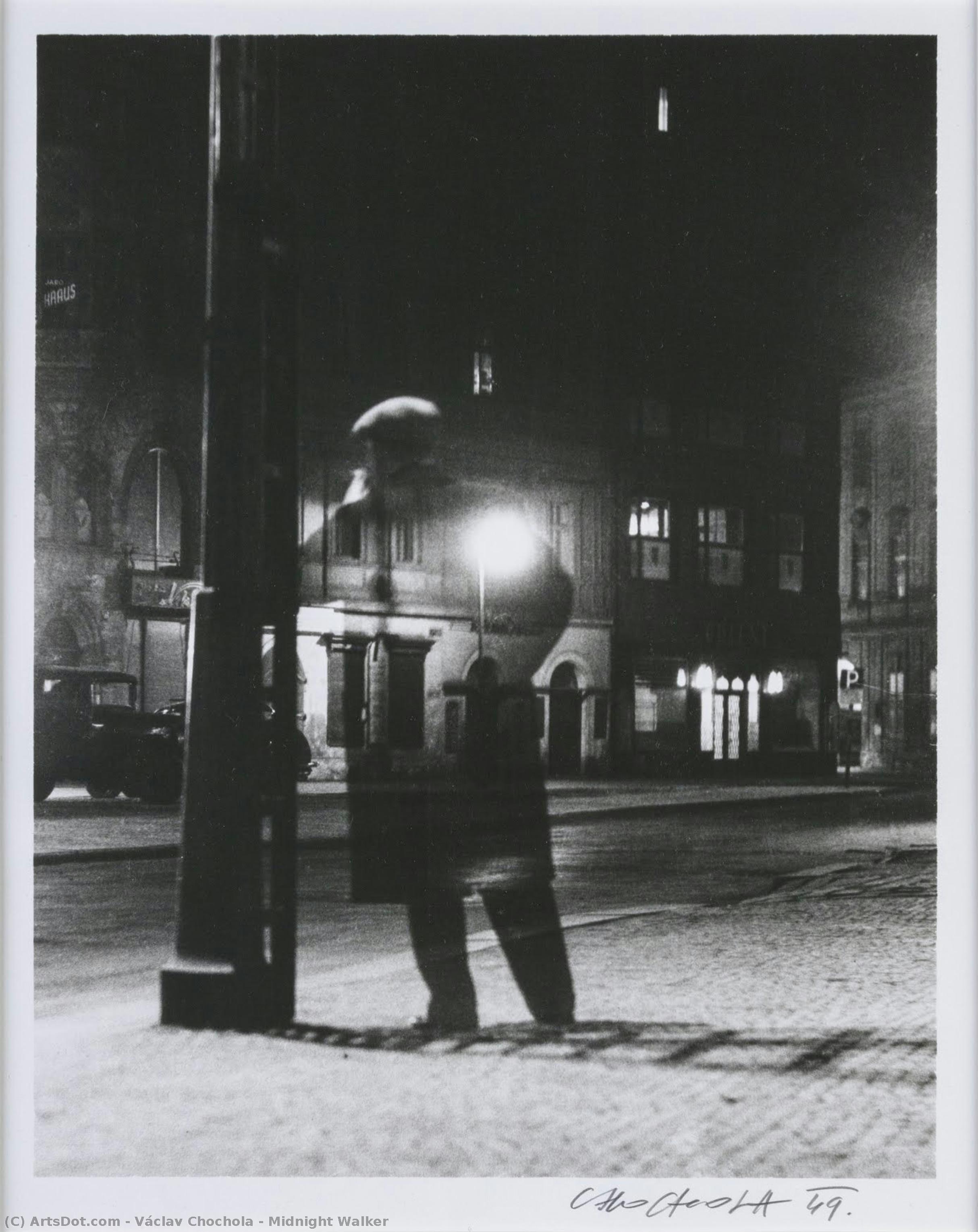
Midnight Walker
複製画のサイズ
Václav Chochola (1923–2005) was far more than a mere chronicler of the Czech capital; he was a poet of light and shadow, an artist who breathed life into the cobblestone streets and silent corners of Prague. Born in the Libeň district during the transformative years following World and I, Chochola’s very existence was intertwined with the shifting tides of Czechoslovak history. His journey began not in a formal studio, but through the lens of a 6x9 cm Voigtlander camera, capturing the kinetic energy of athletic competitions. This early fascination with movement and precision would later evolve into a sophisticated photographic language that bridged the gap between raw documentary reporting and profound artistic contemplation.
As his talent matured, Chochola’s work became deeply embedded in the cultural fabric of his era. During the 1940s, he navigated an apprenticeship in the studios of Prague, absorbing the technical rigors of the craft while simultaneously engaging with the avant-garde movements of his time. His photographic eye was profoundly shaped by the urban poetry of Group 42 and the lingering echoes of Surrealism. He possessed a rare ability to find the extraordinary within the ordinary, transforming the industrial outskirts of Prague and the bustling city center into stages for existential drama. Whether through the stark geometry of architecture or the intimate vulnerability of a portrait, Chochola’s work resonated with the post-war spirit of Existentialism, capturing the solitude and resilience of the human condition.
The technical brilliance of Chochola lies in his masterful command over the fundamental elements of photography: light, composition, and texture. Eschewing a singular, rigid style, he moved fluidly between various modes of expression. In his early years, the influence of the Pictorialist movement was evident, as he sought to elevate the medium through soft, atmospheric compositions reminiscent of great painters. Yet, as he progressed, he embraced the clarity and depth afforded by large-format cameras, allowing him to document both expansive urban vistas and the minute details of human expression with breathtaking precision.
His repertoire was remarkably diverse, showcasing a fearless experimentation with form:
To understand Václav Chochola is to understand the struggle for artistic truth within a landscape of political constraint. Living through the era of Socialist Realism and the complexities of Soviet-aligned rule, Chochola faced the challenge of maintaining an authentic creative voice amidst pervasive ideological pressures. He skillfully navigated these tensions, using his camera to document the daily realities of life during the Cold War without succumbing to the hollow promises of state propaganda. His work remains a vital historical record, offering a nuanced glimpse into the soul of a nation navigating profound political instability.
Ultimately, Chochola’s significance transcends the borders of Czechia. He stands as an exceptional figure in 20th-century photography, a master who could pivot from the straightforward reporting of the Prague Uprising to the most abstract photographic games. His legacy is found in the way he taught us to look at our surroundings—to see the haunting beauty in a lonely fisherman on the Vltava or the quiet drama in a midnight walker on a deserted street. Through his lens, Prague was not just a city of stone and history, but a living, breathing entity, forever captured in the eternal dance of light and shadow.

1923 - 2005 , Czechia


最新の美術ニュース、限定オファー、そしてインテリアのアイデアをいち早くお届けします。
お客様のプロジェクトについてお聞かせください。当社の美術専門家が、お客様に合わせた3つのパーソナライズされた芸術提案をご提供いたします。
あなたにぴったりの3作品を無料で厳選いたします

 プレビュー
プレビュー
 プリントを購入
 シェアする
シェアする シェアする
シェアする
 詳細を見る
詳細を見る

 ダウンロード
 似ている作品
 X線調査
X線調査 スライドショー
 詳細を見る
詳細を見る






































 ガラスオプションは、110cm未満のサイズでのみご利用いただけます。


