設置イメージを確認
 送る
送る シェア
シェア
 詳細情報
詳細情報 ガイドを表示

 画像をダウンロード
 似ている作品
 X線調査
X線調査 スライドショー
 統計情報
統計情報Tuz 1


 続きを読む
続きを読む
このページに掲載されている作品は著作権法によって保護されており、当社の許可なく同一の複製物を制作または販売することは法律で禁じられています。この保護は、以下のような国際条約に基づき執行されます。 ベルヌ条約 および、以下の条項に定められたものを含む各国の法律により、 米国著作権法 第17編。
敬意を払った法的な代替手段として、私たちはオリジナルにインスピレーションを与えられた、カスタムの手描きアートワークを提供しています。私たちの熟練したプロのアーティストは、元の作品が持つスタイル、情緒、そして芸術的なエッセンスを注意深く研究し、独自の創作物でありながら、同じ感性を呼び起こすような、新しくユニークな作品を作り上げます。
この手法は、著作権で保護された作品の複製や複写を伴わないため、著作権法に完全に準拠しています。これは単なる模倣ではなく、創造的な再解釈です。元の作品からインスピレーションを受けつつも、それとは異なる、全く新しい絵画を生み出すものです。
手描き油彩複製画
当社のアーティストが、お客様のご希望のサイズと額縁に合わせて、キャンバスに手描きで制作する油彩画です。 ( プリント版に切り替え デジタル画像販売へ切り替え)




P118B ¥10

P118H ¥10

P118W ¥10

P438Z ¥10

P508JH ¥12

P508YH ¥12

P805H ¥10

P805Z ¥10

P919BZ ¥10

P919G ¥10

P919XJ ¥10

P959ZH ¥10

P968JZ ¥12

W106C ¥8

W218G ¥10

W218JH ¥8

W218Y ¥10

W307PJ ¥10

W316G ¥10

W316PJ ¥8

W316Y ¥10

W398PJ ¥8

W4111J ¥10

W500HY ¥15

W500JH ¥15

W692G ¥12

W849H ¥8

W940BG ¥15

W953PJ ¥8




標準サイズ
カスタムサイズ
CM
INCH
作品のオリジナル比率に合わせた、当店の規定サイズからお選びください。
Loading sizes...

横幅
高さ
フレームや壁のスペースに合わせて、ご希望の幅と高さを入力してください。本作品は手描きのため、異なる比率のサイズをご希望の場合、絵画の周囲を少し広げて描くか、あるいは端を少しカットして調整することが可能です。お客様のご要望に合わせます。制作を開始する前に、仕上がりを確認するためのデジタルモックアップをお送りいたします。このページに表示されている画像は完成品の実物ではなく、あくまでモックアップによるイメージです。
カスタマイズの例:顔をお客様の写真に置き換える、ペットを追加する(例:猫を犬に変更)、背景に隠れたメッセージを入れる、背景の風景や要素を変更するなど。
ご注文後、TopImpressionists.com チームより詳細な指示をお送りするとともに、仕上がりイメージ(モックアップ)をご提供いたします。
ご注文後、TopImpressionists.com チームより詳細な指示をお送りするとともに、仕上がりイメージ(モックアップ)をご提供いたします。


 ガラスオプションは、110cm未満のサイズでのみご利用いただけます。

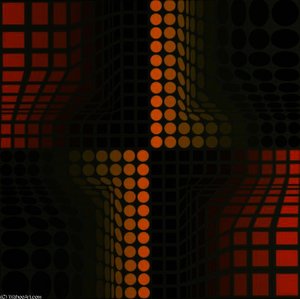
Tuz 1
再現技法
複製画サイズ一覧
-


合計金額
¥ 42382
A Symphony of Illusion: Exploring Victor Vasarely's "Tuz 1"
Victor Vasarely, a name synonymous with Op Art, didn’t simply paint pictures; he orchestrated visual experiences. His work transcends the traditional boundaries of art, delving into the realm of perception and challenging our understanding of form and space. “Tuz 1,” a captivating piece from 1970, exemplifies this perfectly – a mesmerizing interplay of color, geometry, and optical illusion that draws the viewer into its intricate depths. The painting presents itself as a vibrant blue circle, not solid or static, but teeming with life through the inclusion of smaller white circles within it. This central motif is then encircled by a delicate pattern of white dots, creating a dynamic visual rhythm that pulsates across the canvas. It’s an artwork designed to be felt as much as seen, a testament to Vasarely's ambition to democratize art and bring its power to a wider audience.The Birth of Op Art and Vasarely's Pioneering Vision
To truly appreciate "Tuz 1," one must understand the historical context from which it emerged. The mid-20th century was a period of rapid technological advancement and shifting cultural landscapes. Artists began experimenting with new ways to engage viewers, moving away from traditional representational art towards abstraction and exploring the possibilities of optical effects. Victor Vasarely was at the forefront of this movement, coining the term "Op Art" (Optical Art) and establishing himself as its leading figure. His journey wasn't a straightforward path to artistic innovation; it began with medical studies in Budapest before he ultimately embraced painting. Influenced by the Bauhaus school’s emphasis on functional design and geometric abstraction, Vasarely developed a unique system—an “alphabet plastique”—of basic visual elements that could be combined endlessly to create new compositions. This systematic approach allowed him to explore the principles of perception with scientific precision while maintaining an aesthetic sensibility.Decoding the Visual Language: Color, Form, and Illusion
"Tuz 1" is a masterclass in Vasarely’s signature style. The bold blue background provides a striking contrast to the crisp white circles, immediately capturing the eye and creating a sense of depth. This isn't merely about color; it's about how colors interact with each other, influencing our perception of space and form. The concentric circles create an illusion of movement, as if the artwork is subtly expanding or contracting before your eyes. The surrounding dots further enhance this effect, adding texture and complexity to the composition. Vasarely wasn’t interested in depicting a specific object or scene; instead, he sought to explore the fundamental principles that govern how we see—the way our brains interpret patterns, shapes, and colors. He aimed to create art that was not just visually stimulating but also intellectually engaging, prompting viewers to question their own perceptions.Beyond Decoration: The Emotional Resonance of "Tuz 1"
While undeniably striking in its visual appeal, “Tuz 1” possesses a deeper emotional resonance. The repetitive patterns and optical illusions can evoke feelings of both excitement and tranquility—a sense of dynamic energy tempered by underlying order. It’s an artwork that invites contemplation, drawing the viewer into a meditative state as they trace the intricate details with their gaze. Vasarely believed that art should be accessible to everyone, transcending cultural boundaries and speaking directly to the human experience. "Tuz 1," with its universal language of geometric forms and vibrant colors, embodies this ideal—a captivating work that continues to inspire and challenge viewers decades after its creation. Owning a reproduction of “Tuz 1” is not simply acquiring a beautiful object; it’s inviting a piece of artistic history into your space, a constant reminder of the power of perception and the boundless possibilities of visual expression.よくあるご質問
「Tuz 1」の作者は誰で、どの様式に属していますか?
ヴィクトル・ヴァザレリは、Op Artのムーブメントの中で「Tuz 1」を制作しました。
「Tuz 1」は、ヴィクトル・ヴァザレリの作品群の中でどのような位置を占めているのでしょうか?
「Tuz 1」は、ヴィクトル・ヴァザレリの他の作品と同様に、Op Art様式と、描き続けられてきたテーマであるbauhaus, geometric abstraction, optical illusions, geometric patterns, visual perception, op artを共有しています。
「Tuz 1」は、明暗のコントラストが強い作品ですか?
ヴィクトル・ヴァザレリ作「Tuz 1」のコントラストレベルはStatementです。
アーティストについて
幾何学と光の幻想:ヴィクター・ヴァサレリの世界
1906年、クロアチア(当時オーストリア=ハンガリー帝国)のペチュヴァツでKároly Vaszaryとして生まれたヴィクター・ヴァサレリは、Op Art(光学芸術)とキネティックアートの先駆者として知られています。彼の人生は、医学を志した時期から、絵画の世界へと転身する決断に至るまで、一筋縄ではいかないものでした。1927年、彼はポドリーニ=ヴォルクマンアカデミーに入学し、芸術への情熱を追求します。この決断は単なる職業の変化ではなく、知覚と形態の根源的な原理を探求する生涯にわたる旅の始まりを告げるものでした。特に重要なのは、Sándor Bortnyik氏のワークショップ「Műhely」での学びです。そこではバウハウスの影響を受け、機能主義デザインと幾何学的抽象の原則を深く理解しました。ヴァサレリは単なる技術習得にとどまらず、伝統的な芸術的慣習を解体し、論理と精密性に根ざした新たな視覚言語を創造しようとしたのです。
初期の抽象からOp Artへの黎明
1920年代後半から1930年代初頭にかけて、ヴァサレリは徐々に表象芸術からの脱却を図り、幾何学的抽象の世界へと深く踏み込みました。「青の研究」や「緑の研究」(ともに1929年)といった作品は、その移行期を象徴しています。これらの作品は、物語的な内容を意図的に排除し、純粋な形態と色彩の関係性に焦点を当てています。ピエト・モンドリアンやカジミール・マレーヴィチといった巨匠たちから影響を受けつつも、ヴァサレリは彼らのスタイルを単に模倣するのではなく、それを超越し、よりダイナミックで、鑑賞者の知覚を積極的に刺激する表現を目指しました。1930年にパリに移住後、彼はグラフィックデザイナー兼広告アーティストとして活動を開始し、そのスキルを磨きながら独自の芸術的ビジョンを追求しました。この時期に、彼はOp Artの代名詞となるような技術を実験的に試み始めます。形と色彩を操作することで、奥行きや動きの錯覚を生み出すのです。
体系化された幻想:ムーブメントの定義
1960年代になると、ヴィクター・ヴァサレリはOp Art運動における主要な人物として確立しました。多くのアーティストが直感や偶発的な表現に頼るのに対し、ヴァサレリは体系的な方法論を用いて作品を制作しました。彼はグリッドと数学的原理を活用し、視覚的な振動、渦巻き効果、そして物理的には存在しない奥行きといった強烈な光学錯覚を生み出すパターンを生成しました。これは単なるトリックではなく、知覚そのものの内にあるダイナミズムを明らかにする試みでした。ヴァサレリは、芸術をギャラリーや美術館の枠を超えて、より多くの人々にアクセス可能にすることを信じていました。彼の作品は鑑賞者に自らの視覚体験を問い直し、意味の創造に積極的に参加するように促しました。この意図的な知覚との関わりこそがOp Artを他の芸術分野と区別し、ヴァサレリをその最前線に位置づけたのです。彼は単なる絵を描いているのではなく、経験を構築していたのです。
キャンバスを超えて:キネティックな探求と遺産
ヴァサレリの芸術的探求は、静的な錯覚だけにとどまりませんでした。彼はますますキネティックアートの世界へと足を踏み入れ、実際の動きを取り入れたり、視覚的に動いているかのように見せかける作品を制作しました。「ジョルジュ・ポンピドゥ」(1976年)は、パリのポンピドゥー・センターに設置された大規模な運動作品であり、その野心を象徴しています。これは芸術と建築、そして都市デザインを統合した壮大な試みでした。さらに彼は、ロザリン陶器とのコラボレーションによって生まれた象徴的な「Suomi」食器シリーズに見られるように、商業製品へのデザイン応用にも意欲的に取り組みました。この境界線の曖昧さは、芸術が日常生活に浸透する可能性を信じていたヴァサレリの信念を裏付けています。フランスとソ連の共同宇宙船スリュート7号に彼のセリグラフを搭載した1982年の出来事は、彼の芸術の世界的な認知度を高め、人類の探求というより広い文脈における芸術とのつながりを象徴しました。
歴史的意義
ヴァサレリの芸術史への貢献は多岐にわたります。彼は伝統的な絵画技法を超越し、鑑賞者の知覚を積極的に関与させる作品を生み出しました。彼の体系的なアプローチは、芸術的創造性に関する従来の概念に挑戦し、コンピュータ生成アートやデジタルデザインの道を開きました。また、複製と商業応用を受け入れることで、ヴァサレリは美術と大衆文化の境界線を曖昧にし、両方に永続的な影響を与えました。彼は単なる美的に心地よい物体を創造しているのではなく、私たちが世界を見る方法に関する根本的な真実を明らかにする視覚実験を行っていたのです。 彼の作品は今日でも共鳴し続け、抽象の力、幾何学の美しさ、そして人間の創造性の無限の可能性を私たちに思い出させてくれます。

ヴィクトル・ヴァザレリ
1906 - 1997 , クロアチア
アーティスト情報
- フルネーム: ヴィクター・ヴァサレル
- 主な作品:
- 青の研究
- 緑の研究
- Zebra
- 出生地: ペチシュ、クロアチア
- 国籍: ハンガリー・フランス系
- 影響を与えたアーティストまたは運動:
- グラフィックデザイン
- インテリアデザイン
- 影響を受けたアーティスト:
- ピエト・モンドリアン
- カジミール・マレーヴィチ
- 死亡年月日: 1997年3月15日
- 生年月日: 1906年4月9日
- 芸術運動またはスタイル: オプアート、キネティックアート
関連記事

The Beauty of Less: A Sophisticated Guide to the Soul of Minimalist Art and Geometric Harmony
Discover the profound elegance of minimalist art. Explore how geometric abstraction and the beauty of reduction create serene, sophisticated spaces through our expert guide to finding soul and harmony in every line and shape.