
 Realism
 50.0 x 80.0 cm




























作品のオリジナル比率に合わせた、当店の規定サイズからお選びください。

特定のフレームやスペースに合わせて、ご希望のサイズをご入力いただけます。選択されたサイズが元の画像の比率と異なる場合、アートワークをトリミングするか、手描きで要素を追加して絵画を拡張いたします。デジタルモックアップ を制作し、制作開始前にご確認(承認)をいただきます。
画面上のプレビューは、実際のトリミングや拡張を正確に反映しているものではありません。最終的な構図は、モックアップによってのみ正確にご確認いただけます。
カスタムサイズもご利用いただけますが、元の比率を維持するためには、あらかじめ用意されたリストからサイズを選択することをお勧めいたします。

Highland Cattle
複製画のサイズ
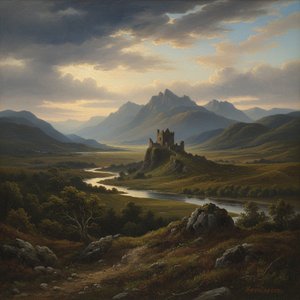
William Luker, a British artist working primarily during the late 19th and early 20th centuries, remains a captivating figure within the landscape art tradition. Often overshadowed by his more prominent contemporaries, Luker’s meticulous detail and evocative use of light have secured him a devoted following amongst collectors and scholars alike. Born in London in 1867, he inherited a passion for painting from his father, William Luker Sr., a renowned artist celebrated for his depictions of rural England – a lineage that profoundly shaped Luker's artistic trajectory.
Luker’s early life was marked by familial challenges. His father’s struggles with depression and financial instability cast a long shadow over the family, influencing the young William to seek solace and creative expression through art. This period of hardship instilled in him a deep appreciation for the beauty of the natural world – a refuge from personal turmoil. He received his initial artistic training under his father, absorbing not only technical skills but also a particular sensibility towards capturing the serene essence of the English countryside.
Luker’s distinctive style is immediately recognizable through his masterful manipulation of light and color. He eschewed the dramatic, often brooding tones favored by some of his contemporaries, instead opting for a softer, more luminous palette. His paintings are characterized by an almost ethereal quality – as if bathed in the golden glow of late afternoon sunlight. This deliberate choice wasn’t merely aesthetic; it reflected Luker's desire to convey a sense of tranquility and harmony with nature.
His subjects typically centered around idyllic rural scenes: rolling hills dotted with sheep, meticulously rendered hunts in Scottish glens, and charming village life. However, Luker’s skill extended beyond simple representation. He possessed an uncanny ability to capture the fleeting effects of light on water, foliage, and stone – transforming ordinary landscapes into moments of breathtaking beauty. He frequently employed a technique of layering thin washes of color, building up depth and atmosphere with subtle gradations.
Among Luker’s most celebrated works is “Two Hunting Horses in a Landscape” (1852), a dynamic depiction of a Victorian hunting scene. The painting showcases his remarkable ability to convey movement and drama, capturing the energy of the horses and the intensity of the hunt with impressive detail. “A Halt in the Desert” (circa 1890) offers a contrasting study – a quiet, contemplative scene featuring a lone rider against a vast expanse of sand, demonstrating Luker’s versatility across different subject matter.
“Stag Hunt in Scotland” (1852), a particularly striking example of his work, exemplifies the artist's meticulous attention to detail and his ability to capture the rugged beauty of the Scottish Highlands. The painting is renowned for its dramatic lighting and the realistic portrayal of the animals and hunters. Luker’s artistic style evolved subtly throughout his career, reflecting both his technical mastery and his growing personal vision.
Despite not achieving widespread fame during his lifetime, William Luker's work has gained increasing recognition in recent decades. His paintings are now held in prestigious collections worldwide, and his influence can be seen in the works of later landscape artists. Luker’s legacy lies not only in his individual achievements but also in his embodiment of a particular aesthetic sensibility – a quiet reverence for nature and a profound understanding of light.
His dedication to capturing the subtle nuances of the English countryside, combined with his exceptional technical skill, ensures that William Luker remains a significant figure in Victorian art history. Further research into his life and work continues to reveal new insights into this talented and often overlooked artist.

1867 - 1909

ジョン・コンスタブルの傑作25選。英国風景画の巨匠が描く自然と光の詩の世界へ。ロマン主義を代表する絵画、デダム・ヴェールやヘイ・ウェインなど、TopImpressionistsで高品質なアートプリントをお楽しみください。インテリアに深みと感動を。コレクションはこちら。
Explore the life & art of Alexander Nasmyth, a pivotal figure in Scottish Romantic landscape painting. Discover his iconic works, including portraits of Robert Burns, and learn about his lasting influence on national identity. Fine art reproductions available.

Explore the profound beauty of the Scottish Highlands through the lens of Romanticism. Discover the history, technique, and atmospheric mastery behind iconic landscape paintings from the Old Masters to museum-quality oil reproductions for collectors.

Explore the serene landscapes & majestic Highland cattle paintings of Louis Bosworth Hurt (1856-1929). Discover his mastery of atmospheric perspective and lasting legacy in British art. Learn more at TopImpressionists.

Explore the life & work of James Giles (1801-1870), a master of Scottish landscape painting and favored artist of Queen Victoria. Discover his atmospheric realism & royal commissions.


最新の美術ニュース、限定オファー、そしてインテリアのアイデアをいち早くお届けします。
お客様のプロジェクトについてお聞かせください。当社の美術専門家が、お客様に合わせた3つのパーソナライズされた芸術提案をご提供いたします。
あなたにぴったりの3作品を無料で厳選いたします


 プレビュー
プレビュー
 プリントを購入
 シェアする
シェアする シェアする
シェアする
 詳細を見る
詳細を見る

 ダウンロード
 似ている作品
 X線調査
X線調査 スライドショー
 詳細を見る
詳細を見る









 ガラスオプションは、110cm未満のサイズでのみご利用いただけます。


