


 設置イメージを確認
 送る
送る シェア
シェア
 詳細情報
詳細情報 ガイドを表示

 画像をダウンロード
 似ている作品
 X線調査
X線調査 スライドショー
 統計情報
統計情報エリヤハ椅子
 キャンバスにアクリル絵具
- ウォールアート
- この作品は、イスラエルの芸術世界を確立したベザレルの学校スタイルに属しています。ユダヤ教の伝統と聖書
 1916
1916 90.0 x 91.0 cm
 イスラエル博物館
エリヤハ椅子」は、エルサレムのベザレルの学校が制作した豪華な彫刻椅子で、ユダヤ教の伝統において、エリヤは男の子の割礼を守る役割を担うとされています。この椅子の繊細な装飾には聖書からのテーマや十二支の emblems が用いられ、初期のシオアニストたちが聖書の歴史と民族的な伝統を結びつけました。
 続きを読む
続きを読む
Wolf Rawicki (Ze’ev Raban): Israeli painter & designer of the Bezalel School. Known for decorative art, industrial design & iconic works like the Capitoline Wolf.
このページに掲載されている作品は著作権法によって保護されており、当社の許可なく同一の複製物を制作または販売することは法律で禁じられています。この保護は、以下のような国際条約に基づき執行されます。 ベルヌ条約 および、以下の条項に定められたものを含む各国の法律により、 米国著作権法 第17編。
敬意を払った法的な代替手段として、私たちはオリジナルにインスピレーションを与えられた、カスタムの手描きアートワークを提供しています。私たちの熟練したプロのアーティストは、元の作品が持つスタイル、情緒、そして芸術的なエッセンスを注意深く研究し、独自の創作物でありながら、同じ感性を呼び起こすような、新しくユニークな作品を作り上げます。
この手法は、著作権で保護された作品の複製や複写を伴わないため、著作権法に完全に準拠しています。これは単なる模倣ではなく、創造的な再解釈です。元の作品からインスピレーションを受けつつも、それとは異なる、全く新しい絵画を生み出すものです。
手描き油彩複製画
当社のアーティストが、お客様のご希望のサイズと額縁に合わせて、キャンバスに手描きで制作する油彩画です。 ( プリント版に切り替え デジタル画像販売へ切り替え)




P118B ¥10

P118H ¥10

P118W ¥10

P438Z ¥10

P508JH ¥12

P508YH ¥12

P805H ¥10

P805Z ¥10

P919BZ ¥10

P919G ¥10

P919XJ ¥10

P959ZH ¥10

P968JZ ¥12

W106C ¥8

W218G ¥10

W218JH ¥8

W218Y ¥10

W307PJ ¥10

W316G ¥10

W316PJ ¥8

W316Y ¥10

W398PJ ¥8

W4111J ¥10

W500HY ¥15

W500JH ¥15

W692G ¥12

W849H ¥8

W940BG ¥15

W953PJ ¥8




標準サイズ
カスタムサイズ
CM
INCH
作品のオリジナル比率に合わせた、当店の規定サイズからお選びください。
Loading sizes...

横幅
高さ
フレームや壁のスペースに合わせて、ご希望の幅と高さを入力してください。本作品は手描きのため、異なる比率のサイズをご希望の場合、絵画の周囲を少し広げて描くか、あるいは端を少しカットして調整することが可能です。お客様のご要望に合わせます。制作を開始する前に、仕上がりを確認するためのデジタルモックアップをお送りいたします。このページに表示されている画像は完成品の実物ではなく、あくまでモックアップによるイメージです。
カスタマイズの例:顔をお客様の写真に置き換える、ペットを追加する(例:猫を犬に変更)、背景に隠れたメッセージを入れる、背景の風景や要素を変更するなど。
ご注文後、TopImpressionists.com チームより詳細な指示をお送りするとともに、仕上がりイメージ(モックアップ)をご提供いたします。
ご注文後、TopImpressionists.com チームより詳細な指示をお送りするとともに、仕上がりイメージ(モックアップ)をご提供いたします。


 ガラスオプションは、110cm未満のサイズでのみご利用いただけます。

エリヤハ椅子
再現技法
複製画サイズ一覧
-


合計金額
¥ 42687
エリヤの椅子 - ウルフ・ラヴィツキー 作品解説
エリヤの椅子は、イスラエル美術館に収蔵されているベザレルの学校が制作した豪華な彫刻作品です。この作品は、ユダヤ教の伝統において、エリヤはあらゆる circumcision(割礼儀式)で嬰児を保護する役割を果たします。そのため、「エリヤの椅子」とは割礼儀式を行う godfather(聖父)が幼児を抱くための座席に付けられる名称です。この椅子の制作にはベザレルの学校の工房から多くの職人が参加し、数年に及ぶ時間を費やしました。 ベザレルの学校は、エルサレムで設立された初期のシオアニズム芸術家たちによって設立され、聖書とイスラエルの土地から取り入れられたユダヤ教の歴史をテーマに芸術言語を確立することを目標としていました。このように初期のシオアニストたちはユダヤ教の歴史を宗教的伝統としても民族的な伝統としても認識し、旧約時代のユダヤ人の未来と過去を結びつけました。この椅子の豪華な装飾は、十二支の emblems(象徴)、そして古典的なベザレルのスタイルで表現された聖書の場面や天使たちを含んでいます。幼児を保護する割礼儀式というユダヤ教における継続的な契約を象徴する椅子として設計されたこの作品は、まさにシオアニズム精神を鼓舞する芸術言語を実現したベザレルの学校の芸術的理念を体現しています。 この椅子の彫刻技法は、ベザレルの学校が取り入れた伝統的なスタイルにあります。特に特徴的なのは、聖書とユダヤ教の歴史をモチーフにした彫刻作品であり、その繊細な表現力は当時の芸術家たちに大きな影響を与えました。ベザレルの学校は、イスラエルの民族意識を高めることを目指し、聖書のテーマや象徴を用いて独自の芸術言語を確立しました。この椅子の豪華な装飾は、当時の社会におけるユダヤ人のアイデンティティと価値観を反映しています。 さらに、この椅子の素材は厳選された高品質のハードウードであり、ベザレルの学校の職人たちによって熟練した技術を用いて制作されました。特にエリヤの椅子に用いられた彫刻技法は、当時の芸術家たちが追求した伝統的なスタイルと技術を反映しています。この作品はベザレルの学校が確立した芸術的理念を体現しており、その美しいデザインと繊細な表現力は現代においても多くの人々を魅了しています。- サイズ:90 x 91 cm
- 作成年:1916年
- アーティスト:ウルフ・ラヴィツキー(ラヴィツキ)
よくあるご質問
Wolf Rawicki (Ravitzki)作「エリヤハ椅子」のコントラストはどの程度ですか?
Wolf Rawicki (Ravitzki)作「エリヤハ椅子」のコントラストレベルはStatementです。
Wolf Rawicki (Ravitzki)作「エリヤハ椅子」 の全体を貫く基調となる色は何ですか?
「エリヤハ椅子」はWarm Sunset Tonesの色調が際立っています。
「エリヤハ椅子」は、いつ、どのような技法と素材で制作されましたか?
Wolf Rawicki (Ravitzki)作「エリヤハ椅子」の技法はキャンバスにアクリル絵具で、制作年は1916年です。
アーティストについて
The Pioneering Vision of Ze’ev Raban: From Rawicki to the Soul of Israeli Art
Ze’ev Raban, born Wolf Rawicki in Kaunas, Russia, in 1890, stands as a monumental figure in the genesis of Israeli art. His journey wasn't merely that of an artist finding his voice; it was the forging of a new aesthetic identity for a nation yearning to express itself. Rawicki’s early life, steeped in the cultural currents of Eastern Europe, laid the foundation for a career dedicated to synthesizing tradition and modernity, culminating in works that became iconic symbols of a burgeoning national consciousness. He wasn't simply *a* painter; he was an architect of visual culture, deeply involved in shaping the artistic landscape of the nascent State of Israel.
Early Formation & The Bezalel School
Rawicki’s formal training took him across Europe – Munich, Paris, and Brussels – exposing him to the prevailing styles of the early 20th century. He absorbed the lessons of Jugendstil, Symbolism, and Art Nouveau, but these influences were never adopted wholesale. A crucial turning point came with his arrival at Bezalel Academy in Jerusalem in 1906. Bezalel, founded by Boris Schatz, was more than an art school; it was a crucible for creating a distinctly “Hebrew style.” This wasn’t about replicating historical forms but rather excavating the spirit of Jewish culture and translating it into contemporary artistic expression. Raban quickly became a central figure in this endeavor, embracing the challenge of defining what that aesthetic might look like.
A Synthesis of Tradition & Modernity
Raban's work is characterized by a remarkable ability to blend diverse influences. He sought inspiration not only from European art movements but also from traditional Jewish crafts, Islamic motifs, and the archaeological discoveries unfolding in Palestine. This fusion manifested in his decorative arts – silver Hanukkah lamps, ceremonial objects, furniture—where intricate carvings and stylized forms evoked ancient patterns while remaining firmly rooted in a modern sensibility. He believed that true Hebrew art wasn’t about imitation but about *interpretation* – distilling the essence of Jewish heritage into new artistic languages. His designs weren't merely beautiful; they were imbued with symbolic meaning, reflecting a deep connection to history and faith.
Major Achievements & The Capitoline Wolf
While Raban excelled in numerous mediums, his impact extended beyond individual artworks. He was instrumental in establishing the aesthetic principles of early Israeli design, influencing everything from typography to public monuments. Perhaps his most enduring legacy is the “Capitoline Wolf,” a silver menorah created for the Hebrew University on Mount Scopus in 1926. This piece, inspired by the Roman wolf that suckled Romulus and Remus, became a powerful symbol of Jewish resilience and national aspiration. It wasn’t simply a religious object; it was a statement about reclaiming heritage and forging a new future. The menorah's design, incorporating stylized Hebrew letters and motifs, resonated deeply with the Zionist movement and solidified Raban’s position as a leading artistic voice.
Historical Significance & Lasting Influence
Ze’ev Raban died in 1970, leaving behind a body of work that continues to inspire. He wasn't just an artist; he was a cultural pioneer who helped define the visual identity of Israel. His commitment to synthesizing tradition and modernity, his dedication to creating a distinctly Hebrew aesthetic, and his ability to imbue objects with profound symbolic meaning cemented his place as one of the most important figures in Israeli art history. His influence can be seen in the work of subsequent generations of artists and designers, who continue to grapple with the challenges of balancing cultural heritage with contemporary expression. Raban’s legacy is a testament to the power of art to shape national identity and inspire a sense of belonging.

Wolf Rawicki (Ravitzki)
1890 - 1970 , Russia
アーティスト情報
- Full Name: Ze'ev Raban
- Nationality: Israeli
- Date Of Birth: 1890
- Date Of Death: 1970
- Place Of Birth: Kaunas, Russia
- Notable Artworks:
- Elijah
- Standing Hanukkah Lamp
- Capitoline Wolf
- Artistic Movement Or Style: Bezalel School Style
関連記事

The Barbizon School: The Soulful Origins of Impressionism's Natural Light and Atmospheric Mastery
Discover the profound influence of the Barbizon School on Impressionism. Explore how these masters captured natural light and atmospheric beauty through plein air painting, paving the way for Monet and Renoir. A journey into the soulful origins of landscape art history.

Capturing the Light: A Journey Through the Soul of American Impressionism and the Hudson River School
Explore the luminous beauty of American Impressionism and the Hudson River School. Discover a curated journey through light, landscape, and history, celebrating the enduring legacy of masters through exquisite, hand-painted oil reproductions for the discerning art lover.
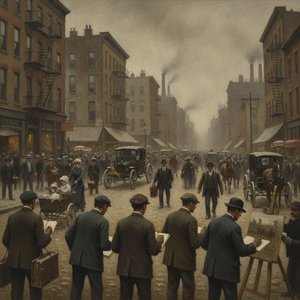
The Ashcan School: Capturing the Raw, Unfiltered Soul of Urban Life through American Realism
Discover the raw beauty of the Ashcan School. Explore how masters like Bellows and Henri captured the gritty, vibrant soul of early 20th-century New York through profound American Realism and evocative urban landscapes.
