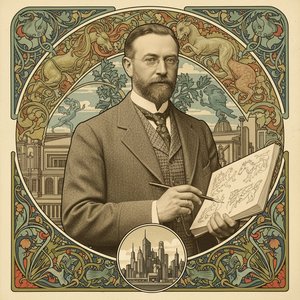
A Life Etched in Realism: The Story of David Shanks Ewart
David Shanks Ewart, a name perhaps less celebrated than some of his contemporaries, nevertheless occupies a fascinating and important niche within the landscape of 20th-century Scottish art. Born in 1901, Ewart’s life was one dedicated to meticulous observation and the pursuit of representational accuracy – a commitment that led him from the bustling streets of Glasgow to the artistic heart of Florence, Italy. While initially known under his birth name, he later adopted the pseudonym Ernest Wedderburn, adding an intriguing layer to his already complex artistic persona. His story is not one of flamboyant innovation but rather of quiet dedication and a profound respect for the traditions of Renaissance masters.
From Glasgow Beginnings to Florentine Studies
Ewart’s early life in Glasgow undoubtedly shaped his aesthetic sensibilities. The city, with its industrial grit and vibrant social tapestry, provided ample subject matter for an aspiring artist. He received formal training at the Glasgow School of Art, a renowned institution that fostered a strong sense of craftsmanship and encouraged students to engage with both historical and contemporary artistic practices. However, it was Ewart’s decision to relocate to Florence in the 1920s that proved pivotal. Immersing himself in the Italian Renaissance, he studied directly from the Old Masters, absorbing their techniques and principles of composition. This period marked a turning point in his work, shifting his focus towards portraiture and scenes imbued with a remarkable sense of realism. He wasn’t merely copying; he was striving to understand the underlying structure and emotional depth that characterized the art of Michelangelo, Raphael, and Leonardo da Vinci.
The Pursuit of Anatomical Precision
Ewart's artistic philosophy centered on an unwavering commitment to anatomical accuracy. This dedication wasn’t simply about technical skill; it was driven by a belief that true representation could unlock deeper emotional resonance in his subjects. He meticulously studied human form, often creating detailed preparatory drawings before embarking on larger compositions. His portraits are not idealized representations but rather honest and unflinching depictions of the individuals he painted – capturing their character, vulnerabilities, and inner lives. This pursuit led him to become a highly sought-after portraitist among both Italian and international clientele. He wasn’t interested in fleeting impressions or abstract interpretations; his goal was to create enduring images that reflected the essence of his sitters.
Exhibition Success & Lasting Legacy
Ewart's work gained recognition through numerous exhibitions, most notably at Florence’s prestigious Galleria dell’Accademia – a testament to his mastery of Renaissance techniques and his ability to connect with audiences on an emotional level. His paintings often featured scenes reminiscent of the Italian masters, but infused with a distinctly modern sensibility. He skillfully blended classical principles with contemporary subject matter, creating works that were both timeless and relevant. While he didn’t actively seek widespread fame, his talent was undeniable, attracting the attention of collectors and critics alike. His ability to capture the human spirit through precise rendering and subtle emotional nuance set him apart from many of his contemporaries. Although not a prolific artist in terms of sheer volume, the quality and depth of his work have ensured his place within the annals of Scottish art history.
Historical Significance & Enduring Appeal
David Shanks Ewart’s significance lies in his unwavering dedication to realism at a time when abstract expressionism was gaining prominence. He represented a counter-current – a steadfast belief in the power of representational art and the importance of traditional techniques. His work serves as a reminder that artistic innovation doesn't always necessitate radical departures from established norms. Ewart’s paintings offer a glimpse into a bygone era, capturing the essence of his subjects with remarkable clarity and emotional depth. His legacy continues to inspire artists who value craftsmanship, anatomical accuracy, and the enduring power of representational art. He died in 1965, leaving behind a body of work that stands as a testament to his skill, dedication, and profound respect for the traditions of the Renaissance masters.
Explore the life & work of Sir Daniel Macnee, a leading Scottish portrait and landscape painter. Discover his artistic evolution, influences, and legacy in 19th-century British art. Learn more at TopImpressionists.