

Julius Hellesenの最も愛されている作品はParti ved Ordrup (1841)で、コペンハーゲンのStatens Museum For Kunstに展示されています。 Julius Hellesenによる1点の作品を掲載しています。ここでは、制作年、所蔵美術館、そしてその作品の魅力とともに、最も有名な1点をご紹介します。
各作品の検索数、閲覧数、および注文数を組み合わせた当サイトの人気スコアに基づきランキングを作成しています。最終更新:11月 2026 このページに掲載されている各作品は、リネンキャンバスに手描きで制作する油彩複製画、またはご希望のサイズに合わせて作成するファインアートプリントとしてご注文いただけます。

このページに掲載されている絵画を最も多く所蔵している 1 の美術館
| 美術館 | 所在都市 | Julius Hellesenの作品 | このリストの絵画 |
|---|---|---|---|
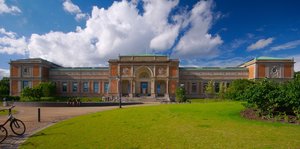 Statens Museum For Kunst |
コペンハーゲン | 1 | Parti ved Ordrup |
このページに掲載されているJulius Hellesenによるすべてのキャンバス画は1841年に描かれたものです。ここでは、最も有名な作品から順に紹介します。
Parti ved Ordrup (1841)
1823年に生まれたJulius Hellesenは18歳でした:Parti ved Ordrupは1841年の作品です。
Julius Hellesenによる作品が1点、カタログに掲載されています。
主にStatens Museum For Kunst (コペンハーゲン)に所蔵されています。上記のリストには、各美術館とその所蔵作品が記載されています。
はい。このページに掲載されているすべての絵画は、各作品の個別ページから、手書きの油彩複製画、またはお好みのサイズでのファインアートプリントとしてご注文いただけます。
Born in Copenhagen, Denmark, on July 17, 1823, Julius Hellesen entered a world that would eventually shape his eye for the natural landscape. He was the son of Anna Dorothea Dons and Niels Conrad Hellesen, a customs assistant. From a young age, the inclinations of his spirit seemed to lean toward the visual arts, leading him toward the formal structures of artistic education in his home city.
His path through the Academy of Fine Arts began early, as he first visited the institution in 1836. This period of study was marked by a steady progression of skill and discipline. By December 1843, he had been admitted to the Model School, a significant step in his development as a painter and lithographer. It was during these formative years that he found his true calling, moving away from general studies to focus on the nuances of the outdoors.
Under the guidance of Heinrich Buntzen, Julius Hellesen dedicated himself to the study of landscape painting. This mentorship provided the technical foundation necessary to capture the light and form of the Danish countryside. His training was not merely about the application of pigment, but a deep immersion into the textures of the earth and sky, a pursuit that would define his professional life and his contributions to the Danish art scene.
The young artist first stepped into the public eye at the age of seventeen, making his debut at the Charlottenborg Spring Exhibition. This early introduction to the art world marked the beginning of a dedicated period of showing his work. Between 1840 and 1846, he became a regular presence at these spring exhibitions, presenting various landscapes that reflected his growing skill and focus on the natural world.
As the years passed, his interests expanded beyond the brush and canvas. In his later years, he turned his attention to the precision of lithography, finding steady work as a lithographer at Em. Bærentzen & Co. This shift allowed him to explore the nuances of printmaking, a craft that required a different kind of patience and technical discipline. Even as he embraced this medium, he continued to exhibit his graphic talents, such as when he presented a color lithograph of Rosenborg Slot in 1860.
Hellesen found his true calling in the quietude of the Danish landscape, a pursuit that defined his creative spirit. His early brushwork captured the essence of the countryside, such as in Parti ved Ordrup, painted in 1841. This work demonstrated an early command of his chosen genre. He continued to explore the natural world through various compositions, including VED EN MOLLEDAM MED UDSIGT OVER HAVET in 1842 and the 1843 work titled Danish landscape. These oil paintings reveal a man deeply attentive to the light and topography of his homeland.
As his career progressed, his technical interests expanded beyond the canvas. He turned his hand to the precision of lithography, capturing specific locales with a different kind of clarity. His output included a landscape from Sæby with a view to the church, and later, a color lithograph titled Fersiska trädgården, Stockholm, which was produced in 1890. This later work shows a shift in medium, yet the artist's eye for detail remained constant even as his methods evolved.
Those who wish to encounter the traces of his hand may find them preserved within the halls of Copenhagen. His presence in the capital remains felt through several significant holdings that have survived the passage of time. One might find his vision of the landscape captured in the Statens Museum For Kunst, where the work titled Parti ved Ordrup resides. This piece offers a glimpse into the way he composed the natural world during his most active years.
Other treasures of his output have found a home within the Thorvaldsens Museum, also located in Copenhagen, Denmark. Here, the museum maintains a digital collection that allows for a closer study of his compositions. Among these is a work known as Danish landscape, which was painted in 1843. This oil on canvas remains a vital part of the institution's holdings, allowing the viewer to observe the specific textures of the Danish terrain as he saw them.
As the years passed, Hellesen’s personal life became anchored by his marriage to Pauline Emilie Paulsen. They wed on November 15, 1862, bringing together two families in Copenhagen. Pauline was the daughter of Jens Paulsen and Christine Duus, and her presence marked a significant chapter in his life as he continued his professional pursuits.
The artist's later years were spent navigating the changing landscape of his craft, moving between the delicate precision of lithography and the expansive nature of his landscape studies. However, his health eventually faltered. He passed away on July 10, 1877, at the Kommunehospitalet in Copenhagen. He was laid to rest in the Assistens Kirkegård, leaving behind a body of work that captured the quiet essence of the Danish terrain.