

წარმოდგენილია: · ჩარჩოსთან ერთად:
 გაგზავნა
 გაზიარება
 დეტალები
 გზამკვლევი

 ჩამოტვირთვა
 მსგავსები
 სლაიდშოუ
 კითხვა-პასუხი
 სტატისტიკა
- 26.0 x 33.0 cm


₾ 699
ზეთის საღებავით შესრულებული ხელით ნაკლნა
ტილოზე შესრულებული ფერწერიანი ზეთប្រდათი, თქვენთვის სასურველი ზომისა და ჩარჩოსთვის, ჩვენი ხელოვანების მიერ შეკვეთის საფუძველზე დამზადებული. ( ბეჭდვის რეჟიმზე გადართვა გადართვა ციფრულ გამოსახულებაზე)
ზომა
·სტანდარტული
სასურველი ზომა
CM
INCH
აირჩიეთ ჩვენს მიერ წინასწარ განსაზღვრული ზომებიდან, რომლებიც ნაწარმოების ორიგინალურ პროპორციებს შეესაბამება.
ზომების გამოთვლა...

სიგანე
სიმაღლე
შეიყვანეთ თქვენთვის საჭირო სიგანე და სიმაღლე, რათა ნახატი მოერგოს თქვენს ჩარჩოს ან კედელს. ვინაიდან ეს ნამუშევარი ხელით არის შესრულებული, სხვა ფორმის ზომის შემთხვევაში, მხატვარმა შესაძლოა სურათის გარშემო ოდნავ მეტი დატოვოს ან შეამციროს — არჩევანი თქვენზეა. დაწყებამდე, დასამტკიცებლად, ჩვენ გამოგიგზავნით ციფრულ მაკეტს. ამ გვერდზე ნაჩვენები სურათი არ ასახავს რეალურ შედეგს — რეალური სახე მხოლოდ მაკეტზე ჩანს.
 გაიგეთ მეტი
დასრულება
·
თეთრი კიდეები ₾1

ბუნდოვანი კიდეები ₾1

გაფართოებული კიდეები ₾1

P118B ₾10

P118H ₾10

P118W ₾10

P438Z ₾10

P508JH ₾12

P508YH ₾12

P805H ₾10

P805Z ₾10

P919BZ ₾10

P919G ₾10

P919XJ ₾10

P959ZH ₾10

P968JZ ₾12

W106C ₾8

W218G ₾10

W218JH ₾8

W218Y ₾10

W307PJ ₾10

W316G ₾10

W316PJ ₾8

W316Y ₾10

W398PJ ₾8

W4111J ₾10

W500HY ₾15

W500JH ₾15

W692G ₾12

W849H ₾8

W940BG ₾15

W953PJ ₾8

H24-GOLD ₾30

H24-SILVER ₾30

H36-GOLD ₾45

H36-SILVER ₾45
გაგზავნილია დამცავ ტუბში, რათა თქვენსთვის სასურველ ჩარჩოში მოთავსდეს.
დამატებითი სერვისები
არასავალდებულორა შედის დამატებით სერვისებში?
რა შეიძლება შეიცვალოს: სახის ჩანაცვლება მომხმარებლის ფოტოთი; შინაური ცხოველის დამატება (მაგალითად, კატის შეცვლა ძაღლით); ფონზე ფარული შეტყობინების დამატება; ფონის ლანდშაფტის ან ელემენტების შეცვლა.
შეკვეთის შემდეგ, TopImpressionists.com გუნდი გამოგსტავთ ელექტრონულ წერილს ინსტრუქციებისთვის და მოგაწვდით წინასწარ ნახატის (mockup) პრევიუსს
შეკვეთის შემდეგ, TopImpressionists.com გუნდი გამოგსტავთ ელექტრონულ წერილს ინსტრუქციებისთვის და მოგაწვდით წინასწარ ნახატის (mockup) პრევიუსს
მიწოდება მსოფლიო მასშტაბით -ში 3/4 კვირაში, სტანდარტული 5 კვირის ნაცვლად. (9 ნოემბერი). ხარისხზე კომპრომისის გაკეთება არ მოხდება.
დამცავი ლაქი
სახელოვანი ფირფიტა
ბრინჯაოს ამოკვეთილი ფირფიტის დეტალები
This elegant plaque features the artist's name and the title of the artwork, finely engraved for a timeless presentation.
It is made from bronze with a refined, elegant finish. The text is precisely laser-engraved for a sharp and permanent result. Measuring 9x2 cm, the plaque is compact yet easy to read. It's built to be durable and scratch-resistant, offering a professional, museum-quality look. Mounting is simple thanks to the included adhesive backing.
აკრილის გამჭვირვალე ფირფიტის დეტალები
The plaque includes essential engraved details such as the artist's name, the title of the artwork, the date it was created, the type of media used-like oil on canvas or watercolor-a brief description of the piece, and a QR code that links to the complete artwork information.
It is crafted from clear acrylic, offering a sleek, modern appearance. The text is UV-engraved in black to ensure strong visual contrast. With a size of 10x15 cm, it ensures optimal readability. It comes equipped with two metal hooks for secure wall mounting. The plaque is designed to be weather-resistant, making it suitable for various environments, and it includes interactive features that work seamlessly with smartphone scanning.
შავი აკრილის ფირფიტის დეტალები
This elegant plaque includes engraved information such as the artist's name, the title of the artwork, the date it was created, the type of media used (like oil on canvas or watercolor), a short description of the artwork, and a QR code for quick access to more information.
The plaque itself is made from refined black acrylic with a premium finish. The text is laser-engraved in white for high contrast and readability. Its size is 10x15 cm, designed to be easy to read. It comes with two metal hooks for professional mounting. The design is sleek and fits any interior style. It is also weather-resistant and durable, with built-in digital integration for mobile compatibility.
მინის ჩარჩოს არჩევანი შესაძლებელია მხოლოდ 110 სმ-მდე ზომისთვის
 მინის ჩარჩოს არჩევანი შესაძლებელია მხოლოდ 110 სმ-მდე ზომისთვის
- უფასო ექსპრეს მიწოდება მთელ მსოფლიოში
- მაღალი ხარისხის ტილოს ქსოვილი
- ტრანსპორტირების სრული დაზღვევა
- საბაჟო გადასახადების დაბრუნების გარანტია
- ფერების სრული შესაბამისობის გარანტია
- დაბრუნების 100-დღიანი პოლიტიკა (მხოლოდ დეფექტის შემთხვევაში)
- 100% თანხის სრული დაბრუნების გარანტია
- ფასდაკლება დიდი რაოდენობით შეკვეთისას


კოლექციონირებადი ნივთის აღწერა
Marvel at Benvenuto Cellini's opulent 'Salt Cellar,' a Renaissance masterpiece of gold, enamel, and intricate symbolism—a testament to artistry & luxury from 1543 Vienna.
მხატვრის ბიოგრაფია
ბენვენუტო ჩელინი (1500-1571) - რენესანსის გამოჩენილი ოქროსმჭედელი და მოქანდაკე, მანერიზმის წარმომადგენელი. ცნობილია "პერსევს" და განსაცვიფრებელი ჩელინის მარილსადგურით. მისი ხელოვნება და ცხოვრება!
სურათის შესახებ
A Gilded Echo of Antiquity
Benvenuto Cellini's Salt Cellar, a shimmering testament to the heights of Renaissance goldsmithing, isn’t merely a container for salt; it’s a miniature cosmos, a meticulously crafted allegory brimming with symbolism and technical brilliance. Completed in 1543 for King Francis I of France, this extraordinary object transcends its functional purpose, becoming a profound meditation on the relationship between earth and sea, divinity and humanity. It's a piece that whispers tales of ambition, artistry, and the intoxicating allure of the Italian Renaissance—a world where beauty was paramount and skill elevated to an almost religious pursuit.
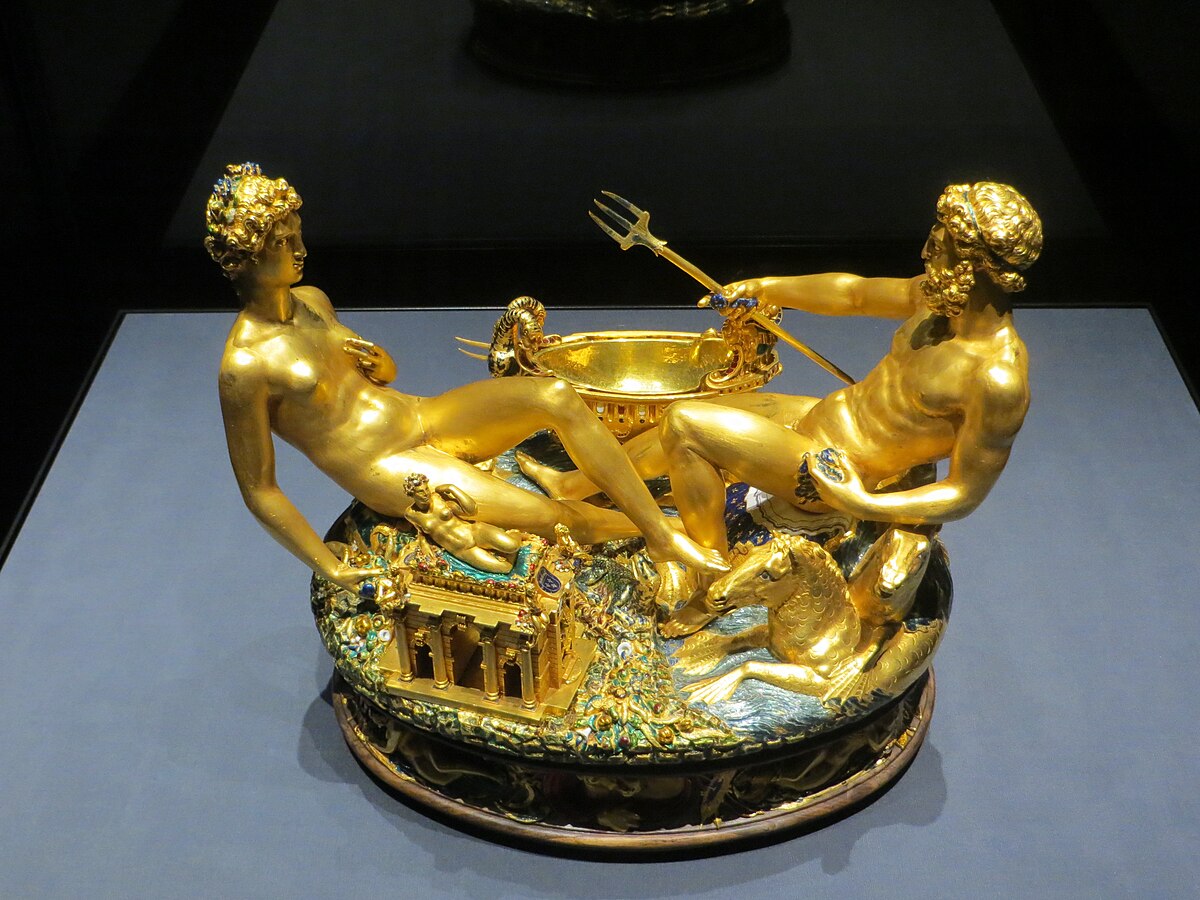
Image of Benvenuto Cellini’s Salt Cellar
The Anatomy of a Masterpiece
Crafted primarily from gold, the Salt Cellar is an astonishing feat of technical mastery. Cellini, renowned for his flamboyant personality and equally impressive skill, eschewed traditional casting methods, instead meticulously hammering the gold into its delicate, flowing form by hand. The base is elegantly fashioned from ebony, providing a striking contrast to the radiant gold, while ivory bearings allow the sculpture to gracefully roll across a banquet table – a deliberate feature designed for display and conversation. But it’s the enameling that truly elevates the piece; intricate scenes depicting figures representing the four seasons and the four winds are painstakingly applied, adding layers of visual complexity and narrative depth. The sheer scale of detail—from the meticulously rendered folds of clothing to the lifelike expressions on the faces of Neptune and Tellus – speaks volumes about Cellini’s dedication and unparalleled skill.
- Material: Gold, Ebony, Ivory, Enamel
- Dimensions: Approximately 10.5 inches (267 mm) tall, 13.1 inches (333 mm) wide
- Technique: Hand-hammered gold, intricate enamel work
A Dialogue with the Divine
The Salt Cellar’s symbolism is as captivating as its aesthetic beauty. At its heart lies a potent allegory of Terra e Mare – Earth and Sea – embodied by the figures of Neptune, god of the ocean, and Tellus, goddess of the earth. These two powerful deities are depicted in an intimate embrace, their legs intertwined, suggesting a harmonious connection between the terrestrial and aquatic realms. The sculpture is further enriched with symbolic details: a small boat carries the salt, representing the flow of commerce and sustenance; a temple dedicated to peppercorns stands alongside Tellus, signifying the pleasures of earthly life. The inclusion of animals—horses, dogs, dolphins—adds another layer of meaning, drawing upon classical iconography and reinforcing the sculpture’s connection to mythology and antiquity.
A Legacy Forged in Ambition
Cellini's autobiography, *Vita*, offers invaluable insight into the creation of this extraordinary piece. He recounts his initial reluctance to accept the commission from Cardinal Ippolito d’Este, dismissing the cardinal’s suggestions with characteristic arrogance and asserting sole credit for the design. The story is rife with anecdotes about Cellini’s daring exploits—including a dramatic escape from bandits while transporting the gold—further cementing his image as a larger-than-life figure of Renaissance Italy. The Salt Cellar, therefore, isn't just an artistic achievement; it’s a reflection of Cellini’s own complex and often contradictory personality – a testament to ambition, skill, and a profound appreciation for beauty. It remains one of the most celebrated examples of Renaissance goldsmithing, captivating viewers with its exquisite detail and enduring symbolism.
კითხვები და პასუხები
რამდენად მკვეთრია კონტრასტი ბენვენუტო ჩელინი-ის „Salt Cellar“-ში?
ბენვენუტო ჩელინი-ის „Salt Cellar“-ში დანახულია Gentle კონტრასტი ღია და მუქ ფერებს შორის.
რატომ არის ბენვენუტო ჩელინი-ის „Salt Cellar“ საუკეთესო არჩევანი საჩუქრად?
ბენვენუტო ჩელინი-ის „Salt Cellar“-ის Reflective ტონი იდეალურად შეესაბამება მის რეკომენდებულ საჩუქრის შემთხვევას: Anniversary.
1540 წელს შექმნილი „Salt Cellar“ ბენვენუტო ჩელინი-ის შემოქმედების რომელი პერიოდის ნაწილია?
რადგან ნამუშევრის თარიღია 1540, „Salt Cellar“ ბენვენუტო ჩელინი-ის Mature Renaissance-ს მიეკუთვნება.
მოკლე ფაქტები და ხელოვნების ქვიზი
ბენვენუტო ჩელინი-ის შესახებ

ბენვენუტო ჩელინი
1500 - 1571, იტალია
მხატვრის ბიოგრაფია
ბენვენუტო ჩელინის ცხოვრება და შემოქმედება
ბენვენუტო ჩელინი (1500-1571) იტალიური რენესანსის გამორჩეული ფიგურა იყო, რომელიც ცნობილია როგორც უნაროვანი ოქროსმჭედელი, მოქანდაკე, მხატვარი, ჯარისკაცი და მწერალი. მისი მრავალმხრივი ნიჭი და ხასიათი მკვეთრად გამოიკვეთება მის ცნობილ ავტობიოგრაფიაში, რომელიც მნიშვნელოვან ლიტერატურულ შედევრად ითვლება მისი მხატვრული მიღწევების პარალელურად. ის განასახიერებს მანერიზმის სულს – ეპოქას, რომელსაც დრამატიული ელფერი და სტილისტური სი complexity ახასიათებს.
ადრეული ცხოვრება და სამხატვრო მომზადება
ჩელინი დაიბადა მუსიკალური ტალანტების ოჯახში – მისი მამა იყო მუსიკოსი და საკრავის შემქმნელი. თავდაპირველად მან მუსიკაში გამოჩენილი ნიჭი აჩვენა, თუმცა 15 წლის ასაკში ის გაძლიერდა ოქროსმჭედლის კარიერისკენ, რამაც მისი შეწუხებული მამა დაარწმუნა, რომ მას ანტონიო დი სანდრო (მარკონე) მოემზადებინა. ეს იყო მისი ფორმალური სამხატვრო მომზადების დასაწყისი. მისი ადრეული წლები არც ისე მშვიდი იყო; 16 წლის ასაკში ის ჩარეულ იქნა თანამოძმეებთან კონფლიქტში, რის შედეგადაც იგი ფლორენციიდან გააძევეს და გარკვეული პერიოდი სიენაში მუშაობდა ოქროსმჭედელ ფრასკატოროსთან.
ოსტატობის წლები და მნიშვნელოვანი ნამუშევრები
ჩელინის შემოქმედებაში განსაკუთრებული ადგილი უჭირავს მისმა გამორჩეულ ნამუშევრებს. მარილის ჭურჭელი, რომელიც საფრანგეთის მეფე ფრანსის I-ს დაკვეთით შეიქმნა, ალბათ მისი ყველაზე ცნობილი შედევრია. მასზე ჩანს რთული დეტალები და დინამიკური ფიგურები, რომლებიც ამჟამად ვენის ხელოვნების ისტორიულ მუზეუმში ინახება. პერსეუსი მედუზას თავით – ბრინჯაოს ქანდაკება, რომელიც პერსეუსს ასახავს მედუზას მოჭრილი თავით, ამ ნამუშევმა ჩელინის უნიკალური უნარი წარმოაჩინა ფორმის და დრამატული კომპოზიციის შესაქმნელად. ეს არის მისი უნარის ტესტირება ლითონის მოძრაობისა და ემოციების აღსასრულებლად. ლედა და გედი – გონფალონიერის გაბრიელო ცეზარინოსთვის შექმნილი მედალიონი, რომელიც აჩვენებს ჩელინის უნარს კლასიკური მიფოლოლოგიის ხარისხოვნად დამუშავებას.
გავლენები და მანერიზმის სტილი
ჩელინის ხელოვნებაზე დიდი გავლენა მოახდინა ანტიკური ცივილიზაციამა და მიქელანჯელოს ძლევამოსილმა ფიგურებმა. მისი სტილი დინამიკურობით, რეალიზმითა და ყურადღებით დეტალებზე ხასიათდება. მანერიზმის ეპოქაში ჩელინის შემოქმედებამ განსაკუთრებული ადგილი დაიკავა – ეს არის პერიოდი, რომელსაც ახასიათებს წაგრძელებული ფორმები, გადაჭარბებული პოზები და თეატრალური განწყობა.
ხოვრების სხვა მხარე: ჯარისკაცი, მუსიკოსი და ავტობიოგრაფისტი
ჩელინის ცხოვრება სამხატვრო სახელოსნოსთან შემოიფარგლებოდა. მან ჯარისკაცად იმსახურა ალყების დროს, ამბობს რომ მნიშვნელოვანი როლი ითამაშა რომის დაცვაში იმპერიული ძალების წინააღმდეგ. ის ასევე იყო უნარიანი მუსიკოსი, რომელიც კორნეტზე უკრავდა პაპის კარტს. თუმცა მისი ავტობიოგრაფია მას განსაკუთრებულად გამოარჩევს.
- ბენვენუტო ჩელინის ცხოვრება – ეს ღია და ხშირად თავხედური ანგარიში უნიკალურ ინფორმაციას გვაწვდის რენესანსის ხელოვნების, კულტურისა და საზოგადოების შესახებ. ის მომხიბლავი ნარატივია პატრონებზე, კონკურენტებზე და პირადი თავგადასავლების შესახებ, რომელიც ამ ეპოქის უნიკალურ პერსპექტივას გვთავაზობს.
მისი ავტობიოგრაფია მხოლოდ მოვლენების ჩანაწერს არ წარმოადგენს; ეს არის ფრთხილად შექმნილი თვითგამოხატვის პორტრეტი, რომელიც მიზნად ისახავს მის ნიჭის წარმოჩენას და მისი საქმიანობის გამართლებას. ზოგჯერ არასწორი ინფორმაცია შეიცავს ჩელინის საკუთარი ცრუპრობის გამო, მაგრამ რენესანსის ცხოვრების გაგებისთვის ეს აუცილებელია.
მემკვიდრეობა და ისტორიული მნიშვნელობა
ბენვენუტო ჩელინი 1571 წელს გარდაიცვალა ფლორენციაში, დატოვა მანერიზმის ერთ-ერთი უმნიშვნელოვანესი მხატვრის მემკვიდრეობა. მისი ტექნიკური უნარი, სამხატვრო ინოვაცია და მომხიბლავი ავტობიოგრაფია აგრძელებს მხატვრებსა და ხელოვნების მოყვარულებს შთააგონებს. ის წარმოადგენს რენესანსის იდეალს – მრავალმხრივ ნიჭიერ ადამიანს, რომელიც სხვადასხვა დისციპლინაში გამოირჩევა, ამბიციებით იყო შევსებული და არ ეშინოდა საკუთარი ინდივიდუალობის გამოვლინების.
მოკლე ფაქტები ბენვენუტო ჩელინი შესახებ
- Artistic Movement Or Style: მანერიზმი
- Artists Who Influenced This Artist: ['მიქელანჯელო']
- Date Of Birth: 1500 წლის 1 ნოემბერი
- Date Of Death: 1571 წლის 13 თებერვალი
- Full Name: ბენვენუტო ჩელინი
- Nationality: იტალიელი
- Notable Artworks (List Of Titles):
- პერსეუსი მედუზის თავით
- ჩელინის მარილსაცხარი
- Place Of Birth (City And Country): ფლორენცია, იტალია
აღმოაჩინეთ ხელოვნების ნაწარმოებები თემების, სტილისა და მახასიათებლების მიხედვით დაჯგუფებული.


ბენვენუტო ჩელინი
Salt Cellar
() ·
ჩარჩოსთან ერთად: · ზეთით შესრულებული ხელნაკეთი ტილოზე linen-ზე
ჯამური ღირებულება