საკლექციო აღწერა
A Symphony of Color and Spirit: Unveiling Franz Marc’s Untitled (8076)
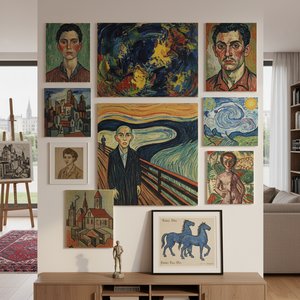
Franz Marc's "Untitled (8076)" stands as a cornerstone of German Expressionism, embodying the movement’s fervent pursuit of spiritual truth through visceral artistic expression. Painted in 1911, this captivating artwork captures two horses locked in an animated dance—a visual metaphor for primal instinct and interconnectedness that resonates deeply with viewers even today. The painting's genesis lies within Marc’s unwavering belief that art could transcend mere representation, striving instead to communicate the essence of existence itself.
The Expressionist Vision: Bold Color and Simplified Forms
Marc’s stylistic approach is instantly recognizable as profoundly influenced by Vincent van Gogh—a deliberate homage to his predecessor’s emotive use of color and brushstrokes. Unlike academic painting's meticulous realism, Marc employed a palette dominated by intense hues – fiery reds, earthy browns, and luminous yellows – applied with thick impasto technique. This textural richness isn’t merely decorative; it serves as a conduit for conveying emotion, mirroring the turbulent inner landscape of the artist himself. Furthermore, Marc eschewed detailed anatomical accuracy, opting for simplified forms that prioritize expressive gesture and symbolic resonance over photographic precision. The horses are rendered in abstracted shapes, emphasizing their movement and vitality rather than portraying them with meticulous detail.
Symbolism Rooted in Nature: Horses as Embodiments of Life Force
The horse occupies a central position within Marc’s artistic lexicon, representing not just animal life but also primal energy, fertility, and the untamed spirit of nature. In “Untitled (8076),” the horses are depicted facing each other, their postures conveying both tension and harmony—a visual representation of the duality inherent in existence. The scattered birds circling above contribute to the painting’s dynamic atmosphere, symbolizing freedom, aspiration, and the interconnectedness of all living beings. Marc's meticulous observation of animal behavior informed his artistic choices, reflecting a deep appreciation for the natural world as a source of spiritual inspiration. He believed that animals possessed an inherent purity untouched by human intellect, embodying qualities he sought to capture in his paintings.
Historical Context: The Blue Rider Movement and Artistic Rebellion
“Untitled (8076)” emerged during the formative years of Der Blaue Reiter (“The Blue Rider”), a collective of Expressionist artists who championed a radical aesthetic vision—one that rejected conventional artistic conventions in favor of subjective experience and spiritual contemplation. Marc, along with Wassily Kandinsky and Edvard Munch, sought to liberate art from the constraints of representational illusionism, aiming instead for a direct communion with the divine through color and form. This movement’s rejection of academic dogma coincided with broader societal anxieties surrounding industrialization and materialism, reflecting a yearning for authenticity and connection to primal forces—themes powerfully conveyed in Marc's oeuvre.
Emotional Resonance: A Window into Inner Turmoil and Transcendence
Ultimately, “Untitled (8076)” transcends its formal elements to evoke a profound emotional response. The painting’s vibrant colors pulsate with energy, mirroring the artist’s own preoccupation with themes of spirituality and transformation. Its simplified forms invite contemplation, prompting viewers to consider the deeper meanings beneath the surface—the struggle for balance between instinct and intellect, the yearning for unity with nature, and the pursuit of transcendent beauty. Like many of Marc's paintings, it speaks to a universal human desire for connection to something greater than oneself, cementing its place as an enduring masterpiece of Expressionist art.



 სურათის შეძენა
 გაგზავნა
 გაზიარება
 დეტალები

 ჩამოტვირთვა
 მსგავსები
 რენტგენოგრაფიული კვლევა
 სლაიდშოუ
 გადასართად დაწვრილებით ნახეთ






































 მინის ჩარჩოს არჩევანი ხელმისაწვდომია მხოლოდ 110 სმ-ზე ნაკლები ზომისთვის