საკლექციო აღწერა
A Portrait of Dignity: John Singer Sargent’s Edwin Booth
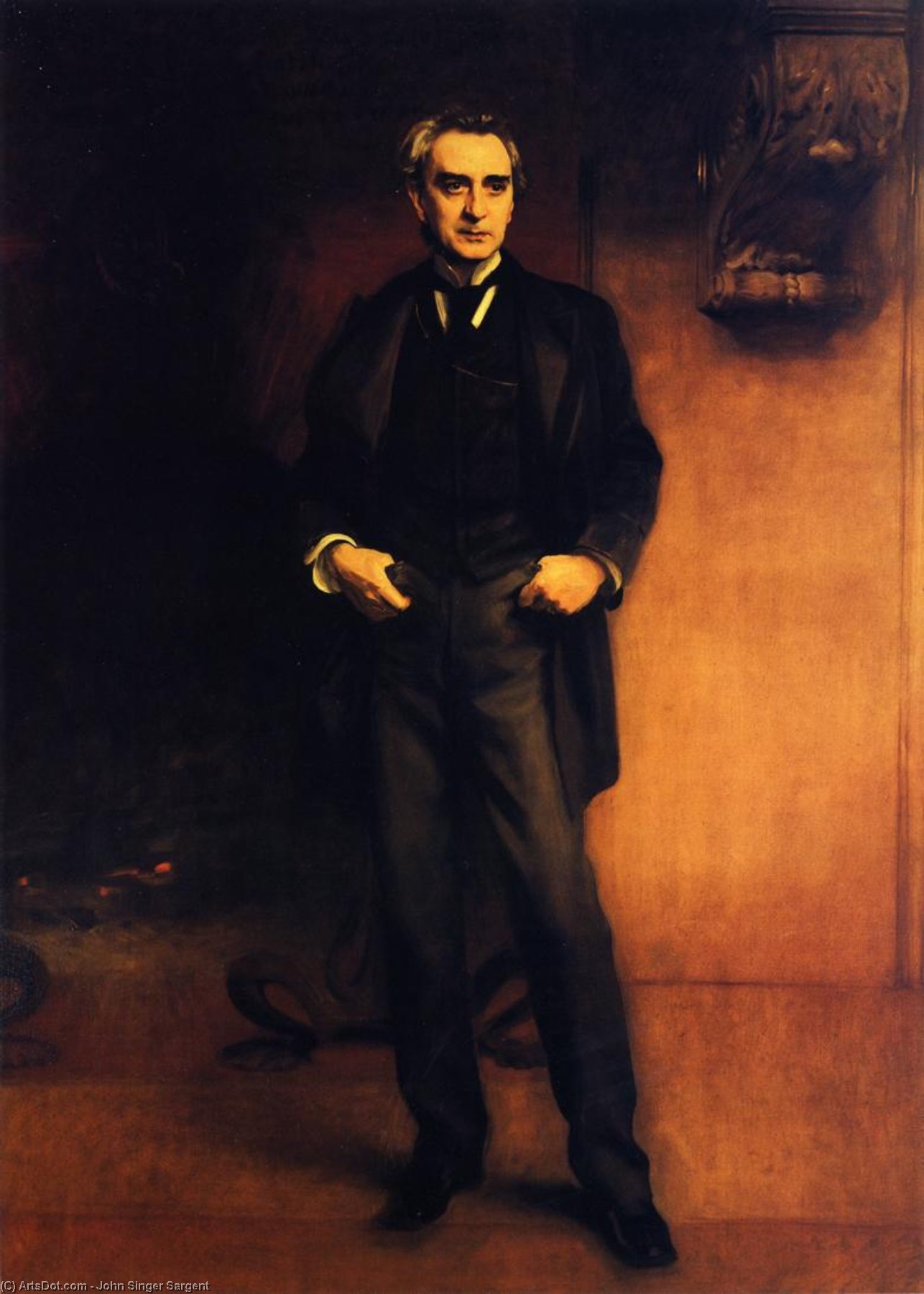
The painting of Edwin Booth by John Singer Sargent stands as an enduring testament to the artist's mastery of portraiture and his ability to capture not merely likeness, but also character—a feat achieved with breathtaking Impressionistic brilliance. Created in 1890 during the height of American artistic fervor, this monumental canvas (222 x 156 cm) resides within the Parrish Art Museum in Water Mill, New York, offering visitors a privileged glimpse into Sargent’s unparalleled vision and technique.
The Subject: An Actor's Presence
Edwin Booth, arguably America’s most celebrated Shakespearean actor of his era, is depicted with remarkable composure against a subtly textured wall adorned with intricate geometric patterns—a deliberate choice reflecting Sargent’s fascination with architectural forms and their influence on human perception. Booth wears a dark suit and tie, attire emblematic of theatrical professionalism during the Victorian period, conveying an aura of quiet confidence and intellectual seriousness. His hands rest casually in his pockets, a gesture that speaks volumes about his demeanor – relaxed yet alert, embodying the inner life of a performer deeply engaged with his craft. Sargent skillfully utilizes light to sculpt Booth’s form, highlighting contours and creating depth without resorting to harsh shading—a hallmark of Impressionistic style.
Style and Technique: Impressionistic Brilliance
Sargent's approach aligns perfectly with the burgeoning Impressionist movement, which championed capturing fleeting moments of sensory experience rather than striving for photographic realism. He employs loose brushstrokes layered upon one another to achieve a luminous effect, prioritizing color harmony over precise detail. The muted palette—dominated by shades of brown and gray—contrasts subtly with the warmer tones emanating from Booth’s skin, drawing attention to his face and conveying an impression of warmth and vitality. Sargent's meticulous observation of light—particularly its interplay with surfaces—is evident throughout the composition, demonstrating a profound understanding of optical principles. The painting exemplifies Impressionistic brilliance.
Historical Context: The Players Club Commission
This portrait was commissioned by Lawrence Barrett and Edwin Booth for presentation to The Players club, New York’s esteemed Shakespearean society. Sargent's work reflects the cultural landscape of late 19th-century America—a period marked by burgeoning industrialization, social reform movements, and a growing appreciation for artistic innovation. The commission itself underscores the importance of theater as a vehicle for intellectual discourse and moral reflection—values deeply ingrained in Victorian sensibilities.
Symbolism: Serpent and Reflection
Beyond its aesthetic qualities, the painting harbors subtle symbolic resonances. Notably, a snake coiled on the floor beneath Booth’s feet serves as a potent emblem of transformation and regeneration – mirroring Sargent's own artistic journey from early academic training to embracing Impressionistic experimentation. Furthermore, the doorway behind Booth—a recurring motif in Sargent’s oeuvre—represents passage and transition, symbolizing both physical space and psychological change. The reflection in the doorway subtly enhances Booth’s presence, suggesting an awareness of his surroundings and reinforcing his role as a performer inhabiting a theatrical world.
Emotional Impact: Dignity and Quiet Strength
Ultimately, Sargent's Edwin Booth transcends mere visual representation; it communicates profound emotional depth—a palpable sense of dignity and quiet strength that continues to resonate with viewers today. The painting captures not just Booth’s physical appearance but also his inner character—his intellect, his composure, and his unwavering dedication to his art. It stands as an enduring masterpiece, inviting contemplation on themes of artistry, performance, and the human condition.


 სურათის შეძენა
 გაგზავნა
 გაზიარება
 დეტალები

 ჩამოტვირთვა
 მსგავსები
 რენტგენოგრაფიული კვლევა
 სლაიდშოუ


 გადასართად დაწვრილებით ნახეთ






































 მინის ჩარჩოს არჩევანი ხელმისაწვდომია მხოლოდ 110 სმ-ზე ნაკლები ზომისთვის



