
Shown: · With its frame:
 ნახვა ინტერьерში
 გაგზავნა
 გაზიარება
 დეტალები
 გზამკვლევი

 ჩამოტვირთვა
 მსგავსები
 რენტგენოგრაფიული კვლევა
 სლაიდშოუ
 Q&A
Q&A სტატისტიკა
- 22.0 x 15.0 cm


₾ 700
ხელით შესრულებული ზეთის საღებავით რეპროდუქცია
ტილოზე შესრულებული ფერწერიანი ზეთប្រდათი, თქვენთვის სასურველი ზომისა და ჩარჩოსთვის, ჩვენი ხელოვანების მიერ შეკვეთის საფუძველზე დამზადებული. ( გადართვა ბეჭდვის რეჟიმზე გადასვლა ციფრულ გამოსახულებაზე)
Size
·სტანდარტული ზომა
ინდივიდუალური ზომა
CM
INCH
აირჩიეთ ჩვენს მიერ წინასწარ განსაზღვრული ზომებიდან, რომლებიც ნაწარმოების ორიგინალურ პროპორციებს შეესაბამება.
Loading sizes...

სიგანე
სიმაღლე
შეიყვანეთ თქვენთვის საჭირო სიგანე და სიმაღლე, რათა ნახატი მოერგოს თქვენს ჩარჩოს ან კედელს. ვინაიდან ეს ნამუშევარი ხელით არის შესრულებული, სხვა ფორმის ზომის შემთხვევაში, მხატვარმა შესაძლოა სურათის გარშემო ოდნავ მეტი დატოვოს ან შეამციროს — არჩევანი თქვენზეა. დაწყებამდე, დასამტკიცებლად, ჩვენ გამოგიგზავნით ციფრულ მაკეტს. ამ გვერდზე ნაჩვენები სურათი არ ასახავს რეალურ შედეგს — რეალური სახე მხოლოდ მაკეტზე ჩანს.
 გაეცანით მეტს
Finish
·
White ₾1

Blurside ₾1

Extended ₾1

P118B ₾10

P118H ₾10

P118W ₾10

P438Z ₾10

P508JH ₾12

P508YH ₾12

P805H ₾10

P805Z ₾10

P919BZ ₾10

P919G ₾10

P919XJ ₾10

P959ZH ₾10

P968JZ ₾12

W106C ₾8

W218G ₾10

W218JH ₾8

W218Y ₾10

W307PJ ₾10

W316G ₾10

W316PJ ₾8

W316Y ₾10

W398PJ ₾8

W4111J ₾10

W500HY ₾15

W500JH ₾15

W692G ₾12

W849H ₾8

W940BG ₾15

W953PJ ₾8

H24-GOLD ₾30

H24-SILVER ₾30

H36-GOLD ₾45

H36-SILVER ₾45
Shipped in a protective tube, ready for your own framer.
Above 105 cm the frame is shipped as a kit for a professional framer — read the details.
Extras
optionalWhat do the extras include?
Examples of what can be changed: Replace face with customer photo; Add pet (e.g., replace cat with dog); Include hidden message in background; Change background landscape or elements.
After order, TopImpressionists.com team will email client for instructions and provide a mockup preview
After order, TopImpressionists.com team will email client for instructions and provide a mockup preview
მიწოდება მსოფლიო მასშტაბით -ში 3/4 კვირაში, სტანდარტული 5 კვირის ნაცვლად. (2 ნოემბერი). ხარისხზე კომპრომისის გაკეთება არ მოხდება.
დამცავი ლაქი
სახელოვანი ფირფიტა
დაკვეთილი ბრინჯაოს ფირფიტის დეტალები
This elegant plaque features the artist's name and the title of the artwork, finely engraved for a timeless presentation.
It is made from bronze with a refined, elegant finish. The text is precisely laser-engraved for a sharp and permanent result. Measuring 9x2 cm, the plaque is compact yet easy to read. It's built to be durable and scratch-resistant, offering a professional, museum-quality look. Mounting is simple thanks to the included adhesive backing.
აკრილის გამჭვირვალე ფირფიტის დეტალები
The plaque includes essential engraved details such as the artist's name, the title of the artwork, the date it was created, the type of media used-like oil on canvas or watercolor-a brief description of the piece, and a QR code that links to the complete artwork information.
It is crafted from clear acrylic, offering a sleek, modern appearance. The text is UV-engraved in black to ensure strong visual contrast. With a size of 10x15 cm, it ensures optimal readability. It comes equipped with two metal hooks for secure wall mounting. The plaque is designed to be weather-resistant, making it suitable for various environments, and it includes interactive features that work seamlessly with smartphone scanning.
შავი აკრილის ფირფიტის დეტალები
This elegant plaque includes engraved information such as the artist's name, the title of the artwork, the date it was created, the type of media used (like oil on canvas or watercolor), a short description of the artwork, and a QR code for quick access to more information.
The plaque itself is made from refined black acrylic with a premium finish. The text is laser-engraved in white for high contrast and readability. Its size is 10x15 cm, designed to be easy to read. It comes with two metal hooks for professional mounting. The design is sleek and fits any interior style. It is also weather-resistant and durable, with built-in digital integration for mobile compatibility.
მინის ჩარჩოს არჩევანი ხელმისაწვდომია მხოლოდ 110 სმ-მდე ზომისთვის
 მინის ჩარჩოს არჩევანი ხელმისაწვდომია მხოლოდ 110 სმ-მდე ზომისთვის
- უფასო ექსპრეს მიწოდება მთელ მსოფლიოში
- მაღალი ხარისხის ტილო
- ტრანსპორტირების სრული დაზღვევა
- საბაჟო გადასახადების დაბრუნების გარანტია
- ფერების სრული შესაბამისობის გარანტია
- დაბრუნების 100-დღიანი პერიოდი (მხოლოდ წარმოების დეფექტის შემთხვევაში)
- 100% თანხის სრული დაბრუნების გარანტია
- ფასდაკლება დიდი რაოდენობით შეკვეთისას


კოლექციონირებადი ნივთის აღწერა
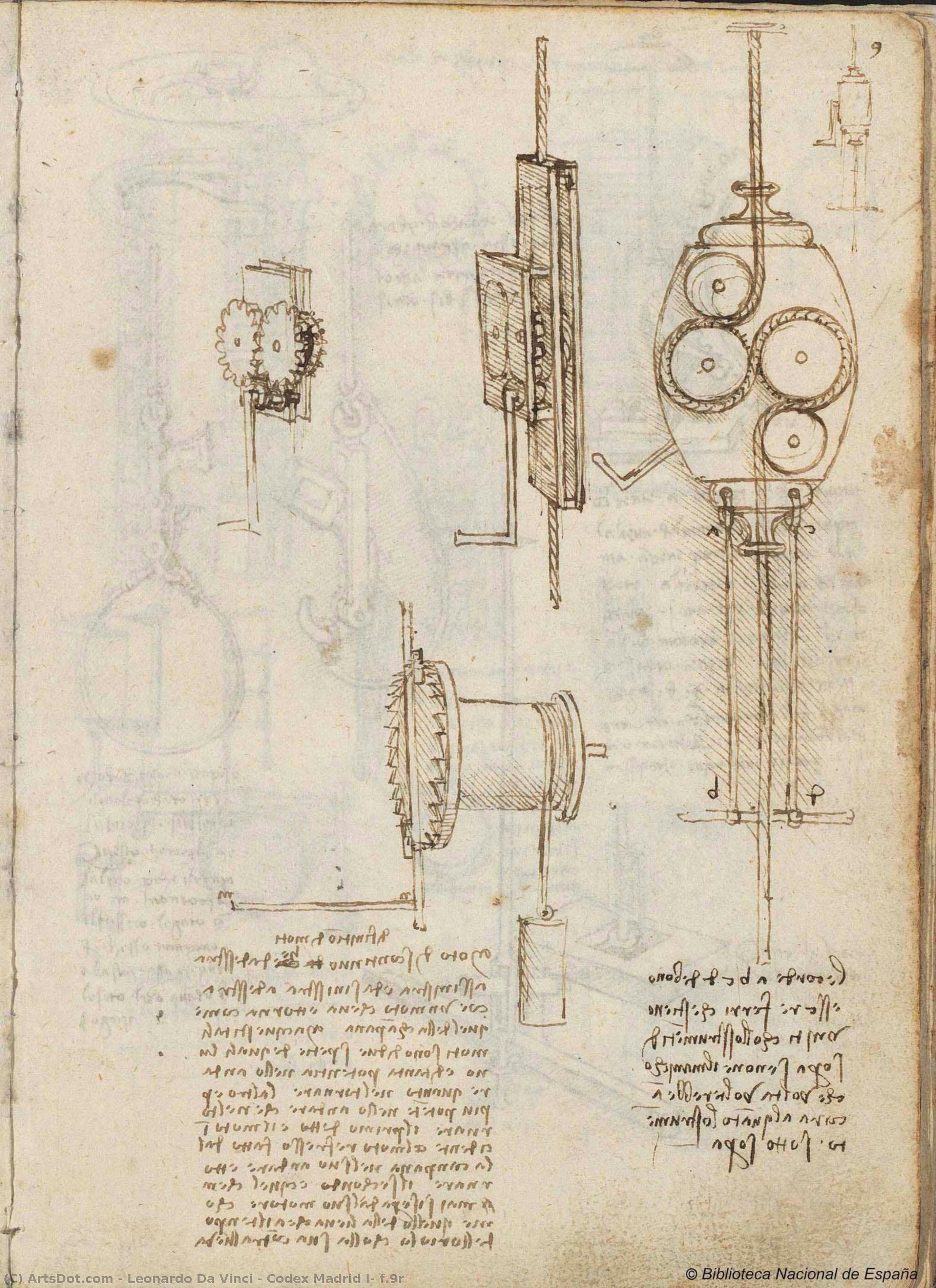
Explore Leonardo da Vinci's Codex Madrid I, f.9r – a meticulously detailed drawing of an ingenious mechanical device schematics labeled in Latin. Admire the Renaissance master’s scientific curiosity and artistic brilliance.
მხატვრის ბიოგრაფია
აღმოაჩინეთ ლეონარდო და ვინჩი (1452-1519): რენესანსის გენიოსი „მონა ლიზასა“ და „ტახტის საიდუმლოს“ მიღმა! გაეცანით მის სფუმატო ტექნიკას, ანატომიურ კვლევებსა და გამორჩეულ გამოგონებებს.
About the painting
A Mechanical Revelation: Decoding Leonardo’s Vision
To gaze upon the Codex Madrid I, folio 9r is to witness a profound moment of intellectual transcendence, where the boundaries between scientific inquiry and artistic mastery dissolve into a single, breathtaking vision. This singular drawing by Leonardo da Vinci serves as much more than a mere technical schematic; it is a window into the very soul of the Renaissance mind. Within these delicate graphite lines, we find the restless spirit of a polymath who refused to accept the limits of the known world. The folio presents an intricate, detailed illustration of an experimental hydraulic device, a complex machine that whispers of Da Vinci’s relentless pursuit of understanding the natural world through the lens of practical engineering and geometric precision.
The subject matter itself is a testament to Leonardo's fascination with the mechanics of life and motion. The drawing portrays a detailed schematic of what appears to be an experimental hydraulic device, perhaps conceived as a method for lifting heavy objects or channeling the raw power of water. Each component is rendered with such meticulous care that one can almost sense the movement of fluid through its channels. There is a quiet, rhythmic beauty in the way the machine's parts are laid out, suggesting a harmony between human ingenuity and the elemental forces of nature. For the collector or the admirer of fine art, this piece offers a rare glimpse into the "pre-industrial" imagination—a blueprint for a future that Leonardo was already dreaming of centuries before its time.
The Mastery of Line and Light
Technically, the folio is a masterclass in observational drawing. Executed with graphite on paper, the work demonstrates Da Vinci's unparalleled ability to use simple tools to convey profound structural integrity. The lines are not merely marks on a page; they are carefully calculated strokes designed to communicate accurate proportions and weight. Through subtle yet effective shading, Leonardo creates a sense of three-dimensional depth, allowing the various mechanical components to emerge from the paper with a palpable presence. This interplay of light and shadow does more than define shape—it breathes life into the inanimate, transforming a technical diagram into a work of evocative fine art.
The aesthetic appeal of this piece lies in its deceptive simplicity. While the content is scientific, the execution is deeply artistic. The way the text—labels written in Latin—intertwines with the mechanical drawings creates a beautiful, organic texture across the parchment. This integration of language and image reflects the Renaissance ideal that art and science are not separate disciplines, but rather two sides of the same coin. For an interior designer, such a piece provides a sophisticated focal point, offering a sense of intellectual depth and historical gravity to any curated space.
A Legacy of Infinite Curiosity
The historical context of the Codex Madrid I places it within the heart of Leonardo’s most prolific era. During this period, Da Vinci was actively engaged in developing technologies that would bridge the gap between medieval tradition and modern innovation. This drawing is a tangible manifestation of his belief that by documenting our observations, we can unlock the secrets of the universe for future generations. It represents a period of significant advancement in engineering and mechanics, where the artist’s eye was just as vital to discovery as the scientist's logic.
Beyond its mechanical utility, the folio carries a profound emotional impact. There is an inherent sense of wonder embedded in every stroke—a feeling of standing on the precipice of discovery. It evokes a sense of nostalgia for the era of the "universal man," reminding us of a time when human potential seemed limitless. Owning or displaying a high-quality reproduction of this work is not merely about decorating a wall; it is about inviting the spirit of innovation, curiosity, and timeless genius into one's personal environment. It serves as a constant reminder that through observation and imagination, we can decode the very mechanics of our existence.
კითხვები და პასუხები
შეიძლება თუ არა ლეონარდო და ვინჩი-ის „Codex Madrid I, f.9r“-ის გამოსახულების თავისუფლად რეპროდუცირება?
ავტორული უფლებების შესახებ პასუხი ნამუშევრისთვის ლეონარდო და ვინჩი-ის „Codex Madrid I, f.9r“: ნამუშევარი არის საჯარო საკუთრებაშია - მისი საავტორო უფლებები ამოწდა. ეს განსაზღვრავს, შესაძლებელია თუ არა გამოსახულების რეპროდუქციის თავისუფლად წარმოება.
რამდენად ცნობილია ლეონარდო და ვინჩი-ის ნამუშევარი "Codex Madrid I, f.9r"?
ლეონარდო და ვინჩი-ის „Codex Madrid I, f.9r“-ის პოპულარობის დონე შეფასებულია როგორც Iconic.
როგორ უკავშირდება ერთმანეთს „Codex Madrid I, f.9r“-ის ფერები?
ლეონარდო და ვინჩი-ის „Codex Madrid I, f.9r“-ის ფერები წარმოადგენს Unified Palette ჰარმონიას. ჰარმონია აღწერს, თუ როგორ უკავშირდება ერთმანეთს ფერები.
Quick facts and art quiz
About ლეონარდო და ვინჩი

ლეონარდო და ვინჩი
1452 - 1519, იტალია
მხატვრის ბიოგრაფია
ლეონარდო და ვინჩის ცხოვრება და მემკვიდრეობა
ლეონარდო დი სერ პიერო და ვინჩი, რომელიც 1452 წელს, ტოსკანურ სოფელ ვინჩის მახლობლად დაიბადა, რენესანსის ყველაზე აღიარებულ ფიგურად რჩება — ჭეშმარიტი პოლიმათი, რომლის დაუცხრომელი ცნობისმოყვარეობა სხვადასხვა დარგს აფართოებდა და წარუშლელ კვალს ტოვებდა ხელოვნებაში, მეცნიერებასა და ინჟინერიაში. მისი სახელი თავად გახდა გენიოსის სინონიმებული, რაც მის არაჩვეულებრივ ნიჭსა და ვიზიონერულ აზროვნებაზე მოწმობს. პიერო და ვინჩის, ნოტარიუსის და კატერინას, გლეხ ქალის შვილა, ლეონარდოს ადრეული ცხოვრება არასტანდარტული იყო, თუმცა სწორედ ამან მისცა მას წვდომა როგორც პრაქტიკულ სამყაროზე, ასევე ბუნებისადმი იმ ღრმა აღფრთოვანებაზე, რამაც შემდგომში მისი მხატვრული ხედვის საფუძველი ჩაუყარა. მან მიიღო ელემენტარული განათლება კითხვის, წერისა და მათემატიკის შესახებ, მაგრამ სწორედ ფლორენციაში, ანდრეა დელ ვერროკიოსთან გატარებულმა სტაჟირებამ აღძრა მისი შემოქმედებითი ნაპერწკალი. ვერროკიოს სახელოსნოში ლეონარდო მხოლოდ ფერწერას თუ ქანდაკებას კი არ სწავლობდა, არამედ მთლიანად იყო ჩაფლული ტექნიკური ოსტატობის სამყაროში — დახვეწდა ლითონის დამუშავებას, ნაკვეთს, ხატვასა და მხატვრული შემოქმედების სირთულეებს, რაც იმ მრავალმხრივი გენიოსობის საფუტი გახდა, რომელსაც ის მოგვიანებით ააშენებდა. ამ ფორმირების პერიოდშიც კი უკვე გავრცელებული იყო ჭორები მისი გამორჩეული ნიჭის შესახებ; არსებული თქმები მიუთითებს, რომ თავად ვერროკიომ შეწყვიტა ფერწერა ლეონარდოს უპირატესი შესაძლებლობების დანახვის შემდეგ.
მილანური ინოვაციები და მხატვრული აყვავება
1482 წელს ლეონარდომ ახალი თავი დაიწყო, როდესაც მილანის დუკის, ლუდოვიკო სფორცას სამსახურში ჩაერთო. ეს არ იყო მხოლოდ მხატვრული დანიშვნა; ლეონარდო მოასრულებდა სამხედრო ინჟინერის, არქიტექტორის, ქანდაკებულისა და დიზაინერის როლს სამეფო კარზე — რაც მისი მრავალფეროვანი უნარების დასტური იყო. მან შეიმუშავა ინოვაციური გამ fortifications, შექმნა რთული სცენოგრაფია და დახატა ფანტასტიკური მანქანების გეგმებიც კი. თუმცა, სწორედ ამ პერიოდში დაიწყო მან მუშაობა ერთ-ერთ ყველაზე საკულტურო შედევრზე: უკანასკნელი ვახშამი. სანტა მარია დელე გრაციეს მონასტრის რეფექტორიაში ფრესკად შესრულებული ეს ნამუშევარი სცდება მხოლოდ რეპრეზენტაციას; იგი ადამიანური ემოციებისა და ფსიქოლოგიური დრამატის ღრმა კვლევაა, რომელიც ზუსტად იმ მომენტს აფიქსირებს, როდესაც ქრისტე ღალატს აცხადებს. კომპოზიცია, რომელიც თავისი დროისთვის ინოვაციური იყო, და პერსპექტივის ოსტატური გამოყენება, საუკუნეების მანძილზე ახდენდა გავლენას დასავლურ ხელოვნებაზე. მიუხედავად იმისა, რომ მილანის პერიოდში ბევრი ქანდაკებებითი პროექტი დასრულებდაით, ლეონარდოს გამომგონებლური სული აგრძელებდა აყვავებას და საფუძველს უყრიდა მომავალ სამეცნიერო კვლევებს.
ფლორენციური დაბრუნება და სრულყოფილებისკენ სწრაფვა
1499 წელს მილანში ფრანგული შემოჭრის შემდეგ, ლეონარდო ფლორენციას დაუბრუნდა — ქალაქს, რომელიც მხატვრული განვითარების პიკს განიცდიდა. მიუხედავად იმისა, რომ ამ დროს მან ნაკლები დასრულებული ნამუშევარი შექმნა, მათი გავლენა უზომო იყო. სწორედ აქ დაიწყო მან მუშაობა იმაზე, რაც მსოფლიოში ყველაზე ცნობილ ფერწერად იქცა: მონა ლიზა (ლა ჯოკონდა). სუბიექტის იდუმალი ღიმილი და მომხიბვლელი მზერა თაობებს გასცდა ადამიანთა გულებს, ხოლო ლეონარდოს რევოლუციურმა *სფუმატო* ტექნიკამ — სინათლისა და ჩრდილის ნატიფი შერწყმამ ბუნდოვანი კონტურებისა და ატმოსფერული პერსპექტივის შესაქმნელად — მნიშვნელოვანი წვლილი შეიტანა ნახატის ეთერულ ხარისხში. ეს პერიოდი ასევე მოიცავდა მისი ანატომიური კვლევების გაუმჯობესებას, რასაც განაპირობებდა ადამიანური ფორმის სამეცნიერო სიზუსტით შეცნობის შეუპოვარი სურვილი. იგი ახდენდა გვამების დისექციას და ზედმიწევნით აღრიცხავდა კუნთებს, ძვლებსა და ორგანოებს საოცრად დეტალური ნახატების სერიაში, რომელიც თავისი დროისგან საუკუნეებით წინსვლას წარმოადგენდა.
მემკვიდრეობა ხელოვნობის მიღმა: მეცნიერება, გამოგონება და მარადიული გავლენა
ლეონარდოს მოგვიანებითი წლები აღინიშნა მოგზაურობებით ფლორენციას, მილანსა და რომს შორის; მას ყოველთვის ეძებდნენ მისი ექსპერტიზის გამო, თუმცა პროექტები ხშირად დასრულებელ მდგომარეობაში რჩებოდა — რაც, შესაძლოა, მისი მოუსვენარი ინტელექტისა და ინტერესების უზარმაზარი მასშტაბის පිළිබერბება იყო. 1516 წელს მან მიიღო მოწვევა მეფე ფრანცის I-ისგან, რათა ეცხოვრა და ემუშაათ საფრანგეთში, ამბუაზის მახლობლად მდებარე შატო დუ კლოს ლუსეში, სადაც მან ბოლო წლები გაატარა. იგი 1519 წელს გარდაიცვალა, დატოვა უზარმაზარი მემკადვეობა, რომელიც ხელოვნების სფეროს ბევრად სცილდება. მისი რვეულები აჩვენებს პიონერულ ნამუშევრებს ანატომიაში, ოპტიკაში, ჰიდრავლიკაში, გეოლოგიასა და კარტოგრაფიაში — ასევე წარმოადგენდა გამოგონებებს, რომლებიც თავიანთი დროისგან საუკუნეებით წინსვლას ახდენდნენ, მათ შორის მფრინავი მანქანები, ტანკები და მოწინავე შეიარაღება. ლეონარდო და ვინჩის გავლენა ხელოვნების ისტორიაზე შეუფასებელია. მან მხატვრის სტატუსი გამოცდილი ხელოსნიდან ინტელექტუალურ ფიგურად აწამო elevates, დაამტკიცა, რომ მხატვრული შემოქმედება შეიძლება ეფუძნებოდეს სამეცნიერო კვლევასა და ბუნებრივი სამყაროს ღრმა წვდომას. მისი ფერწერები აღიარებულია რეალიზმით, ფსიქოლოგიური სიღრმითა და ინოვაციური ტექნიკით. იგი რჩება ადამიანური ცნობისმოყვარეობის, შემოქმედებითობისა და ცოდნის დაუცხრომელი ძიების სიმბოლოდ — რენესანსის სულის ნამდვილი განსახიერებად, რომლის მემკვიდრეობაც მისი გარდაცვალებიდან საუკუნეების შემდეგაც აგრძელებს აღფრთოვანებისა და მოხიბვლის შთაგონებას.
მთავარი მიღწევები და მარადიული გავლენა
- ფერწერა: მონა ლიზა, უკანასკნელი ვახშამი, სკოლის ქალწული, უწყება
- ხატვა და ესკიზი: ვრცელი ანატომიური კვლევები, საინჟინრო დიზაინი (მფრინავი მანქანები, შეიარაღება), ბოტანიკური ილუსტრაციები
- მეცნიერება და ინჟინერია: პიონერული ნამუშევრები ანატომიაში, ოპტიკაში, ჰიდრავლიკაში, გეოლოგიასა და კარტოგრაფიაში. შექმნილი იყო გამოგონებები, რომლებიც თავის დროისგან საუკუნეებით წინსვლას ახდენდა.
Quick facts about ლეონარდო და ვინჩი
- Artistic Movement Or Style: რენესანსის ხელოვნება
- Artists Or Movements Influenced By This Artist: ['რენესანსის ხელოვნება']
- Artists Who Influenced This Artist: ['ანდრეა დელ ვერროკიო']
- Date Of Birth: 1452 წლის 15 აპრილი
- Date Of Death: 1519 წლის 2 მაისი
- Full Name: ლეონარდო და ვინჩი
- Nationality: იტალიელი
- Notable Artworks:
- მონა ლიზა
- სადილე ბოლო
- ვიტრუვის człowieკი
- Place Of Birth: ვინცი, იტალია
აღმოაჩინეთ ხელოვნების ნაწარმოებები თემების, სტილისა და მახასიათებლების მიხედვით დაჯგუფებული.


ლეონარდო და ვინჩი
Codex Madrid I, f.9r
() ·
With its frame: · Hand-painted in oil on linen
Total