A Glimpse of Flight: Timothy Pflueger’s “Bird”
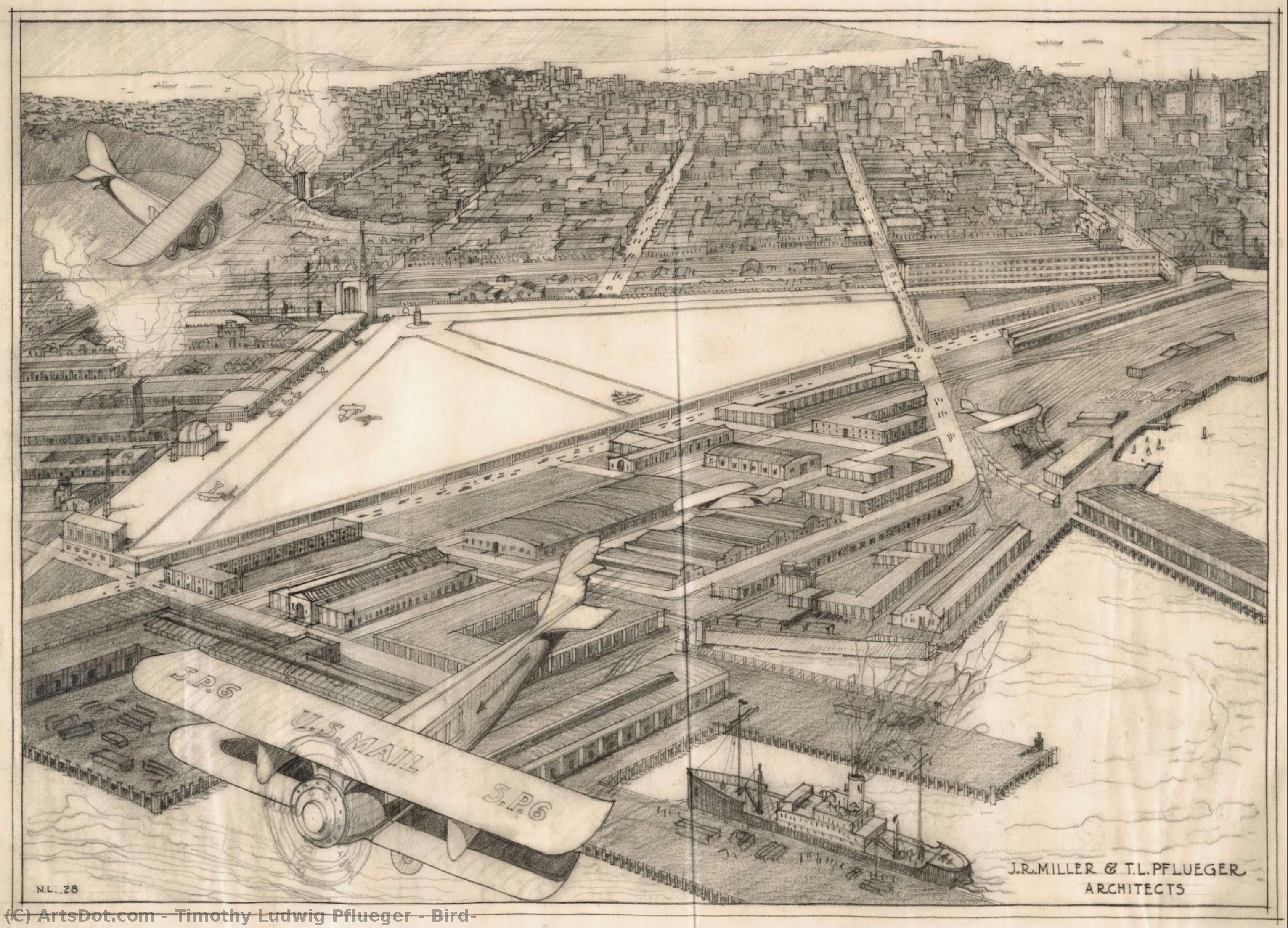
Timothy Ludwig Pflueger's "Bird," painted in the mid-1920s during a pivotal era of San Francisco’s architectural and artistic blossoming, is more than just a depiction of an aircraft; it’s a vibrant encapsulation of optimism and technological advancement. Pflueger, a visionary architect deeply involved in shaping the city's skyline and interior spaces – from the opulent Mark Hopkins Hotel to the iconic Castro Theatre – captured a moment of exhilarating progress, reflecting the burgeoning belief in speed, modernity, and the boundless possibilities of the future. The painting isn’t merely about machines; it’s about the *feeling* of flight, the dream of conquering the skies that gripped a generation.
The Artist and His Time
Born in 1892 amidst the recovering energy of San Francisco following the devastating earthquake and fire of 1906, Pflueger’s trajectory was remarkably unconventional for an architect. He eschewed formal education, instead learning through hands-on experience as a draftsman, absorbing the practicalities of construction and design within Miller & Colmesnil. This apprenticeship instilled in him a deep understanding of materials and a keen eye for detail – qualities that would become hallmarks of his distinctive style. The 1920s were a period of dramatic transformation in San Francisco; Art Deco’s geometric elegance, combined with the streamlined aesthetic of Streamline Moderne, dominated architectural expression. Pflueger skillfully blended these influences, creating designs that were both sophisticated and undeniably forward-looking.
A Study in Movement and Light
The painting itself is a masterclass in capturing dynamic movement. Pflueger’s technique employs loose, expressive brushstrokes to convey the speed and energy of the aircraft soaring through the air. The planes are not rendered with photographic precision but rather as suggestions of form, their outlines blurred by motion. Notice how he utilizes varying shades of grey and white – a deliberate choice that emphasizes the play of light and shadow, creating an illusion of depth and volume. The background is deliberately atmospheric, suggesting a vast expanse of sky punctuated by the distant silhouettes of buildings, grounding the scene in a recognizable urban landscape. The artist’s use of perspective draws the viewer's eye upwards, mirroring the upward trajectory of the aircraft.
Symbolism and the Spirit of an Age
"Bird" is deeply intertwined with the symbolism of its time. The rise of aviation represented a fundamental shift in human experience – a liberation from earthly constraints and a promise of unprecedented connectivity. The painting embodies this spirit of exploration and ambition, reflecting the optimism that characterized the 1920s. Furthermore, Pflueger’s inclusion of automobiles on the ground below subtly acknowledges the interconnectedness of transportation systems—a testament to the era's fascination with technological integration. The bird itself, a universally recognized symbol of freedom and aspiration, serves as a potent metaphor for the boundless possibilities offered by this new age of flight.
This reproduction offers a beautiful window into a transformative period in San Francisco’s history and the visionary work of Timothy Ludwig Pflueger. It's an ideal addition to any collection, bringing a touch of Art Deco elegance and the spirit of innovation to your home or office.


 წინასწარი ნახვა
 შეიძინეთ ხელით შესრულებული ნახატი
 გაგზავნა
 გაზიარება
 დეტალები

 ჩამოტვირთვა
 მსგავსები
 რენტგენოგრაფიული კვლევა
 სლაიდშოუ


 გადასართად დაწვრილებით ნახეთ






































 მინის ჩარჩოს არჩევანი ხელმისაწვდომია მხოლოდ 110 სმ-ზე ნაკლები ზომისთვის



