

 보내기
보내기 공유하기
공유하기
 상세 보기
상세 보기 가이드 보기

 이미지 다운로드
 유사 작품 더 보기
 슬라이드 쇼 보기
 통계 정보
통계 정보Works from Juazeiro do Norte


Intricate wooden carvings inspired by Brazilian ex-voto traditions showcase Ai Weiwei's powerful social commentary through folk art craftsmanship, inviting you to explore this unique collection of contemporary sculpture.
 상세 보기
상세 보기
Explore Ai Weiwei's powerful sculptures & photography tackling social issues & political commentary. A vital voice in Chinese art, challenging norms & sparking global dialogue.
이 페이지에 표시된 작품은 저작권법의 보호를 받으며, 이에 따라 동일한 복제품을 제작하거나 판매하는 것은 법으로 금지되어 있습니다. 이러한 권리 보호는 다음과 같은 국제 협약에 따라 시행됩니다. 베른 협약 또한 다음에서 명시하는 법률을 포함한 국내법에 의해 보호됩니다. 미국 저작권법 제17조.
이 방식은 저작권 보호를 받는 예술 작품을 복제하거나 그대로 재현하는 것이 아니기에 저작권 규정을 완벽히 준수합니다. 대신, 이는 창의적인 재해석의 과정을 거칩니다. 즉, 원작에서 영감을 받되 원작과 동일하지 않은 새로운 회화 작품을 의미합니다.
지클레 / 아트 프린트
빠른 제작과 다양한 마감 옵션을 선택할 수 있는 박물관 수준의 지클레이 및 캔버스 프린트. ( 수작업 채색 복제본 주문하기 디지털 이미지 판매 채널로 전환)




































표준 규격
맞춤 제작
CM
INCH
작품의 원본 비율을 그대로 유지하는 프리셋 사이즈 중에서 선택해 보세요.
Loading sizes...

가로 너비
높이
액자나 벽면 크기에 맞춰 필요한 가로와 세로 길이를 입력해 주세요. 프린트는 원본 이미지보다 크게 제작할 수 없으며 오직 자르는 것만 가능하므로, 비율이 다른 사이즈를 선택할 경우 이미지의 일부가 잘려 나갈 수 있습니다. 인쇄 작업에 들어가기 전, 최종 확인을 위해 디지털 목업을 보내드립니다. 이 페이지에 표시된 이미지는 실제 잘리는 영역을 나타내지 않으며, 오직 목업을 통해서만 정확한 확인이 가능합니다.


 유리 옵션은 110cm 미만 크기에서만 선택 가능합니다.

Works from Juazeiro do Norte
지클레 / 아트 프린트
복제본 규격
-


총 결제 금액
₩ 94434
A Sacred Dialogue in Wood: The Soul of Juazeiro do Norte
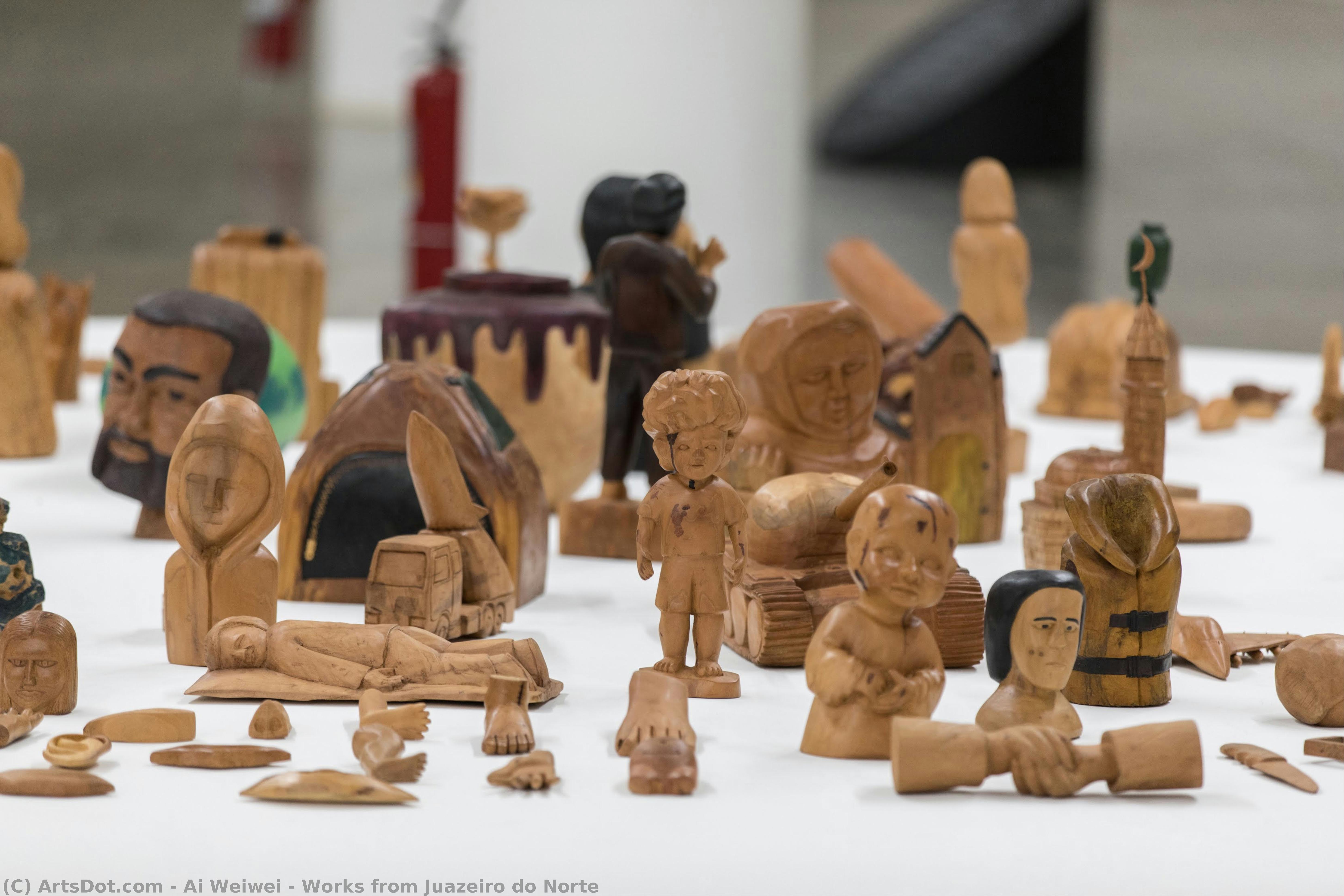
In the quiet, rhythmic dance of a chisel against grain, one finds the profound intersection of global activism and local devotion. Works from Juazeiro do Norte is not merely a collection of sculptures; it is a living tapestry of faith, memory, and social commentary. Created in 2018 through a soulful collaboration between the world-renowned contemporary artist Ai Weiwei and the skilled artisans of a community in Brazil, these wooden carvings breathe with the spirit of the ex-voto. Traditionally, an ex-voto is a physical manifestation of a promise—a token of gratitude left at the feet of a saint to mark a miracle received or a prayer answered. In this collection, the wood carries more than just the artist's vision; it carries the collective heartbeat of a community practicing their ancestral language of devotion.
The aesthetic of these pieces is deeply rooted in the folk traditions of Brazil, yet they are infused with the subversive, conceptual brilliance that defines Ai Weiwei’s oeuvre. As one gazes upon the intricate carvings, there is a sense of finding familiar ghosts within the grain. The artisans have freely interpreted elements from the artist's broader body of work—transforming icons like the Coca-Cola Vase and the Tree into tactile, wooden offerings. This metamorphosis from industrial or conceptual symbols into organic, hand-carved talismans creates a mesmerizing tension between the globalized modern world and the timeless sanctity of folk art.
Symbolism and the Weight of Human Experience
Beyond their physical beauty, these carvings serve as profound vessels for contemporary narrative. The collection moves fluidly between the whimsical and the harrowing, mirroring the complexities of our current era. Within the arrangement of figures and objects, one might encounter the playful silhouette of an alpaca or the sharp, provocative imagery of a Leg Gun, alongside much more somber reflections on the global refugee crisis and the fragility of the human body. Each piece acts as a miniature monument to resilience. By utilizing the language of religious offerings, Ai Weiwei elevates contemporary political struggles to the level of the sacred, demanding that the viewer witness the plight of the displaced and the marginalized with the same reverence one would accord to a saint.
The technique employed here is a testament to the mastery of the Juazeiro do Norte artisans. The wood is worked with an intimacy that reveals every notch and texture, creating a surface that invites touch and contemplation. There is no separation between the hand of the maker and the intent of the artist; they are unified in a singular pursuit of expression. This synergy results in a collection where the medium—wood—is as much a character as the subjects themselves, representing growth, endurance, and the deep-seated roots of human culture.
An Evocative Addition to the Modern Interior
For the discerning collector or interior designer, Works from Juazeiro do Norte offers an unparalleled opportunity to integrate art that possesses both intellectual depth and tactile warmth. These pieces are far more than decorative objects; they are conversation starters that bridge the gap between high contemporary art and soulful craftsmanship. In a curated space, these carvings provide a grounding element, offering a sense of history and human connection that mass-produced decor can never replicate.
Whether displayed as part of a larger sculptural installation or as singular focal points within a minimalist setting, these reproductions capture the essence of Ai Weiwei’s transformative vision. They bring an atmosphere of profound storytelling into the home, inviting guests to linger over the details and reflect on the universal themes of gratitude, struggle, and the enduring power of the human spirit. To possess such a work is to hold a fragment of a global dialogue, rendered in the humble, eternal medium of carved wood.
질의응답
"Works from Juazeiro do Norte"은(는) Ai Weiwei의 다른 작품들과 어떤 공통점을 지니고 있나요?
"Works from Juazeiro do Norte"은(는) Ai Weiwei의 다른 작품들과 마찬가지로 Contemporary Art 양식과 더불어 brazilian ex-voto tradition, traditional votive offerings, social and political critique, global refugee crisis themes, collaborative artisan craftsmanship라는 작가의 반복되는 주제 의식을 공유합니다.
2018년에 "Works from Juazeiro do Norte"을(를) 제작할 당시 Ai Weiwei의 나이는 몇 세였나요?
Ai Weiwei은(는) 61세에 "Works from Juazeiro do Norte"을(를) 제작했습니다. 작가는 1957년에 태어났으며, 이 작품의 제작 연도는 2018년입니다.
Ai Weiwei의 "Works from Juazeiro do Norte"은(는) 무엇을 묘사하고 있으며, 어떤 분위기를 담고 있나요?
Ai Weiwei의 "Works from Juazeiro do Norte"은(는) Earthy한 분위기 속에서 wood carving, ex-votos, social critique, brazilian artisans, religious devotion, contemporary art을(를) 묘사합니다. 작품의 주제와 분위기가 어우러져 하나의 완성된 세계를 보여줍니다.
작가 소개
A Voice for Contemporary China
Ai Weiwei, born in Beijing in 1957, stands as one of the most recognizable and controversial figures in contemporary Chinese art. His upbringing amidst the stark realities of rural northwest China—marked by his father’s exile under Mao Zedong’s regime—shaped his worldview and fueled a lifelong commitment to artistic expression as a vehicle for social critique. From an early age, Weiwei demonstrated an innate fascination with sculpture and design, honing his skills through formal education at Tsinghua University before embarking on a career that would propel him into the global spotlight. His life has been a continuous dialogue between the personal and the political, where the boundaries of art and activism are perpetually blurred.
Weiwei’s initial artistic endeavors focused on minimalist sculptural forms—often utilizing industrial materials like steel and concrete—reflecting a deliberate rejection of traditional Chinese aesthetics. This stylistic choice was not merely aesthetic; it symbolized his desire to challenge established conventions and forge his own path within the evolving landscape of Chinese art. Influenced by the conceptual rigor of artists such as Donald Judd and Sol LeWitt, he embraced principles that prioritized ideas over visual ornamentation. His early works explored themes of fragmentation and repetition, mirroring deep-seated anxieties about societal uniformity and governmental control—a preoccupation that would become the heartbeat of his entire artistic practice.
The Intersection of Art and Activism
The trajectory of Weiwei’s career shifted dramatically in the late 1990s as he began engaging in activism against corruption within China's education system. This transformation was catalyzed by the devastating "Tofu Dreg Schools" scandal, where a massive earthquake exposed systemic negligence and bribery in school construction. Galvanized by this tragedy, Weiwei utilized his artistic platform to expose injustices and amplify marginalized voices, turning his studio into a site of investigation and protest. His work transitioned from purely formal explorations into profound social investigations, often involving the collection of data, names, and evidence to hold power to account.
This period marked the rise of his monumental installations that command global attention. One of his most iconic achievements, Sunflower Seeds (2010), featured millions of handcrafted porcelain seeds spread across the floor of the Tate Modern. This work served as a powerful metaphor for the relationship between the individual and the masses, reflecting on themes of mass production, Chinese craftsmanship, and the weight of history. Through such large-scale installations, he forces the viewer to confront the sheer scale of human existence and the fragility of the individual within a vast, often indifferent, political machine.
Legacy and Global Significance
Beyond his physical sculptures, Ai Weiwei has mastered the use of photography and digital media to document contemporary struggles. His ability to weave together the personal narrative with global crises—such as the refugee crisis or the erosion of freedom of speech—has cemented his status as a global icon of resistance. His work does not merely exist in galleries; it exists in the streets, on social media, and in the very conscience of the international community.
The historical significance of Ai Weiwei lies in his refusal to remain silent. His career serves as a testament to the power of the artist as a witness. Through his diverse body of work, we see:
- A profound exploration of materiality and its connection to cultural heritage.
- The use of conceptual art to challenge political censorship and corruption.
- A relentless pursuit of transparency in an era of information control.
- The transformation of social protest into a high-art aesthetic experience.

Ai Weiwei
1957 - , China
작가 정보 요약
- Full Name: Ai Weiwei
- Nationality: Chinese
- Date Of Birth: 1957
- Place Of Birth: Beijing, China
- Notable Artworks:
- Swatter
- Camera with Plint
- Artistic Movement Or Style: Contemporary Art
- Artists Or Movements Influenced By This Artist: ['Minimalism']
관련 기사

The Soul of the Carved Line: Discovering the Timeless Magic of Japanese Woodblock Prints
Embark on a cultural journey through the delicate beauty of Japanese woodblock prints. Explore the mastery of Ukiyo-e, from Hokusai's dramatic lines to Obata's serene designs, and discover the enduring soul of this timeless art form for the discerning collector.

The Soul of the Grain: Discovering the Timeless Beauty and Artistic Legacy of Woodcut Art
Explore the profound beauty of woodcut art. From ancient traditions to modern mastery, discover the tactile soul of relief printing and its enduring legacy in fine art collections.