
 PaintingContemporary Realism
 1992Modern
 36.0 x 45.0 cm
 Pinacoteca Universidad de Colima
빠른 제작과 다양한 마감 옵션을 제공하는 박물관 품질의 지클레이 또는 캔버스 프린트. ( 손으로 그린 그림 구매 이미지 구매)





























작품의 원본 비율을 유지하는 미리 설정된 크기 중에서 선택하세요.

특정 프레임이나 공간에 맞춰 직접 치수를 입력하실 수 있습니다. 선택하신 사이즈가 원본 이미지의 비율과 일치하지 않을 경우, 작품을 크롭(자르기)하거나 이미지를 대칭 또는 단색 채우기로 확장하여 제작합니다. 제작 시작 전, 최종 확인을 위해 디지털 목업이 전송됩니다.
화면상의 미리보기는 실제 크롭이나 확장 상태를 반영하지 않으므로, 최종 구도는 오직 목업을 통해서만 정확하게 확인하실 수 있습니다.
맞춤 사이즈 제작도 가능하지만, 원본 비율을 유지하기 위해서는 사전 정의된 목록에서 치수를 선택하시는 것을 권장합니다.

Lumberjack
복제본 크기
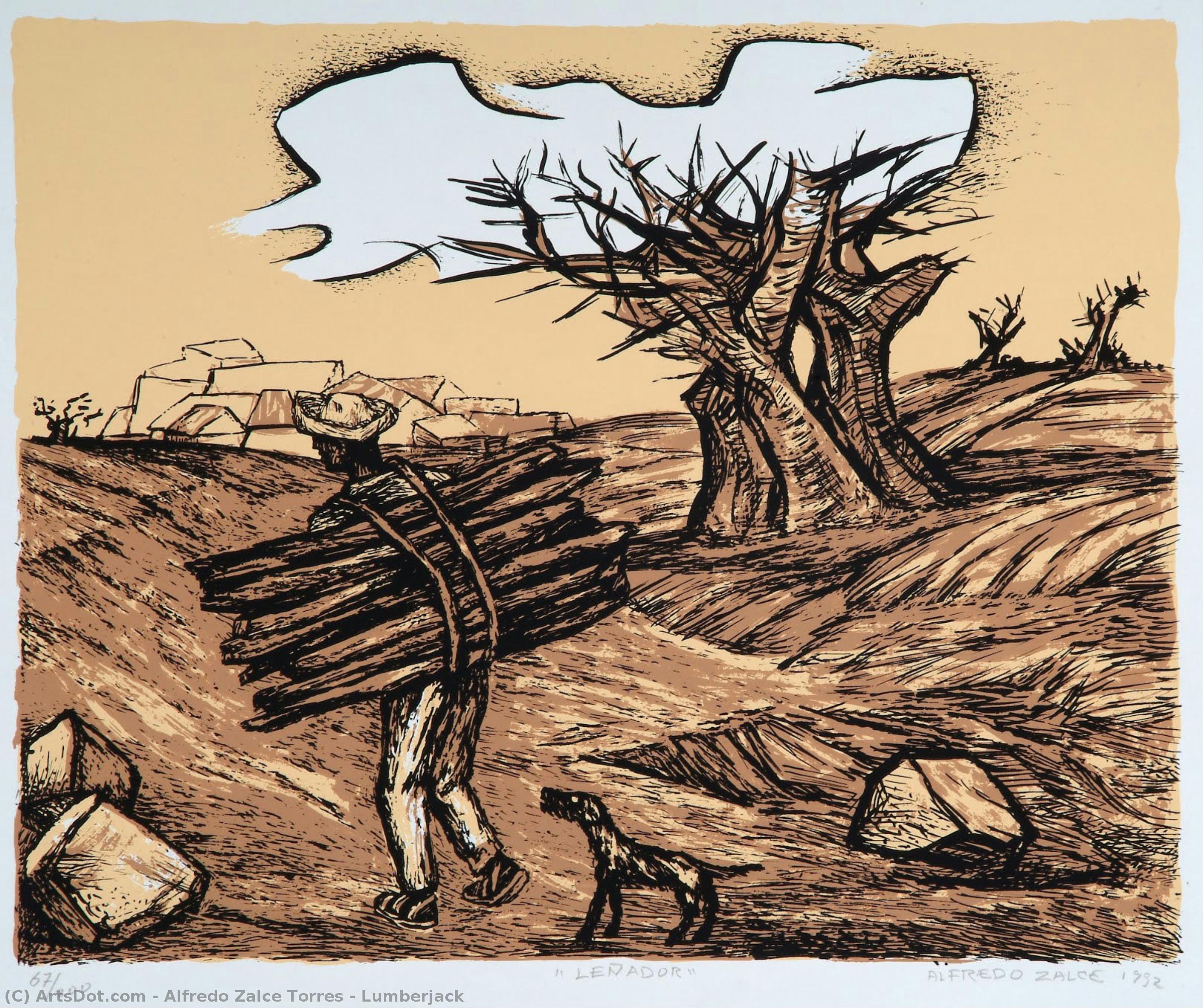
In the evocative painting Lumberjack, the legendary Mexican master Alfredo Zalce Torres invites us into a serene yet profound moment of pastoral life. The scene unfolds with a quiet dignity, capturing a solitary man navigating a sun-drenched field, his back burdened by a heavy load of wood. This is not merely a depiction of manual labor; it is a soulful meditation on the relationship between humanity and the earth. As the figure moves through the landscape, accompanied by the faithful presence of a dog, the viewer is transported to a timeless era where the rhythms of life were dictated by the seasons and the physical demands of the land. The composition breathes with the stillness of the countryside, offering a window into a world that feels both intimately familiar and nostalgically distant.
The technique employed by Zalce Torres in this 1992 work showcases his masterful ability to blend traditional Mexican themes with a sophisticated modern sensibility. Through deliberate brushwork and a rich, earthy palette, he constructs a landscape that feels tactile and alive. The interplay of light across the wooden planks and the textured field creates a sense of depth that draws the eye inward, toward the heart of the worker's journey. His mastery of form allows the weight of the lumber to feel palpable, emphasizing the physical reality of the subject's toil, while the soft integration of the background trees provides a protective, natural embrace around the central figure.
Beyond its surface beauty, Lumberjack carries the weight of Zalce Torres’s deep-seated commitment to social commentary and the celebration of everyday existence. As a contemporary of the great muralists, Torres possessed a unique ability to elevate the mundane to the monumental. The lumberjack serves as a symbol of resilience and the enduring strength of the working class—a theme that resonates deeply within the history of Mexican art. The presence of the dog adds a layer of companionship and domesticity, softening the ruggedness of the labor with a sense of peace and continuity. Every element, from the scattered pieces of wood to the distant treeline, contributes to a narrative of survival, purpose, and a harmonious coexistence with nature.
For the discerning collector or interior designer, this piece offers more than just aesthetic appeal; it provides an emotional anchor for any space. The painting’s ability to evoke feelings of tranquility, respect, and nostalgia makes it a versatile masterpiece for high-end decor. Whether placed in a quiet study, a sophisticated gallery, or a contemporary living area, Lumberjack serves as a conversation piece that honors the dignity of human effort. Owning a reproduction of this caliber allows one to bring a fragment of Mexico’s rich artistic heritage and the profound, quiet strength of the rural spirit into the modern home.
Born amidst the vibrant cultural landscape of Patzcuaro, Mexico, on January 12, 1908, Alfredo Zalce Torres emerged as a vital voice in the tapestry of twentieth-century Latin American art. His life, which spanned nearly a century until his passing in 2003, was defined by an unwavering commitment to capturing the pulse of his nation. As a contemporary of the legendary muralists such as Diego Rivera and David Alfaro Siqueiros, Zalce Torres did not merely observe the social shifts of his era; he translated them into a visual language that blended profound social criticism with an exquisite mastery of form. His work serves as a bridge between the ancient traditions of Mexico and the experimental frontiers of modernism.
The artistic evolution of Zalce Torres was marked by a restless curiosity and a desire to expand the boundaries of what art could be. While he was a versatile master—working with equal dexterity as a painter, sculptor, and engraver—he is perhaps most celebrated for his pioneering spirit in medium experimentation. He holds a unique place in art history as the first artist to utilize colored cement as a medium for modern art, a technique that allowed him to bring a tactile, architectural permanence to his visions. This innovation reflected his broader artistic philosophy: an attempt to ground the ephemeral struggles of human life in something as enduring and elemental as stone and pigment.
The essence of Zalce Torres's oeuvre lies in its ability to find the monumental within the mundane. His compositions often focused on the dignity of the working class and the quiet, powerful rhythms of Mexican daily existence. Through his lens, the struggles of the braceros—laborers seeking contracts in the United States—were transformed into poignant narratives of hope and hardship. In works such as Tintoreras, one can witness his ability to capture the atmospheric essence of coastal life, blending a sense of realism with a modern, stylized aesthetic that speaks to the collective Mexican identity.
His approach was deeply rooted in the tradition of social realism, yet he avoided the trap of mere propaganda. Instead, his art functioned as a mirror to society, utilizing both traditional Mexican themes and avant-garde techniques to provoke thought and empathy. This duality allowed him to engage with the political tensions of his time while maintaining a high level of aesthetic sophistication that resonated far beyond the borders of Mexico.
The profound impact of Zalce Torres's contributions to the cultural heritage of Mexico was formally recognized in 2001 when he was honored with the prestigious Premio Nacional de Ciencias y Artes. This award stands as a testament to a lifetime of dedication to the arts and his role in shaping the visual identity of a nation. His works continue to inspire scholars and art lovers alike, preserved within esteemed institutions that safeguard the history of Latin American expression.
Today, the legacy of Alfredo Zalce Torres can be explored through several significant collections:
Through his innovative use of materials and his unflinching gaze upon the social realities of his people, Alfredo Zalce Torres remains a cornerstone of Mexican modernism, leaving behind a body of work that continues to breathe with the life and spirit of the land that inspired it.

1908 - 2003 , Mexico

Explore the world of Grant Wood & American Regionalism with TopImpressionists. Discover the symbolism behind 'American Gothic', recurring themes, and the movement's lasting impact on art history. High-quality reproductions available.

Explore the revolutionary murals of Diego Rivera and his profound impact on Mexican art & identity. Discover his techniques, iconic works like 'Man at the Crossroads,' and lasting legacy with TopImpressionists.

Explore the powerful world of Mexican muralism! Discover Diego Rivera, Frida Kahlo & Orozco's revolutionary art, social impact & lasting legacy. Expert insights & high-quality reproductions at TopImpressionists.

Explore 10 famous paintings bathed in rich 'burly wood' tones! Discover masterpieces by Rembrandt, Van Gogh & more. Learn their stories and find museum-quality art reproductions for your home at TopImpressionists.com.

Embark on a visual journey through the soul of Mexican art. Explore the profound legacy of muralism, folk traditions, and revolutionary masters like Rivera and Orozco in this deep cultural exploration of color, symbolism, and identity.


최신 미술 뉴스, 특별 혜택 및 인테리어 아이디어를 가장 먼저 만나보세요.
프로젝트에 대해 알려주시면 저희 미술 전문가들이 맞춤형 아트 제안 3가지를 전달해 드립니다.
당신만을 위한 맞춤형 옵션 3가지를 무료로 추천해 드립니다!

 미리보기
미리보기
 공유하기
공유하기 공유하기
공유하기
 상세 정보
상세 정보

 다운로드
다운로드
 유사 작품
유사 작품 X-레이
X-레이 슬라이드 쇼
 더 보기
더 보기









 유리 옵션은 110cm 미만 크기에서만 선택 가능합니다.


