
빠른 제작과 다양한 마감 옵션을 제공하는 박물관 품질의 지클레이 또는 캔버스 프린트. ( 손으로 그린 그림 구매 이미지 구매)





























작품의 원본 비율을 유지하는 미리 설정된 크기 중에서 선택하세요.

특정 프레임이나 공간에 맞춰 직접 치수를 입력하실 수 있습니다. 선택하신 사이즈가 원본 이미지의 비율과 일치하지 않을 경우, 작품을 크롭(자르기)하거나 이미지를 대칭 또는 단색 채우기로 확장하여 제작합니다. 제작 시작 전, 최종 확인을 위해 디지털 목업이 전송됩니다.
화면상의 미리보기는 실제 크롭이나 확장 상태를 반영하지 않으므로, 최종 구도는 오직 목업을 통해서만 정확하게 확인하실 수 있습니다.
맞춤 사이즈 제작도 가능하지만, 원본 비율을 유지하기 위해서는 사전 정의된 목록에서 치수를 선택하시는 것을 권장합니다.

Asanka Manjula May - Pathok
복제본 크기
Born in Harlem, New York City in 1960, Jean-Michel Basquiat’s life was a whirlwind of artistic experimentation, social commentary, and tragically premature death. His journey from the streets of Manhattan to international acclaim is a testament to his raw talent, relentless drive, and the potent confluence of influences that shaped his distinctive visual language. Basquiat's work wasn't simply about painting; it was an urgent dialogue with American society, grappling with issues of race, class, power, and identity within the vibrant, often chaotic landscape of 1980s New York.
Early influences were deeply rooted in his surroundings. Growing up in a predominantly Black neighborhood, Basquiat witnessed firsthand the inequalities and struggles faced by his community. This experience fueled a critical perspective that permeated his art. He was also profoundly impacted by graffiti culture – a world of vibrant tags, wild styles, and rebellious expression that he initially engaged with through the duo SAMO (Screw Attack Magic Operation) alongside Al Diaz. Together, they created enigmatic epigrams sprayed across Lower East Side walls, challenging established artistic norms and injecting social critique into the urban fabric. This early collaboration provided Basquiat with invaluable experience in street art techniques and a crucial understanding of how to communicate directly with a public audience.
By the early 1980s, Basquiat transitioned from SAMO to working as a solo artist, developing a highly distinctive style that quickly garnered attention. He embraced neo-expressionism, a movement characterized by its rejection of minimalist abstraction and return to figurative painting with raw emotion and subjective experience. His canvases became a chaotic yet compelling blend of text, symbols, and imagery – skulls, crowns, hands, and anatomical fragments—often referencing historical figures, cultural references, and personal reflections.
His work frequently explored themes of race, poverty, and the American Dream. Pieces like *Irony of Negro Policeman* (1981) directly confronted issues of racial injustice within the police force, while *Defacement* (1983), depicting a portrait of Michael Stewart—a young Black man killed by a white police officer—became an iconic symbol of protest and social outrage. Basquiat’s use of text was particularly significant; he incorporated words, phrases, and names directly onto his canvases, creating layers of meaning that demanded active engagement from the viewer.
Despite his rapid ascent to fame, Basquiat’s life was tragically cut short at the age of 27 in August 1988 due to a heroin overdose. His death shocked the art world and left behind an unfinished body of work that continues to be studied and celebrated today.
In the years following his death, Basquiat’s paintings have steadily increased in value, becoming some of the most sought-after and expensive works by any artist of his generation. His legacy extends far beyond the art market; he remains a powerful symbol of artistic rebellion, social critique, and the enduring power of raw emotion.
Jean-Michel Basquiat’s impact on contemporary art is undeniable. He challenged conventional notions of what constituted “art” and demonstrated the potential for visual language to be a vehicle for social commentary and personal expression. His work continues to resonate with audiences today, prompting reflection on issues of race, inequality, and the complexities of the human experience.
His influence can be seen in the work of countless artists who followed in his footsteps, and his paintings remain powerful testaments to the transformative potential of art as a force for change. The retrospective exhibitions at the Whitney Museum of American Art (1992) and other major institutions have solidified his place as one of the most important and influential artists of the late 20th century.

1981 - , Sri Lanka

Explore 10 iconic paintings where dark olive green reigns supreme! From Van Gogh to Rembrandt, discover art history's most captivating masterpieces & the stories behind them. Find museum-quality reproductions and curated decor ideas at .

Immerse yourself in the captivating world of slate blue! Explore 10 iconic paintings by Monet, Van Gogh & Renoir. Discover their stories, techniques & find museum-quality art reproductions for your home at .

Explore the rich history & symbolism of green in art! Discover iconic paintings, techniques, and how to bring verdant harmony into your home with TopImpressionists's expert guide.

Explore 10 famous paintings where 'Chrome Green' reigns supreme! Discover Monet, Manet & Van Gogh’s masterpieces. Learn the stories behind these iconic artworks and find museum-quality art reproductions for your home at .
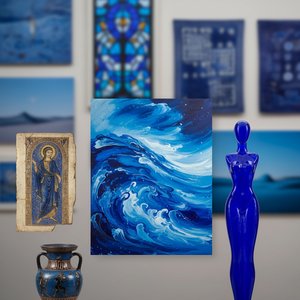
Explore the rich history of blue in art! Discover its symbolism, from ancient pigments to modern masterpieces by Kandinsky & Seurat. Uncover the psychological impact and cultural meanings behind this captivating hue.


최신 미술 뉴스, 특별 혜택 및 인테리어 아이디어를 가장 먼저 만나보세요.
프로젝트에 대해 알려주시면 저희 미술 전문가들이 맞춤형 아트 제안 3가지를 전달해 드립니다.
당신만을 위한 맞춤형 옵션 3가지를 무료로 추천해 드립니다!


 미리보기
미리보기
 공유하기
공유하기 공유하기
공유하기
 상세 정보
상세 정보

 다운로드
다운로드
 유사 작품
유사 작품 X-레이
X-레이 슬라이드 쇼


 더 보기
더 보기









 유리 옵션은 110cm 미만 크기에서만 선택 가능합니다.


