


 실제 크기로 보기
 보내기
보내기 공유하기
공유하기
 상세 보기
상세 보기 가이드 보기

 이미지 다운로드
 유사 작품 더 보기
 X-레이
X-레이 슬라이드 쇼 보기
 통계 정보
통계 정보Riverside Town
 Impressionism
 1926
1926 48.0 x 54.0 cm
Discover "Riverside Town" by Bertram Nicholls – a captivating impressionist painting of a tranquil riverside scene. Explore its warm colors & serene atmosphere. #art #impressionism #landscapepainting
Explore the evocative landscapes of Bertram Nicholls’ paintings – Italian coastal scenes & British countryside. Capturing light & atmosphere, his works showcase a unique artistic vision.
 상세 보기
상세 보기
이 페이지에 표시된 작품은 저작권법의 보호를 받으며, 이에 따라 동일한 복제품을 제작하거나 판매하는 것은 법으로 금지되어 있습니다. 이러한 권리 보호는 다음과 같은 국제 협약에 따라 시행됩니다. 베른 협약 또한 다음에서 명시하는 법률을 포함한 국내법에 의해 보호됩니다. 미국 저작권법 제17조.
저희는 존중을 담은 합법적인 대안으로서, 원작에서 영감을 받은 맞춤형 수제 유화 작품을 제공합니다. 저희의 숙련된 전문 화가들은 원작의 스타일, 분위기, 예술적 정수를 면밀히 연구하여, 그 자체로 독창적인 창작물이면서도 원작과 동일한 감동을 불러일으키는 새로운 작품을 만들어냅니다.
이 방식은 저작권 보호를 받는 예술 작품을 복제하거나 그대로 재현하는 것이 아니기에 저작권 규정을 완벽히 준수합니다. 대신, 이는 창의적인 재해석의 과정을 거칩니다. 즉, 원작에서 영감을 받되 원작과 동일하지 않은 새로운 회화 작품을 의미합니다.
핸드메이드 유화 복제화
작가가 직접 캔버스에 손으로 그린 유화 작품으로, 원하는 크기와 액자로 맞춤 제작해 드립니다. ( 프린트 판매로 전환 디지털 이미지 판매 채널로 전환)




P118B ₩10

P118H ₩10

P118W ₩10

P438Z ₩10

P508JH ₩12

P508YH ₩12

P805H ₩10

P805Z ₩10

P919BZ ₩10

P919G ₩10

P919XJ ₩10

P959ZH ₩10

P968JZ ₩12

W106C ₩8

W218G ₩10

W218JH ₩8

W218Y ₩10

W307PJ ₩10

W316G ₩10

W316PJ ₩8

W316Y ₩10

W398PJ ₩8

W4111J ₩10

W500HY ₩15

W500JH ₩15

W692G ₩12

W849H ₩8

W940BG ₩15

W953PJ ₩8




표준 규격
맞춤 제작
CM
INCH
작품의 원본 비율을 그대로 유지하는 프리셋 사이즈 중에서 선택해 보세요.
Loading sizes...

가로 너비
높이
액자나 벽면 크기에 맞춰 필요한 가로와 세로 길이를 입력해 주세요. 본 작품은 수작업으로 제작되므로, 요청하신 비율에 따라 작가가 그림의 가장자리를 조금 더 넓게 그리거나 일부를 조정하여 작업할 수 있습니다. 작업 시작 전, 최종 확인을 위해 디지털 목업 이미지를 보내드립니다. 이 페이지에 표시된 이미지는 실제 결과물과 다를 수 있으며, 오직 목업 이미지만이 정확한 결과물을 보여줍니다.
변경 가능한 예시: 얼굴을 고객님의 사진으로 교체, 반려동물 추가(예: 고양이를 강아지로 변경), 배경에 숨겨진 메시지 삽입, 배경 풍경 또는 요소 변경 등
주문 완료 후 TopImpressionists.com 팀에서 상세 안내를 위해 고객님께 이메일을 보내드리며, 미리보기 시안을 함께 제공해 드립니다.
주문 완료 후 TopImpressionists.com 팀에서 상세 안내를 위해 고객님께 이메일을 보내드리며, 미리보기 시안을 함께 제공해 드립니다.


 유리 옵션은 110cm 미만 크기에서만 선택 가능합니다.

Riverside Town
재현 매체
복제본 규격
-


총 결제 금액
₩ 365651
관련 작품들


작가 소개
The Quiet Observer: The Life and Legacy of Bertram Nicholls
Born in the industrious heart of Didsbury, Manchester, on September 26th, 1883, Bertram Nicholls emerged as a painter of profound stillness and atmospheric grace. As the youngest child of William Andrews Nicholls, a local fruit merchant, and Mary Allen, his early years were rooted in the steady rhythms of Northern English life. His journey toward artistic mastery began at the Manchester Grammar School, but it was his subsequent enrollment at the prestigious Slade School of Fine Art between 1901 and 1904 that would fundamentally reshape his vision. Under the tutelage of Reginald Barber, Nicholls began to move beyond mere representation, seeking instead a deeper connection with the light and tonal harmonies that define the natural world.
The foundations of his style were laid by the giants of British art history. He drew deep inspiration from the meticulous observation found in the works of Joshua Reynolds and the landscape sensibilities of Richard Wilson. These early influences instilled in him a reverence for compositional balance and a sophisticated understanding of how light interacts with texture. His formative years were further enriched by encounters with the Staithes Group, particularly Frederick Jackson, whose commitment to plein air painting—the practice of painting directly from nature—encouraged Nicholls to capture the immediate, breathing essence of the British countryside.
A Journey Through Light and Stone
In 1904, a transformative voyage to Madrid introduced Nicholls to the profound complexities of Baroque mastery. Immersing himself in the works of Diego Velázquez, he developed an acute sensitivity to the rendering of light and the structural integrity of composition. This Spanish influence would later manifest in his ability to imbue even the most tranquil landscapes with a sense of monumental presence. Upon returning to England, Nicholls’ work began to reflect a unique synthesis of styles; he absorbed the innovative color palettes of Whistler and the atmospheric grandeur of Turner, blending them into a personal language characterized by understated beauty and quietude.
His travels across Europe provided him with an endless repertoire of subjects, from the rugged, sun-drenched architecture of Italy to the pastoral serenity of the Netherlands. In his 1926 masterpiece, Pitigliano, one can witness his ability to turn stone into memory, capturing an Italian town carved from volcanic tuff with a tactile precision that makes the ancient masonry feel almost palpable. Similarly, in works such as Washing in a Stream at Gouda (1928), he achieved a rare dissolution of boundaries between human presence and the natural world, using soft, painterly brushstrokes to evoke the misty, restorative solitude of a Dutch landscape.
The Resilience of Vision
The trajectory of Nicholls’ life was not without its interruptions by the turbulence of history. During the First World War, he served in the Kite Balloon Service of the Royal Flying Corps. This period of aerial reconnaissance offered him a unique, panoramic perspective on the landscape—a view from above that likely deepened his understanding of spatial relationships and the sweeping contours of the earth. This experience of observing the world from a detached, soaring height may have contributed to the sense of peaceful, observational distance found in his later landscapes.
Throughout his long life, which concluded in 1974, Nicholls remained dedicated to the pursuit of the "quiet landscape." His oeuvre stands as a testament to the power of subtle emotion and the enduring beauty of the everyday. Whether depicting a sun-dappled quay in Italy or a muted, impressionistic stream in Sussex, his work continues to resonate with those seeking a moment of respite. His historical significance lies in his ability to bridge the gap between the rigorous traditions of the Slade School and a modern, emotive approach to light, ensuring that his paintings remain timeless windows into a world of profound peace.

Bertram Nicholls
1883 - 1974
작가 정보 요약
- Artistic Movement Or Style: Impressionism
- Artists Or Movements Influenced By This Artist: ['Velázquez']
- Artists Who Influenced This Artist:
- Joshua Reynolds
- Richard Wilson
- Frederick Jackson
- Date Of Birth: 1883
- Date Of Death: 1974
- Full Name: Bertram Nicholls
- Nationality: British
- Notable Artworks:
- Quay in Italy
- Tredington, Warwickshire
- Ragusa
- Place Of Birth: Didsbury, Manchester
관련 기사
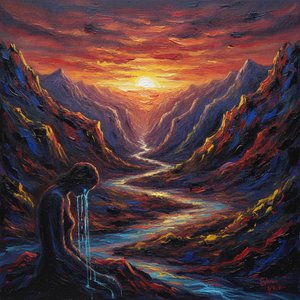
Capturing Emotion: A Journey Through the Soul of Expressionist Landscapes
Explore the profound emotional depth of Expressionist landscapes. Discover how Post-Impressionist masters moved beyond light to capture the soul through vibrant color and form. A curated journey for true art lovers seeking the beauty of expressive mastery.

Beyond the Light: Capturing Raw Emotion and Subjective Vision in Post-Impressionist Landscapes
Explore the profound emotional depth of Post-Impressionist landscapes. Discover how masters like Van Gogh moved beyond light to capture raw human feeling through vibrant color and expressive texture in this expert art history retrospective.