

 미리보기
미리보기
 공유하기
공유하기 공유하기
공유하기
 상세 정보
상세 정보 가이드 보기

 다운로드
다운로드
 유사 작품 더 보기
 X-레이
X-레이 슬라이드 쇼 보기
 질의응답
질의응답 통계 정보
통계 정보Laundry Day


Charles Adams Platt’s "Laundry Day" (1884) captures rural life with loose Impressionist brushwork & impasto texture. Explore this evocative landscape painting of quiet solitude.
Charles A. Platt (1861-1933) was a leading American Renaissance architect & garden designer. Known for Neo-Georgian estates, Italianate landscapes, and blending architecture with nature. Influential designs include the Freer Gallery & Endicott House.
 더 보기
더 보기
지클레 / 아트 프린트
빠른 제작과 다양한 마감 옵션을 제공하는 박물관 수준의 지클레이 및 캔버스 프린트. ( 수작업 채색 복제본 주문하기 디지털 이미지로 전환)




































표준 규격
맞춤형
CM
INCH
작품의 원본 비율을 그대로 유지하는 프리셋 사이즈 중에서 선택해 보세요.
Loading sizes...

가로 너비
세로 길이
액자나 벽면 크기에 맞춰 필요한 가로와 세로 길이를 입력해 주세요. 프린트는 원본 이미지보다 크게 제작할 수 없으며 오직 자르는 것만 가능하므로, 비율이 다른 사이즈를 선택할 경우 이미지의 일부가 잘려 나갈 수 있습니다. 인쇄 작업에 들어가기 전, 최종 확인을 위해 디지털 목업을 보내드립니다. 이 페이지에 표시된 이미지는 실제 잘리는 영역을 나타내지 않으며, 오직 목업을 통해서만 정확한 확인이 가능합니다.


 유리 옵션은 110cm 미만 크기에서만 선택 가능합니다.

Laundry Day
지클레 / 아트 프린트
복제본 크기
-


최종 결제 금액
₩ 93734
유사한 작품들


작가 정보
Charles Adams Platt: Architect of American Gardens
Charles Adams Platt (1861-1933) stands as a pivotal figure in the development of American landscape architecture and design, a true “American Renaissance” artist who seamlessly blended architectural vision with the art of cultivating space. More than simply a gardener, Platt was an architect of experience, meticulously crafting environments that evoked a sense of tranquility, order, and sophisticated beauty – a style profoundly influential on the aesthetics of the early 20th century.
Born in New York City to Mary Elizabeth Cheney and John Henry Platt, his artistic journey began with landscape painting. Early training at the National Academy of Design and the Art Students League in New York, coupled with a formative period studying under Gustave Boulanger and Jules Joseph Lefebvre at the Académie Julian in Paris, provided him with a solid foundation in traditional techniques. However, it was his sojourn to Italy in 1892 – a trip undertaken with his brother – that irrevocably shifted his artistic perspective. Documenting extant Renaissance gardens and villas, Platt became captivated by the principles of classical design, particularly the harmonious integration of architecture and nature. This experience directly informed his later work, leading him to publish “Italian Gardens” in 1894, a seminal volume that championed the revival of these historical models.
Platt’s aesthetic evolved further through engagement with contemporary influences. He keenly observed the works of Reginald Blomfield's "The Formal Garden in England" and the garden illustrations found in *Country Life*, absorbing their emphasis on geometric precision, restrained color palettes, and a deliberate sense of formality. Crucially, Platt remained largely unaware of W.P. Tuckermann’s comprehensive “Die Gartenkunst der italienischen Renaissance-Zeit,” published in Berlin in 1884 – a significant omission that shaped his interpretation of Italian garden design.
The Rise of the Neo-Georgian Style
Platt's work is most notably associated with the development and popularization of the “Neo-Georgian” style, a distinctly American adaptation of Georgian architecture and its accompanying landscape. This style, characterized by symmetrical facades, classical detailing, and a restrained elegance, sought to evoke a sense of historical grandeur while remaining firmly rooted in contemporary sensibilities. Platt’s designs weren't merely about replicating past forms; he skillfully integrated them with carefully considered planting schemes – often incorporating elements of Italianate design – to create cohesive and harmonious environments.
His approach was deeply informed by the broader Arts and Crafts movement, emphasizing craftsmanship, natural materials, and a connection to the land. He believed that architecture should not exist in isolation but rather be inextricably linked to its surroundings, creating a symbiotic relationship between structure and landscape. This philosophy is vividly illustrated in his own garden at Cornish, New Hampshire, a meticulously planned space reflecting Beaux-Arts Neo-Georgian and Colonial Revival principles.
Notable Commissions and Architectural Achievements
Platt’s influence extended far beyond theoretical considerations; he was a prolific designer of private residences and public spaces. Among his most significant commissions are the Freer Gallery of Art in Washington, D.C., where he designed the Italianate palazzo (1918), and the Endicott House in Dedham, Massachusetts, a magnificent estate for H. Wendell Endicott (1934). His townhouse for Sara Delano Roosevelt on East 65th Street in New York City remains a landmark of architectural elegance, showcasing his mastery of proportion and detail.
His designs also included the Causeway in Washington D.C., and a manor house in Little Falls, New York, built for J. Judson Gilbert. These projects demonstrate his ability to adapt his style to diverse contexts and client needs, while consistently upholding his commitment to creating spaces of exceptional beauty and refinement. He collaborated with Ellen Biddle Shipman on planting plans, further refining the visual impact of his designs.
Legacy and Influence
Charles Adams Platt’s work profoundly shaped the landscape of American architecture and garden design in the early 20th century. His emphasis on integrating architecture and nature, coupled with his championing of Neo-Georgian aesthetics, had a lasting influence on generations of designers. His ideas are reflected in Edith Wharton's “Italian Villas and Their Gardens” (1904), which highlighted the shift away from formal lawns towards more naturalistic garden settings. Platt’s legacy continues to resonate today, reminding us of the power of thoughtful design to create spaces that inspire and uplift.
Useful Links:

Charles Adams Platt
1861 - 1933
작가 정보 요약
- Full Name: Charles Adams Platt
- Nationality: American
- Date Of Birth: 1861
- Date Of Death: 1933
- Place Of Birth: New York City, USA
- Notable Artworks:
- Laundry Day
- Rye, Sussex, England
- Artistic Movement Or Style: American Renaissance
- Artists Who Influenced This Artist:
- Stephen Parrish
- Gustave Boulanger
- Jules Lefebvre
- Artists Or Movements Influenced By This Artist:
- Reginald Blomfield
- Gertrude Jekyll
- Edith Wharton
관련 콘텐츠

Capturing the Soul of Nature: A Journey Through the Sublime Majesty of American Romanticism
Explore the breathtaking beauty of American Romanticism. Discover how Hudson River School masters captured the sublime spirit of the wilderness through luminous oil landscapes and emotional depth. A journey into the soul of nature for the true art enthusiast.

Capturing the Soul: The Most Emotionally Moving Impressionist and Post-Impressionist Masterpieces
Discover the profound emotional depth of Impressionist and Post-Impressionist masterpieces. Explore how legends like Monet, Van Gogh, and Gauguin captured light and soul through evocative landscapes and vibrant brushwork for a timeless connection to art history.
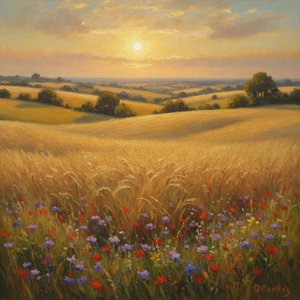
Golden Fields & Sun-Drenched Meadows: Capturing the Soul of Impressionist Landscapes
Immerse yourself in the luminous world of Impressionist landscapes. Discover how masters like Monet and Gauguin captured ephemeral light through plein air painting, and learn to bring the soul of sun-drenched meadows into your home with exquisite, hand-painted oil reproductions.