


 실제 크기로 보기
 보내기
보내기 공유하기
공유하기
 상세 보기
상세 보기 가이드 보기

 이미지 다운로드
 유사 작품 더 보기
 X-레이
X-레이 슬라이드 쇼 보기
 통계 정보
통계 정보Suit


Experience Cristóbal Balenciaga’s iconic 'Suit' (1966). A masterpiece of tailored elegance & structural precision. Discover this timeless piece from the Eizaguirre collection.
 상세 보기
상세 보기
우아하고 조각적인 디자인과 전위적인 영향력으로 알려진 혁신적인 스페인 쿠튀리에, 크리스토발 발렌시아가 에이자가레(Balenciaga)의 세계를 탐험해 보세요. 'Tree Roots'와 같은 회화 작품과 패션에 남긴 그의 영원한 유산을 만나보실 수 있습니다.
이 페이지에 표시된 작품은 저작권법의 보호를 받으며, 이에 따라 동일한 복제품을 제작하거나 판매하는 것은 법으로 금지되어 있습니다. 이러한 권리 보호는 다음과 같은 국제 협약에 따라 시행됩니다. 베른 협약 또한 다음에서 명시하는 법률을 포함한 국내법에 의해 보호됩니다. 미국 저작권법 제17조.
이 방식은 저작권 보호를 받는 예술 작품을 복제하거나 그대로 재현하는 것이 아니기에 저작권 규정을 완벽히 준수합니다. 대신, 이는 창의적인 재해석의 과정을 거칩니다. 즉, 원작에서 영감을 받되 원작과 동일하지 않은 새로운 회화 작품을 의미합니다.
지클레 / 아트 프린트
빠른 제작과 다양한 마감 옵션을 선택할 수 있는 박물관 수준의 지클레이 및 캔버스 프린트. ( 수작업 채색 복제본 주문하기 디지털 이미지 판매 채널로 전환)




P118B ₩10

P118H ₩10

P118W ₩10

P438Z ₩10

P508JH ₩12

P508YH ₩12

P805H ₩10

P805Z ₩10

P919BZ ₩10

P919G ₩10

P919XJ ₩10

P959ZH ₩10

P968JZ ₩12

W106C ₩8

W218G ₩10

W218JH ₩8

W218Y ₩10

W307PJ ₩10

W316G ₩10

W316PJ ₩8

W316Y ₩10

W398PJ ₩8

W4111J ₩10

W500HY ₩15

W500JH ₩15

W692G ₩12

W849H ₩8

W940BG ₩15

W953PJ ₩8




표준 규격
맞춤 제작
CM
INCH
작품의 원본 비율을 그대로 유지하는 프리셋 사이즈 중에서 선택해 보세요.
Loading sizes...

가로 너비
높이
액자나 벽면 크기에 맞춰 필요한 가로와 세로 길이를 입력해 주세요. 프린트는 원본 이미지보다 크게 제작할 수 없으며 오직 자르는 것만 가능하므로, 비율이 다른 사이즈를 선택할 경우 이미지의 일부가 잘려 나갈 수 있습니다. 인쇄 작업에 들어가기 전, 최종 확인을 위해 디지털 목업을 보내드립니다. 이 페이지에 표시된 이미지는 실제 잘리는 영역을 나타내지 않으며, 오직 목업을 통해서만 정확한 확인이 가능합니다.


 유리 옵션은 110cm 미만 크기에서만 선택 가능합니다.

Suit
지클레 / 아트 프린트
복제본 규격
-


총 결제 금액
₩ 93636
The Architectonic Elegance of Cristóbal Balenciaga’s Suit
Cristóbal Balenciaga Eizaguirre (1895 – 1972), born in Getaria, Spain, wasn't merely a fashion designer; he was an innovator who fundamentally reshaped the landscape of haute couture. Revered as “the master of us all” by Christian Dior and “the only couturier in the truest sense of the word” by Coco Chanel, Balenciaga’s legacy extends far beyond mere garments—it embodies a profound understanding of form, proportion, and material manipulation that continues to inspire designers today. His approach was rooted in an unwavering commitment to sculptural precision, prioritizing structural integrity over ornamentation, resulting in silhouettes that defied convention and captivated audiences worldwide.- Early Life & Artistic Influences: Balenciaga’s formative years were marked by exposure to Basque folklore and the avant-garde art movements of his time—particularly Surrealism and Cubism. These influences instilled within him a fascination with geometric shapes, unconventional textures, and the exploration of subconscious imagery, concepts that would permeate his artistic vision throughout his career. Notably, his painting “Tree Roots,” executed in 1950, exemplifies this preoccupation with natural forms rendered through an abstract lens—a testament to Balenciaga’s ability to distill complex ideas into striking visual representations.
- A Singular Style: Balenciaga's distinctive style was characterized by its uncompromising elegance and meticulous attention to detail. He rejected excessive embellishments, favoring instead clean lines and understated drapery that accentuated the body’s natural contours. This minimalist aesthetic wasn’t simply a stylistic choice; it reflected Balenciaga’s belief in conveying emotion through form—creating garments that communicated intention and sophistication without resorting to superfluous decoration.
- The Suit: A Statement of Form The suit, as conceived by Balenciaga, transcended its functional purpose to become an emblem of refined taste and architectural prowess. He meticulously studied the interplay between fabric and structure, utilizing techniques like pleating and draping to sculpt garments that possessed a palpable sense of movement and dynamism. Consider his 1962 masterpiece – “Suit in Black Silk & Nylon Cloque.” This design exemplifies Balenciaga’s mastery of material manipulation, transforming simple fabrics into sculptural forms that commanded attention.
Technique and Material Innovation
Balenciaga's genius lay not only in his conceptual vision but also in his technical execution. He championed innovative tailoring methods—particularly the “sack suit”—which prioritized ease of movement while maintaining a dramatic silhouette. His meticulous craftsmanship demanded an unparalleled understanding of fabric behavior, requiring him to experiment with textures like nylon cloque and silk crepe to achieve breathtaking results. The use of pleats – strategically placed to create expansive panels – was central to Balenciaga’s aesthetic, allowing him to sculpt garments that defied gravity and conveyed a sense of grandeur. This command of technique—creating decoration by the cuts—was an essential trademark of all his work.- The Sack Suit: A Revolutionary Silhouette Unlike traditional suits which emphasized rigidity and formality, Balenciaga’s sack suit embraced fluidity and comfort without sacrificing visual impact. It achieved this remarkable feat through a masterful manipulation of fabric folds—creating a voluminous drape that accentuated the torso's form while maintaining an assertive posture.
- Material Exploration: Silk Cloque & Nylon Innovation Balenciaga consistently pushed the boundaries of textile technology, incorporating materials like nylon cloque – a revolutionary fabric at the time – into his designs. This material’s ability to cling to the body and create subtle folds contributed significantly to the sculptural quality of garments such as “Suit in Black Silk & Nylon Cloque,” demonstrating Balenciaga's commitment to exploring new possibilities within haute couture.
Historical Context and Legacy
Balenciaga emerged during a period of profound artistic upheaval—the mid-20th century witnessed the rise of Surrealism, Abstract Expressionism, and Pop Art—influences that profoundly shaped his aesthetic sensibilities. He stood apart from many of his contemporaries by rejecting trends toward excessive ornamentation and prioritizing geometric precision and sculptural form. His designs resonated with audiences who craved sophistication and intellectual stimulation, establishing him as a singular voice within the fashion world. Today, Balenciaga’s influence continues to endure—his architectural silhouettes inspire designers globally, cementing his place as one of the most influential figures in couture history.Emotional Impact & Artistic Inspiration
Ultimately, Cristóbal Balenciaga's work transcends mere clothing; it communicates a profound sense of elegance, restraint, and intellectual curiosity. His suits embody a belief that beauty resides not in ostentation but in harmonious proportion—a timeless message that speaks to the enduring power of artistic vision. Collectors and interior designers alike find inspiration in Balenciaga’s uncompromising aesthetic—a testament to his ability to transform fabric into sculptural masterpieces that capture the essence of refined taste and architectural grandeur.질의응답
크리스토발 발렌시아가 에이자가기레의 "Suit"을(를) 어떤 용도로 활용하기에 좋을까요?
"Suit" 프린트의 권장 용도는 Accent입니다.
크리스토발 발렌시아가 에이자가기레의 "Suit"에서 예술 사조와 시대상은 어떻게 맞닿아 있나요?
"Suit"은(는) High Fashion / Modernist 사조에 속하며, 작가는 근대 미술 시대에 활동했습니다.
"Suit"의 색감은 강렬한 편인가요, 아니면 부드러운 편인가요?
크리스토발 발렌시아가 에이자가기레의 "Suit"은(는) Monochromatic 색채 강도를 보여줍니다.
작가 소개
생애 초기와 경력
크리스토발 발렌시아가 에이자가레(Cristóbal Balenciaga Eizaguirre)는 스페인의 전설적인 패션 디자이너로, 1895년 스페인 게타리아에서 태어났습니다. 그는 하이엔드 오트 쿠튀르의 대명사가 된 발렌시아가 브랜드를 설립한 인물로 가장 잘 알려져 있습니다. 타협하지 않는 완벽한 기준을 추구했던 그의 명성은 동료 거장들에게도 깊은 경외심을 불러일듬었으니, 크리스찬 디올은 그를 "우리 모두의 거장"이라 칭송하였고, 코코 샤넬은 그를 "진정한 의미에서의 유일한 쿠튀리에"라고 극찬하며 그의 독보적인 위상을 증명했습니다.예술적 스타일과 영향
발렌시아가의 디자인은 우아함과 단순함, 그리고 세밀한 디테일에 대한 집요한 집중력이 특징입니다. 그는 아방가르드 예술 운동으로부터 깊은 영감을 받았으며, 이는 그의 대담하고 혁신적인 디자인 속에 고스란히 투영되어 있습니다. 그의 예술적 세계를 엿볼 수 있는 주요 작품들은 다음과 같습니다:- '아가 III 연구'(Study to 'Song of Songs IV (나이브 아트 / 원시주의), 패션을 향한 그의 실험적인 접근 방식을 잘 보여주는 회화 작품입니다.
- '나무 뿌리'(Tree Roots (50 x 100 cm, 후기 인상주의, 캔버스에 유채), 자연의 본질을 포착해내는 그의 탁월한 능력을 증명하는 작품입니다.
- '곡예사'(Acrobat, 초현실주의, 캔버스에 유채), 패션의 경계를 허물고자 했던 그의 도전 정신이 돋보이는 작품입니다.
박물관 및 소장처
발렌시아가의 예술적 유산은 전 세계 다양한 박물관과 컬렉션에서 만나볼 수 있습니다:- 유럽 예술의 다채로운 컬렉션을 보유한 스페인의 아스투리아스 미술관(Museo de Bellas Artes de Asturias)
- 라틴 아메리카 예술품을 선보이는 멕시코의 안드레스 블라이스텐 컬렉션(Colección Andrés Blaisten)
- 미국 미술사의 비극적인 사건을 간직한 화재로 소실된 박물관(The Museum Destroyed by Fire)
유산과 영향력
발렌시아가가 남긴 유산은 단순히 패션 디자인의 영역에 머물지 않습니다. 그는 수많은 세대의 디자이너들에게 영감을 주었으며, 그의 작품은 시대를 초월한 우아함으로 오늘날까지도 찬사를 받고 있습니다. 크리스토발 발렌시아가 에이자가레라는 이름은 쿠튀르 세계에서 영원히 변치 않을 상징적인 인물로 기억될 것입니다.
크리스토발 발렌시아가 에이자가기레
1895 - 1972 , 스페인
작가 정보 요약
- Artistic Movement Or Style: 아방가르드 예술 / 초현실주의
- Artists Or Movements Influenced By This Artist: ['위베르 드 지방시']
- Artists Who Influenced This Artist:
- 크리스찬 디올
- 코코 샤넬
- Date Of Birth: 1895년 1월 21일
- Date Of Death: 1972년 3월 23일
- Full Name: Cristóbal Balenciaga Eizaguirre
- Nationality: 스페인
- Notable Artworks:
- '아가 IV' 연구
- 나무 뿌리
- 곡예사
- Place Of Birth: 스페인 게타리아
관련 기사

Draped Narratives: Fashion as Symbol & Subject in Historical Art
Explore the fascinating history of fashion as a symbol of power & status in art! Discover masterpieces from Gainsborough to Tissot and learn how clothing shaped societal narratives. Find museum-quality reproductions at TopImpressionists.

The Lens of Luxury: A Visual Journey Through the Evolution and Artistry of Fashion Photography
Embark on a visual journey through the evolution of fashion photography. Discover how masters like Gianfranco Ferré blended geometry, surrealism, and texture to redefine high-fashion art for collectors and connoisseurs of luxury imagery.
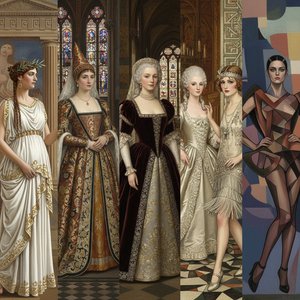
Style Through the Ages: Iconic Artworks That Defined the Evolution of Fashion Design
Explore the breathtaking intersection of fine art and high fashion. Discover how iconic masterpieces from Art Deco to Impressionism have shaped the world of luxury couture and timeless design in this curated visual journey.

Gianfranco Ferré: Deconstructing Haute Couture – A Legacy of Architectural Form
Explore the revolutionary world of Gianfranco Ferré, 'the architect of fashion.' Discover his architectural approach to haute couture, iconic Dior designs, and lasting influence on luxury style. A deep dive for collectors & enthusiasts.

Cristóbal Balenciaga: Deconstructing Haute Couture's Architectural Legacy
Explore the revolutionary world of Cristóbal Balenciaga, the 'couturier's couturier'. Discover his architectural designs, lasting influence on haute couture, and guide to collecting rare pieces. A connoisseur’s resource.

