

Shown: · With its frame:
 실제 크기로 보기
 보내기
보내기 공유하기
공유하기
 상세 보기
상세 보기 가이드 보기

 이미지 다운로드
 유사 작품 더 보기
 X-레이
X-레이 슬라이드 쇼 보기
 Q&A
Q&A 통계 정보
통계 정보

₩ 365765
핸드메이드 유화 복제화
작가가 직접 캔버스에 손으로 그린 유화 작품으로, 원하는 크기와 액자로 맞춤 제작해 드립니다. ( 프린트 판매로 전환 디지털 이미지 판매 채널로 전환)
본 작품은 저작권법의 보호를 받습니다.
이 페이지에 표시된 작품은 저작권법의 보호를 받으며, 이에 따라 동일한 복제품을 제작하거나 판매하는 것은 법으로 금지되어 있습니다. 이러한 권리 보호는 다음과 같은 국제 협약에 따라 시행됩니다. 베른 협약 또한 다음에서 명시하는 법률을 포함한 국내법에 의해 보호됩니다. 미국 저작권법 제17조.
저희는 존중을 담은 합법적인 대안으로서, 원작에서 영감을 받은 맞춤형 수제 유화 작품을 제공합니다. 저희의 숙련된 전문 화가들은 원작의 스타일, 분위기, 예술적 정수를 면밀히 연구하여, 그 자체로 독창적인 창작물이면서도 원작과 동일한 감동을 불러일으키는 새로운 작품을 만들어냅니다.
이 방식은 저작권 보호를 받는 예술 작품을 복제하거나 그대로 재현하는 것이 아니기에 저작권 규정을 완벽히 준수합니다. 대신, 이는 창의적인 재해석의 과정을 거칩니다. 즉, 원작에서 영감을 받되 원작과 동일하지 않은 새로운 회화 작품을 의미합니다.
 상세 보기
상세 보기Size
·표준 규격
맞춤 제작
CM
INCH
작품의 원본 비율을 그대로 유지하는 프리셋 사이즈 중에서 선택해 보세요.
Loading sizes...

가로 너비
높이
액자나 벽면 크기에 맞춰 필요한 가로와 세로 길이를 입력해 주세요. 본 작품은 수작업으로 제작되므로, 요청하신 비율에 따라 작가가 그림의 가장자리를 조금 더 넓게 그리거나 일부를 조정하여 작업할 수 있습니다. 작업 시작 전, 최종 확인을 위해 디지털 목업 이미지를 보내드립니다. 이 페이지에 표시된 이미지는 실제 결과물과 다를 수 있으며, 오직 목업 이미지만이 정확한 결과물을 보여줍니다.
Finish
·
White ₩1

Blurside ₩1

Extended ₩1

P118B ₩10

P118H ₩10

P118W ₩10

P438Z ₩10

P508JH ₩12

P508YH ₩12

P805H ₩10

P805Z ₩10

P919BZ ₩10

P919G ₩10

P919XJ ₩10

P959ZH ₩10

P968JZ ₩12

W106C ₩8

W218G ₩10

W218JH ₩8

W218Y ₩10

W307PJ ₩10

W316G ₩10

W316PJ ₩8

W316Y ₩10

W398PJ ₩8

W4111J ₩10

W500HY ₩15

W500JH ₩15

W692G ₩12

W849H ₩8

W940BG ₩15

W953PJ ₩8

H24-GOLD ₩30

H24-SILVER ₩30

H36-GOLD ₩45

H36-SILVER ₩45
Shipped in a protective tube, ready for your own framer.
Above 105 cm the frame is shipped as a kit for a professional framer — read the details.
Extras
optionalWhat do the extras include?
Examples of what can be changed: Replace face with customer photo; Add pet (e.g., replace cat with dog); Include hidden message in background; Change background landscape or elements.
After order, TopImpressionists.com team will email client for instructions and provide a mockup preview
After order, TopImpressionists.com team will email client for instructions and provide a mockup preview
전 세계 배송()은 표준 5주 대신 3~4주 내에 완료됩니다. (30 10월). 품질에는 어떠한 타협도 하지 않습니다.
보호용 바니시
캡션
동판 각인 상세 정보
This elegant plaque features the artist's name and the title of the artwork, finely engraved for a timeless presentation.
It is made from bronze with a refined, elegant finish. The text is precisely laser-engraved for a sharp and permanent result. Measuring 9x2 cm, the plaque is compact yet easy to read. It's built to be durable and scratch-resistant, offering a professional, museum-quality look. Mounting is simple thanks to the included adhesive backing.
투명 아크릴 명판 상세 정보
The plaque includes essential engraved details such as the artist's name, the title of the artwork, the date it was created, the type of media used-like oil on canvas or watercolor-a brief description of the piece, and a QR code that links to the complete artwork information.
It is crafted from clear acrylic, offering a sleek, modern appearance. The text is UV-engraved in black to ensure strong visual contrast. With a size of 10x15 cm, it ensures optimal readability. It comes equipped with two metal hooks for secure wall mounting. The plaque is designed to be weather-resistant, making it suitable for various environments, and it includes interactive features that work seamlessly with smartphone scanning.
블랙 아크릴 명판 상세 정보
This elegant plaque includes engraved information such as the artist's name, the title of the artwork, the date it was created, the type of media used (like oil on canvas or watercolor), a short description of the artwork, and a QR code for quick access to more information.
The plaque itself is made from refined black acrylic with a premium finish. The text is laser-engraved in white for high contrast and readability. Its size is 10x15 cm, designed to be easy to read. It comes with two metal hooks for professional mounting. The design is sleek and fits any interior style. It is also weather-resistant and durable, with built-in digital integration for mobile compatibility.
유리 옵션은 110cm 미만 크기에서만 선택 가능합니다.
 유리 옵션은 110cm 미만 크기에서만 선택 가능합니다.
- 전 세계 무료 특급 배송
- 고품질 린넨 캔버스
- 배송 전 과정 보험 적용
- 관세 환급 보장 서비스
- 원본 색상 일치 보장
- 제조 결함 발견 시 100일 이내 반품 가능
- 100% 환불 보장
- 다량 구매 할인 혜택


컬렉션 상세 정보
Edward Hopper’s evocative painting captures a poignant stillness—a solitary building bathed in muted light against a towering clock tower—reflecting the artist's signature style and capturing the mood of mid-century American realism. Explore this masterpiece and bring its quiet beauty into your home.
작가 소개
에드워드 호퍼는 미국 사실주의의 거장으로 도시 생활과 빛과 그림자의 표현력으로 유명합니다. 니하크스와 같은 상징적인 작품들을 통해 그의 예술적 유산을 탐구해보세요.
About the painting
A Study in Architectural Stillness
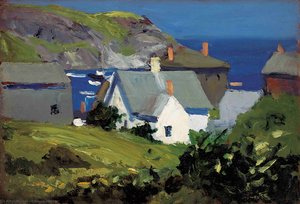
The scene presented by this painting, le pavillonde flore, immediately draws the eye into a tableau of imposing, yet strangely quiet, architecture. Dominating the composition is a grand structure, reminiscent of European civic buildings or perhaps an elaborate estate pavilion, crowned with a prominent clock tower and steeple. The facade itself speaks of permanence and measured time, emphasized by the visible clocks marking moments both central and peripheral to the main edifice. To the left, a smaller ancillary building anchors the foreground, lending a sense of lived-in reality to the grand backdrop. It is a setting that feels simultaneously public and deeply private.
The Echoes of Modern Life
What elevates this piece beyond mere architectural documentation is the subtle infusion of contemporary life into what otherwise appears to be a historical monument. The presence of a parked truck, its hood open as if awaiting inspection or repair, grounds the scene firmly in a specific, modern moment. Near this vehicle stand two figures, their posture suggesting contemplation—perhaps they are admiring the craftsmanship of the building, or perhaps they are simply pausing amidst the rhythm of daily routine. These elements—the mechanical interruption against the backdrop of enduring stone—create a fascinating dialogue between the passage of time measured by gears and hands, and the fleeting moments of human interaction.
Mastery in Light and Shadow
While the artist's hand is not explicitly named for this particular work, the overall mood resonates with the sensibilities of masters who understood the poetry inherent in light. The technique appears to favor a detailed realism, allowing the interplay of sunlight and shadow to sculpt the various planes of the buildings. One can almost feel the quality of the air—the crispness that illuminates the stonework while casting deep, contemplative shadows into recessed doorways. This careful handling of illumination is key; it prevents the grand architecture from feeling cold, instead imbuing it with a palpable sense of atmosphere.
Symbolism and Emotional Resonance
The emotional impact of le pavillonde flore lies in its masterful ambiguity. The clock tower itself serves as a potent symbol: time passing inexorably, yet the stillness captured by the brushstrokes suggests a momentary pause from that relentless march. The juxtaposition of the monumental and the mundane—the castle-like pavilion against the utilitarian truck—invites the viewer to contemplate their own place within the flow of history and daily existence. It speaks to moments of quiet observation, where grand structures meet the intimacy of human endeavor.
Bringing the Scene Home
For the collector or designer seeking a piece that anchors a space with intellectual depth, this reproduction offers more than just decoration; it offers contemplation. Imagine this scene rendered in your drawing-room or study—the solid presence of the architecture providing gravitas, while the subtle narrative elements invite conversation and reflection. It is an artwork perfect for those who appreciate the beauty found not in dramatic action, but in the quiet, enduring poetry of a well-observed moment.
질의응답
"le pavillonde flore"은 미술사적으로 어떤 위치에 있습니까?
역사적으로 "le pavillonde flore"은(는) 더 넓은 의미의 Modern 시대에 속하는 American Realism 작품입니다.
"le pavillonde flore"의 조회수는 얼마인가요?
에드워드 호퍼의 "le pavillonde flore"에 관한 통계 정보는 작품의 통계 페이지에서 확인하실 수 있습니다: 해당 작품의 월간 방문 횟수, 작가 작품의 방문 횟수, 그리고 최근 방문자의 국가 및 언어별 상세 현황을 제공합니다.
에드워드 호퍼의 "le pavillonde flore"의 프린트 제품은 어디에서 구매할 수 있나요?
에드워드 호퍼의 "le pavillonde flore"의 프린트를 구매하시려면, 해당 작품의 파인 아트 프린트 페이지에서 간단히 주문하실 수 있습니다: 코튼 캔버스 또는 아카이브용 캔버스지에 인쇄된 파인 아트 프린트.
Quick facts and art quiz
About 에드워드 호퍼

에드워드 호퍼
1931 - 1967, 미국
작가 소개
Edward Hopper: A Master of American Realism
Edward Hopper, a name inextricably linked to the quietude and subtle melancholy that permeated 20th-century American life, wasn’t simply a painter of scenes; he was a poet of light and shadow, a chronicler of modern isolation. Born in Nyack, New York, in 1882, to middle-class parents of Dutch ancestry, Hopper's early years provided a stable upbringing that nurtured his artistic inclinations. From childhood sketches meticulously dated and signed, it became evident that keen observation and an innate talent for drawing were central to his being. Though initially encouraged towards commercial illustration – a pragmatic suggestion from his parents – Hopper’s ambitions leaned toward fine art, leading him to the New York School of Art where he studied under William Merritt Chase and Robert Henri. These formative years instilled not only technical skill but also an appreciation for realism and a commitment to depicting the world as he saw it—unvarnished and honest. The writings of Ralph Waldo Emerson resonated deeply with Hopper, reinforcing his sense of individualism and acute observation – qualities that would become hallmarks of his artistic vision. Early travels to Paris exposed him to Impressionism, yet Hopper quickly diverged from its fleeting brushstrokes, forging a path uniquely his own.Early Life and Artistic Beginnings
Hopper’s formative years were marked by a quiet determination to pursue his passion for art despite familial reservations about pursuing a less lucrative profession. He demonstrated exceptional drawing skills from a young age, capturing landscapes and portraits with remarkable accuracy—a testament to his innate talent and disciplined practice. His father, George Hopper, encouraged him to develop his artistic abilities, recognizing the importance of formal training in achieving creative excellence. Josephine Nivison Hopper, his wife, became an invaluable collaborator and muse, providing inspiration for many of his paintings and embodying the idealized feminine figure that frequently appeared in his work. Their shared apartment in Nyack served as a constant backdrop to Hopper’s artistic endeavors—a space imbued with understated elegance and reflecting his meticulous attention to detail. He honed his skills through diligent studio practice, experimenting with various mediums before settling on oil paint—a choice that allowed him to achieve the tonal richness and textural complexity characteristic of his style.Realism and Influences: Embracing Impressionistic Roots
Despite rejecting Impressionism’s ephemeral qualities, Hopper's artistic sensibilities were undeniably shaped by its influence. He absorbed the lessons of Impressionist masters like Claude Monet and Pierre-Auguste Renoir, recognizing their pioneering use of light and color to convey emotion—though he ultimately rejected their stylistic conventions in favor of a more restrained approach. Robert Henri’s teachings at the New York School of Art instilled in Hopper a belief in artistic freedom and encouraged him to depict the world with uncompromising honesty. William Merritt Chase championed realism as a means of capturing psychological truth, guiding Hopper's early explorations into portraiture and landscape painting. These mentors recognized the importance of observation—a cornerstone of Hopper’s artistic vision—and urged him to strive for accuracy without sacrificing expressive power. The Symbolist poets of Baudelaire and Verlaine captivated Hopper with their exploration of darkness and melancholy—themes that would permeate his oeuvre and reflect his profound understanding of human psychology.Iconic Visions: Nighthawks and Beyond
While Hopper’s career unfolded gradually, certain works catapulted him to widespread recognition. Nighthawks (1942), arguably his most famous painting, became an instant icon of American culture. The late-night diner scene, bathed in stark fluorescent light, perfectly encapsulates the alienation and anonymity of modern urban life. The figures within are lost in their own thoughts, disconnected from one another despite their proximity—a poignant commentary on the human condition. Hopper’s meticulous rendering of light and shadow—particularly its ability to convey mood—became a defining characteristic of his style. He wasn't interested in grand historical narratives or allegorical symbolism; he focused on the mundane, elevating it through careful observation and emotional resonance. House by the Railroad (1925) exemplifies this approach—a seemingly simple composition radiating a profound sense of isolation and mystery. His printmaking, often overlooked, ran parallel to his painting, sharing similar themes and stylistic qualities, demonstrating his mastery across mediums. He possessed an extraordinary ability to capture the psychological states of his subjects, hinting at narratives without explicitly stating them.Legacy and Influence: An Enduring Artistic Voice
Edward Hopper’s influence on subsequent artists is undeniable. His unique style has inspired countless painters, including Pierre Sanford Ross, and continues to resonate with contemporary artists seeking to capture the essence of human experience. His paintings remain highly sought after by collectors and are exhibited in major museums worldwide, solidifying his place as a pivotal figure in American art history. More than just an artist, Hopper was a visual philosopher, offering profound insights into the human condition through his masterful use of light, shadow, and composition. He left behind a body of work that transcends time—a testament to his enduring artistic vision and his unwavering commitment to portraying the world as he saw it—with honesty, sensitivity, and an unforgettable aesthetic. Hopper’s legacy extends beyond the realm of art; his paintings have become iconic representations of American culture, often used to symbolize the anxieties and aspirations of the 20th century—and beyond.Quick facts about 에드워드 호퍼
- Artistic Movement Or Style: 사실주의
- Artists Who Influenced This Artist:
- 윌리엄 메리트 체이스
- 로버트 한리
- Date Of Birth: 1882년 7월 22일
- Date Of Death: 1967년 5월 15일
- Full Name: Edward Hopper
- Nationality: 미국인
- Notable Artworks:
- 나이트호크스
- 기차 옆 집
- 가스 주유소
- Place Of Birth: 뉴욕주 니악 시




에드워드 호퍼
le pavillonde flore
() ·
With its frame: · Hand-painted in oil on linen
Total