


 실제 크기로 보기
 보내기
보내기 공유하기
공유하기
 상세 보기
상세 보기 가이드 보기

 이미지 다운로드
 유사 작품 더 보기
 X-레이
X-레이 슬라이드 쇼 보기
 통계 정보
통계 정보Welsh Cottage
 Romanticism
 50.0 x 67.0 cm
 Salford Museum - Art Gallery
Discover 'Welsh Cottage' by Edward William Finley – an evocative oil landscape painting of rural Wales. Explore its impressionistic style & serene beauty, capturing a timeless scene.
Discover Edward William Finley’s evocative paintings of British landscapes & rural life. Explore scenes of everyday England – cottages, processions, cemeteries – in a distinctive style.
 상세 보기
상세 보기
이 페이지에 표시된 작품은 저작권법의 보호를 받으며, 이에 따라 동일한 복제품을 제작하거나 판매하는 것은 법으로 금지되어 있습니다. 이러한 권리 보호는 다음과 같은 국제 협약에 따라 시행됩니다. 베른 협약 또한 다음에서 명시하는 법률을 포함한 국내법에 의해 보호됩니다. 미국 저작권법 제17조.
저희는 존중을 담은 합법적인 대안으로서, 원작에서 영감을 받은 맞춤형 수제 유화 작품을 제공합니다. 저희의 숙련된 전문 화가들은 원작의 스타일, 분위기, 예술적 정수를 면밀히 연구하여, 그 자체로 독창적인 창작물이면서도 원작과 동일한 감동을 불러일으키는 새로운 작품을 만들어냅니다.
이 방식은 저작권 보호를 받는 예술 작품을 복제하거나 그대로 재현하는 것이 아니기에 저작권 규정을 완벽히 준수합니다. 대신, 이는 창의적인 재해석의 과정을 거칩니다. 즉, 원작에서 영감을 받되 원작과 동일하지 않은 새로운 회화 작품을 의미합니다.
핸드메이드 유화 복제화
작가가 직접 캔버스에 손으로 그린 유화 작품으로, 원하는 크기와 액자로 맞춤 제작해 드립니다. ( 프린트 판매로 전환 디지털 이미지 판매 채널로 전환)




































표준 규격
맞춤 제작
CM
INCH
작품의 원본 비율을 그대로 유지하는 프리셋 사이즈 중에서 선택해 보세요.
Loading sizes...

가로 너비
높이
액자나 벽면 크기에 맞춰 필요한 가로와 세로 길이를 입력해 주세요. 본 작품은 수작업으로 제작되므로, 요청하신 비율에 따라 작가가 그림의 가장자리를 조금 더 넓게 그리거나 일부를 조정하여 작업할 수 있습니다. 작업 시작 전, 최종 확인을 위해 디지털 목업 이미지를 보내드립니다. 이 페이지에 표시된 이미지는 실제 결과물과 다를 수 있으며, 오직 목업 이미지만이 정확한 결과물을 보여줍니다.
변경 가능한 예시: 얼굴을 고객님의 사진으로 교체, 반려동물 추가(예: 고양이를 강아지로 변경), 배경에 숨겨진 메시지 삽입, 배경 풍경 또는 요소 변경 등
주문 완료 후 TopImpressionists.com 팀에서 상세 안내를 위해 고객님께 이메일을 보내드리며, 미리보기 시안을 함께 제공해 드립니다.
주문 완료 후 TopImpressionists.com 팀에서 상세 안내를 위해 고객님께 이메일을 보내드리며, 미리보기 시안을 함께 제공해 드립니다.


 유리 옵션은 110cm 미만 크기에서만 선택 가능합니다.

Welsh Cottage
재현 매체
복제본 규격
-


총 결제 금액
₩ 372636
관련 작품들


작가 소개
The Visionary of Rural England: The Life and Legacy of Edward William Finley
Edward William Finley (1907–1979) remains a singular, evocative figure in the annals of British landscape painting. While many of his contemporaries sought to capture the grandeur of sweeping vistas or the drama of historical epics, Finley turned his gaze toward the quiet, the humble, and the overlooked. His work serves as a profound meditation on the essence of rural life, transforming simple cottages nestled among rolling hills, winding village processions, and the somber stillness of cemeteries into canvases imbued with deep emotion and subtle symbolism. To view a Finley landscape is to be invited into a rhythmic, bygone England, where the beauty of simplicity is elevated through an unwavering dedication to observation and a soulful connection to the land.Formative Years and the Convergence of Influences
Finley’s artistic journey began far from the misty landscapes of the British Isles. His formative years were spent in Washington, D.C., where he received a rigorous classical education that laid the foundation for his technical mastery. He honed his craft under the guidance of distinguished instructors at Howard University and the Yale School of Fine Arts, an experience that provided him with a robust understanding of both structure and light. During this period, he began to absorb the transformative influences of Impressionism and Neo-Romanticism. These movements, which prioritized the capture of fleeting atmospheric moments and emotional resonance over photographic precision, became central to his developing aesthetic. The intellectual landscape of Finley’s work was further enriched by the profound impact of John Ruskin. The writings of Ruskin, particularly regarding social justice and the necessity of moral contemplation through nature, resonated deeply with Finley’s sensibilities. This connection drew him toward the tenets of the Pre-Raphaelite Brotherhood, a movement that rejected rigid academic conventions in favor of vibrant color palettes and meticulous, reverent detail. By blending Ruskinian ethics—the idea of depicting nature with honesty and reverence—with a Pre-Raphaelite eye for texture, Finley developed a style that was uniquely his own: a delicate balance between tonal harmony and textural contrast.A Technique of Light, Texture, and Emotion
The mastery of Finley’s technique lies in his ability to manipulate light and texture to evoke specific moods. He eschewed the harshness of stark realism, preferring instead a deliberate blending of tones that could capture the soft glow of an afternoon sun or the damp, heavy atmosphere following a rainfall. His landscapes, such as the serene Welsh Cottage or the evocative After Rain, demonstrate a sophisticated use of color to suggest depth and movement. Through his brushwork, he was able to breathe life into the inanimate, making the stone of a cottage wall or the surface of a canal feel tangible and alive. His thematic repertoire often focused on the cyclical nature of life and the quiet dignity of the English countryside. His works frequently explored:- The Pastoral Ideal: Capturing the peaceful coexistence of man and nature through scenes of rural dwellings and lush parklands.
- Communal Traditions: Documenting the spirit of village life, such as the rhythmic movement found in May Day processions.
- Contemplative Solitude: Utilizing landscapes like cemeteries or quiet canal scenes to invite the viewer into moments of introspection and peace.
Historical Significance and Enduring Appeal
The historical significance of Edward William Finley lies in his ability to act as a bridge between eras. Through his paintings, he preserved the spirit of a Victorian-era sensibility within the context of the twentieth century. His work does not merely document landscapes; it preserves a way of life that was rapidly vanishing under the pressures of modernization. By focusing on the "small" moments—the texture of a path, the light hitting a village square—he created a lasting testament to the enduring power of the English landscape. Today, his paintings continue to resonate with collectors and art enthusiasts alike, offering a timeless escape into a world defined by grace, simplicity, and an exquisite reverence for the natural world.
Edward William Finley
1907 - 1979
작가 정보 요약
- Full Name: Edward William Finley
- Nationality: American
- Date Of Birth: 1907
- Date Of Death: 1979
- Place Of Birth: Dubuque, Iowa
- Notable Artworks: ['The Grapes Hotel']
- Artistic Movement Or Style: British Landscape Art
관련 기사
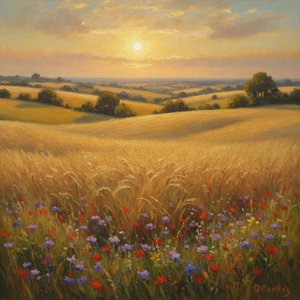
Golden Fields & Sun-Drenched Meadows: Capturing the Soul of Impressionist Landscapes
Immerse yourself in the luminous world of Impressionist landscapes. Discover how masters like Monet and Gauguin captured ephemeral light through plein air painting, and learn to bring the soul of sun-drenched meadows into your home with exquisite, hand-painted oil reproductions.

Capturing the Soul: The Most Emotionally Moving Impressionist and Post-Impressionist Masterpieces
Discover the profound emotional depth of Impressionist and Post-Impressionist masterpieces. Explore how legends like Monet, Van Gogh, and Gauguin captured light and soul through evocative landscapes and vibrant brushwork for a timeless connection to art history.

The Beauty of Impermanence: Capturing Decay through Impressionist Eyes
Explore the profound beauty of impermanence through Impressionist and Post-Impressionist eyes. Discover how masters like Monet and Van Gogh captured fleeting light and the poetic essence of nature's transitions in our deep dive into art history and emotional landscapes.

Beyond the Light: Capturing Raw Emotion and Subjective Vision in Post-Impressionist Landscapes
Explore the profound emotional depth of Post-Impressionist landscapes. Discover how masters like Van Gogh moved beyond light to capture raw human feeling through vibrant color and expressive texture in this expert art history retrospective.

The Timeless Charm of Oil on Board: Reimagining Texture and Light through the Impressionist Lens
Discover the profound intimacy of oil on panel. Explore how Impressionist masters used rigid supports to capture light, texture, and impasto depth through exquisite, handmade oil reproductions for discerning collectors.