





























작품의 원본 비율을 유지하는 미리 설정된 크기 중에서 선택하세요.

특정 프레임이나 공간에 맞도록 직접 크기를 입력할 수 있습니다. 선택하신 크기가 원본 이미지의 비율과 일치하지 않는 경우, 작품을 자르거나 추가적인 손으로 그린 요소를 사용하여 그림을 확장합니다. 제작 시작 전 승인을 위해 디지털 목업을 보내드립니다.
화면 미리 보기는 실제 자르기 또는 확장을 반영하지 않습니다. 최종 구성은 목업을 통해서만 정확하게 확인하실 수 있습니다.
맞춤 크기 제작도 가능하지만, 원본 비율을 유지하기 위해 사전 정의된 목록에서 크기를 선택하시는 것을 권장합니다.

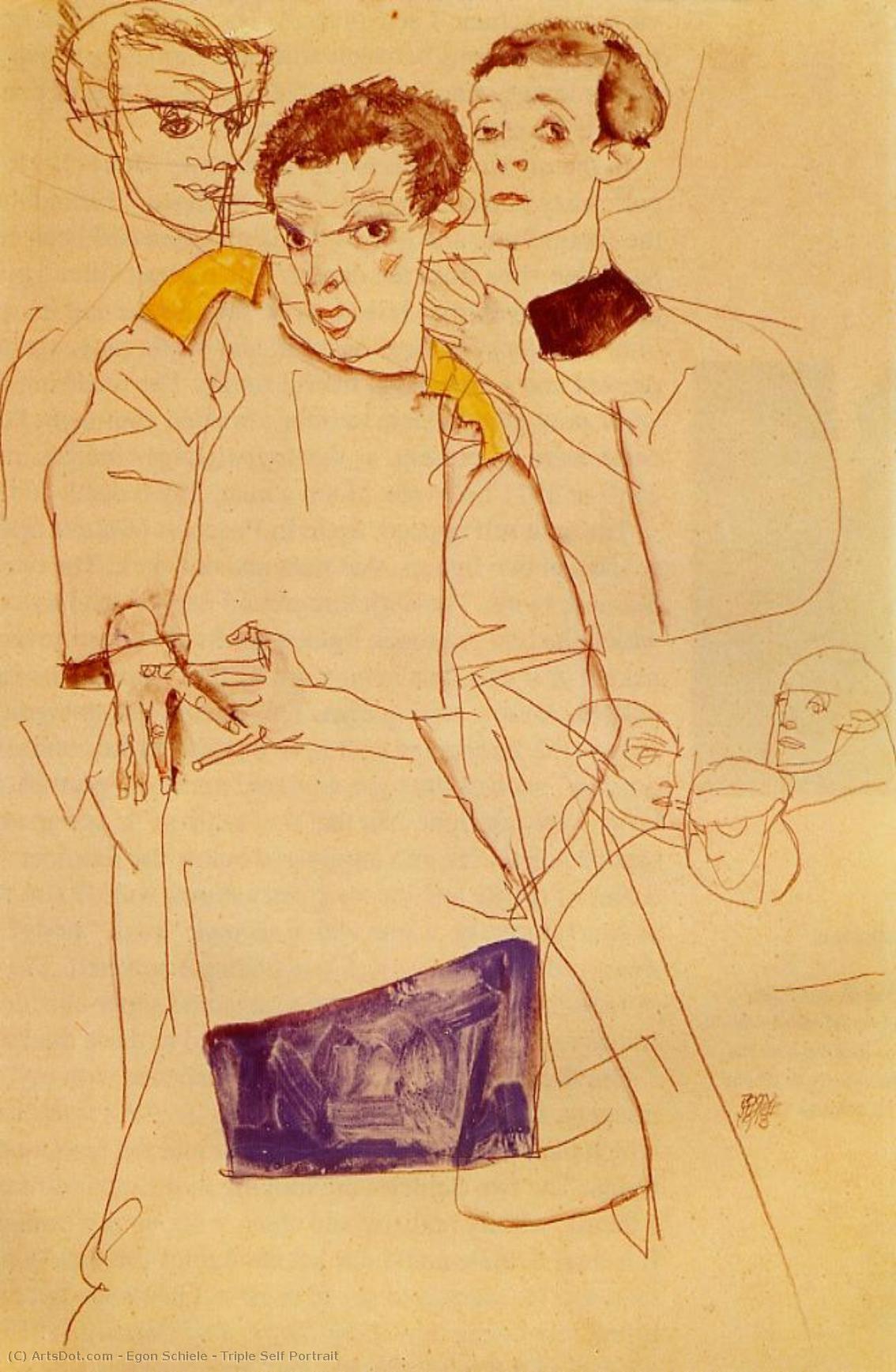
Triple Self Portrait
복제본 크기
Egon Schiele’s “Triple Self Portrait,” painted in 1913, stands as a haunting testament to the anxieties simmering beneath the surface of Expressionist art. More than just a depiction of three figures seated before a chair—though these elements contribute significantly to its visual impact—the painting delves into profound psychological complexities and embodies Schiele’s signature preoccupation with mortality and vulnerability.
Schiele, born in Tulln an der Donau in 1890, experienced early trauma that profoundly shaped his artistic vision. His father's debilitating syphilis illness instilled within him a visceral awareness of disease and decay—themes that would permeate throughout his oeuvre. Raised primarily by his mother and later under the watchful eye of his uncle Leopold Czihaczek, Schiele’s upbringing fostered an independent spirit tempered by intellectual curiosity. Despite familial disapproval regarding his artistic pursuits – deemed frivolous compared to more practical ambitions – he relentlessly pursued drawing, honing his skill with unwavering dedication.
The painting itself is executed in watercolor on paper, a technique Schiele favored for its ability to convey subtle tonal variations and capture the immediacy of emotion. His distinctive style—characterized by angular lines, flattened perspectives, and unsettlingly realistic depictions of human anatomy—is instantly recognizable. The figures are rendered with meticulous detail, their faces pressed together in expressions of anguish and introspection. Notably, the inclusion of two chairs serves as a powerful visual metaphor for confinement and isolation; they represent not merely physical spaces but also psychological barriers hindering self-awareness.
Painted during a period marked by intellectual ferment and societal upheaval—the burgeoning avant-garde movement challenging traditional artistic conventions alongside the looming shadow of World War I— “Triple Self Portrait” reflects the pervasive atmosphere of unease and disillusionment prevalent in Europe at the time. Schiele’s unflinching gaze confronts viewers with uncomfortable truths about human existence, prompting contemplation on themes of suffering, fear, and the inescapable awareness of death.
“Triple Self Portrait” continues to resonate powerfully today as a masterpiece of psychological portraiture. Its haunting beauty lies not in idealized representation but in its courageous articulation of inner turmoil—a testament to Schiele’s enduring legacy as one of Expressionism's most influential figures and a poignant reminder of the artist’s profound engagement with the human condition.

1890 - 1918 , 오스트리아 크로아티아
개인의 서사를 담아내는 맞춤 초상화 제작 전문 TopImpressionists. 심리적 깊이와 예술적 가치를 더한 유화, 수채화 등 다양한 스타일로 특별한 순간을 영원히 기록하세요. 고품질 작품과 100% 만족 보장.

Explore the emotionally charged world of Egon Schiele (1890-1918). Discover his Expressionist masterpieces, psychological themes, and lasting impact on modern art. A comprehensive guide for collectors & enthusiasts.

Explore the fascinating evolution of portraiture from classical masterpieces to digital art! Discover symbolism, techniques & societal impact. Expert insights for collectors & enthusiasts at TopImpressionists.

Explore the groundbreaking work of Paula Modersohn-Becker, a pioneer of Expressionism. Discover her intimate self-portraits & poignant depictions of motherhood – shaping early 20th-century art with emotional depth and innovation.

에곤 시엘레 최고 걸작 25선을 만나보세요. 표현주의 화가 시엘레의 삶과 죽음, 불안을 담은 인물화 작품들을 감상하고 그 의미를 탐구합니다. TopImpressionists에서 명작 복제본으로 예술적인 공간을 완성하세요. 지금 바로 컬렉션을 확인하세요!


최신 미술 뉴스, 특별 혜택 및 인테리어 아이디어를 가장 먼저 만나보세요.
프로젝트에 대해 알려주시면 저희 미술 전문가들이 맞춤형 아트 제안 3가지를 전달해 드립니다.
당신만을 위한 맞춤형 옵션 3가지를 무료로 추천해 드립니다!

 Preview
 프린트 구매하기
 공유하기
공유하기 공유하기
공유하기
 상세 정보
상세 정보

 다운로드
다운로드
 유사 작품
유사 작품 X-레이
X-레이 슬라이드 쇼

 더 보기
더 보기









 유리 옵션은 110cm 미만 크기에서만 선택 가능합니다.


